The United States has once again reaffirmed its support for Pakistan's right to defend itself against terrorism emanating from Afghan soil. This endorsement comes during the ninth review of the UN Global Counterterrorism Strategy (GCTS), a framework adopted in 2006 and periodically reviewed to guide international cooperation against terrorism. The US stance validates Pakistan's inherent right to self-defence under Article 51 of the UN Charter, a position Islamabad has long advocated.
Decades of Conflict and Shared Commitment
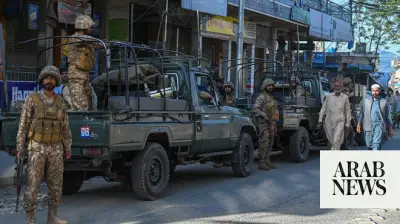
The US was bogged down for decades inside Afghanistan fighting reclusive extremist elements, which emboldens its commitment to exterminating the faceless enemy. Pakistan has been a prime victim of terrorism, having lost more than 70,000 lives and continues to suffer from attacks. This shared experience reinforces efforts on bilateral and global levels to foment a broader strategy to fight the terror nexus that continues to strengthen in Afghanistan.
US Designations and Regional Dynamics
The US support for counter-terrorism must be read alongside the State Department's recent decisions to proscribe the Balochistan Liberation Army (BLA), Tehrik-i-Taliban Pakistan (TTP), and other entities as terrorist organisations. These designations provide the nomenclature to rewrite a new anti-terror strategy for the region and beyond, aiming to ensure that hegemonic states such as India and Afghanistan, acting in cahoots, do not undermine the sovereignty and territorial integrity of regional entities.

Pakistan's Stance at the UN
Pakistan's stance at the UN in support of the GCTS-related resolution that urges member states to finalise a convention aimed at closing loopholes in existing international law is a step in the right direction. The proposed convention would establish a universally binding legal framework to address gaps in counter-terrorism efforts. According to Pakistani officials, the country faces an existential threat from India and Afghanistan, as they collaborate to foment terrorism in the region.
Need for a Unified Diplomatic Front
This shared stance underscores the urgent need for robust intelligence sharing and a unified diplomatic front, especially as Kabul and New Delhi continue to posture aggressively against Islamabad. The UN must also deliberate over the notion of equating self-determination and self-defence with terrorism, and adopt a categorical position in line with nation-states' right to survival.