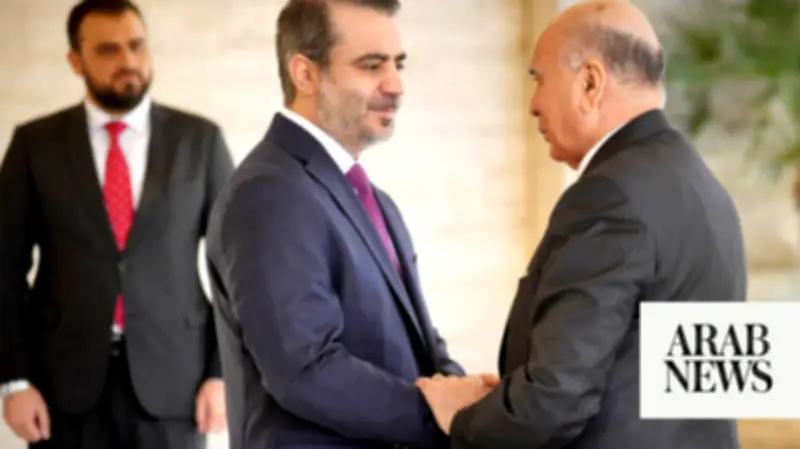
Iraqi Foreign Minister Fuad Hussein on Monday began his first trip to Syria since the December 2024 ouster of longtime ruler Bashar Assad. Relations between the two countries have faced upheaval since the fall of Assad, who was a close ally of previous governments in Baghdad.
Iraq at first approached new ruler Ahmad Al-Sharaa cautiously but is now seeking to bolster trade and security cooperation with Syria, which is emerging from years of civil war. An Iraqi diplomatic source told AFP that Hussein would meet Al-Sharaa as well as Syrian Foreign Minister Asaad Al-Shaibani and Energy Minister Mohammad Al-Bashir.
Visit Aims to Deepen Cooperation
The visit seeks to “deepen joint cooperation in various political, security, economic and trade fields” and address regional and international developments, according to a statement from Hussein’s office. His meetings will also explore “ways of strengthening coordination and consultation” on shared challenges, it added.

With its oil exports disrupted due to the Middle East war, Iraq in recent months has begun exporting limited amounts of oil through Syria. Hussein is the first senior Iraqi political figure to visit Damascus since the new authorities took power, though other Iraqi officials have done so.
Previous Official Exchanges
Iraqi intelligence chief Hamid Al-Shatri visited the month Assad was ousted, while Syria’s Al-Shaibani made his first trip to Baghdad in March last year. In May 2025, several powerful Iraqi politicians voiced opposition to a planned visit by Al-Sharaa to Iraq for an Arab League summit, with security sources telling AFP an old arrest warrant from his time as a member of Al-Qaeda remained in place. Al-Shaibani attended instead.
Al-Sharaa, whose Islamist group spearheaded the offensive that toppled Assad, was imprisoned for years in Iraq on charges of belonging to Al-Qaeda following the 2003 US-led invasion.
Security and Border Developments
In February this year, the United States completed the transfer of 5,700 Daesh group detainees, including hundreds of foreigners, from Syria to Iraq, after they had been held in Kurdish-run jails in northeast Syria for years. In April, Iraq reopened a once-bustling border crossing with Syria more than a decade after it was closed to trade following the rise of Daesh. Three crossings between the countries are now operational.
Iraqi authorities view the new crossing as strategic as it also helps link the country and neighboring Gulf states to Turkiye as part of a regional infrastructure development project.