The Punjab Control of Habitual Offenders and Anti-Social Behaviour Bill, 2026, introduced in the Provincial Assembly on June 8, 2026, moved through a standing committee with minimal public attention until June 28, when Assembly Speaker Malik Muhammad Ahmad Khan stated on the floor that he had not been informed of the bill's existence, despite the committee having already reviewed it. This reveals how the law advanced rapidly and with low visibility, bypassing the presiding officer.
What the Bill Does
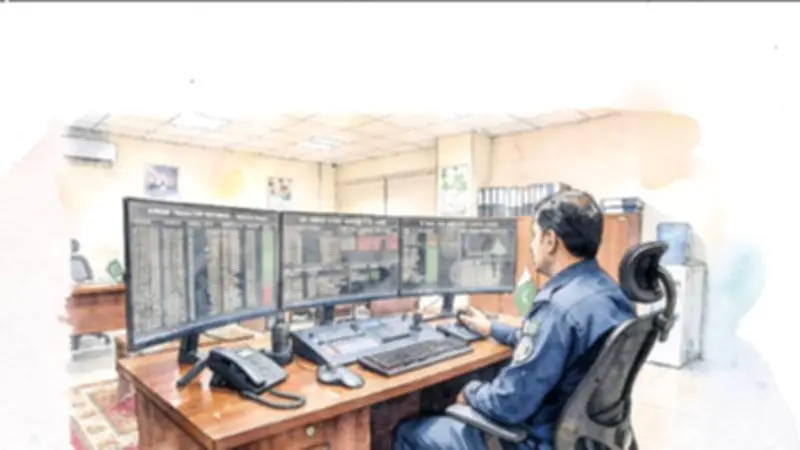
The bill establishes a three-tier structure of Intelligence Committees at provincial, divisional, and district levels, staffed by commissioners, police, and intelligence officials. These committees can classify a person as a “habitual offender” or as exhibiting “anti-social behaviour.” Once classified, the state can freeze bank accounts, seize property, confiscate phones, remove social media accounts, cancel arms licences, block CNICs and passports, and attach an electronic monitoring anklet. A magistrate signs off on some steps, but no court conviction is required for any of them.
Expansive Definitions Without Fixed Boundaries
Section 9 allows a person to be declared a habitual offender if a criminal case has been registered and a police report filed under Section 173 of the Code of Criminal Procedure, if they have been arrested more than once for a listed offence, or on “credible evidence” of repeated anti-social conduct. None of these thresholds require a finding of guilt; a challan is sufficient. In a system where cases routinely take years to resolve, a person can carry a state-imposed label and a monitoring device while still legally presumed innocent, and while the case against them may eventually collapse.

Section 6’s definition of “anti-social behaviour” makes this worse. Running a drug den sits alongside using abusive language in public, causing “annoyance,” and spreading anything an official later calls “misinformation.” District Intelligence Committees can also declare further activities anti-social on their own, without the Assembly voting again. A law that can expand its own definition of the offence it punishes does not have fixed boundaries.
Constitutional Concerns
Measured against the Constitution, this runs into trouble on several fronts. Article 4 guarantees every citizen the right to be dealt with in accordance with law; Article 10A, added in 2010, makes fair trial and due process a right in any criminal determination. A committee of police and bureaucrats issuing findings with criminal weight sidesteps both. Article 10 is the one place the Constitution already allows liberty restrictions without conviction—preventive detention—but only for threats to security or public order, and only if a Review Board of judges certifies continued restriction past three months. Section 9’s monitoring device has a floor of three months and no ceiling; Section 7’s freezes are capped at three months but renewable indefinitely by the same committee that ordered them. The deciding authority is always a magistrate or a police-heavy committee, never a judicial Review Board. Articles 15, 23, and 24, on movement and property, hit the same gap.
Article 19 adds a separate problem. Its restrictions on speech are not open-ended; they are limited to the glory of Islam, Pakistan’s security or integrity, public order, decency, contempt of court, or incitement to an offence. “Misinformation” and “annoyance” fit none of those categories. A citizen or journalist reading Section 6 has no way to know in advance what crosses the line, because the line is not defined until an official decides, after the fact, that it was.

Historical Context and Modernisation
None of this is new to Punjab’s statute books. The bill repeals the Restriction of Habitual Offenders (Punjab) Act, 1918, and the Punjab Control of Goondas Ordinance, 1959, both of which let an executive officer, not a judge, restrict liberty on reputation rather than conviction. The 1918 Act traces to the colonial policy behind the Criminal Tribes Act of 1871, which registered entire communities as hereditary criminals without a court weighing in. The 2026 Bill keeps that logic and adds DNA collection, biometric registries, and digital surveillance neither predecessor had the technology for. Calling that modernisation gets the vocabulary right and the substance backwards.
Impact and Next Steps
The stakes are not abstract. A frozen account can stop someone paying rent or medical bills. A confiscated phone is banking access and years of personal records. Handing the power to take both away to a police-heavy committee, on an FIR rather than a verdict, inverts the sequence justice is supposed to follow: investigation, evidence, trial, and only then punishment. Punjab has real problems—extortion, vehicle theft, online harassment—and the 1918 and 1959 laws were outdated. But the fix for an outdated colonial law is not a more powerful version of it.
Three days of backlash have already forced a pause: the Speaker announced on July 1, 2026, that the bill is going back to the Law Department and Cabinet for redrafting. That is worth something. But a redraft that keeps committees in the place of courts is the same bill with better packaging. Punjab needs a law built around a conviction, not an allegation.