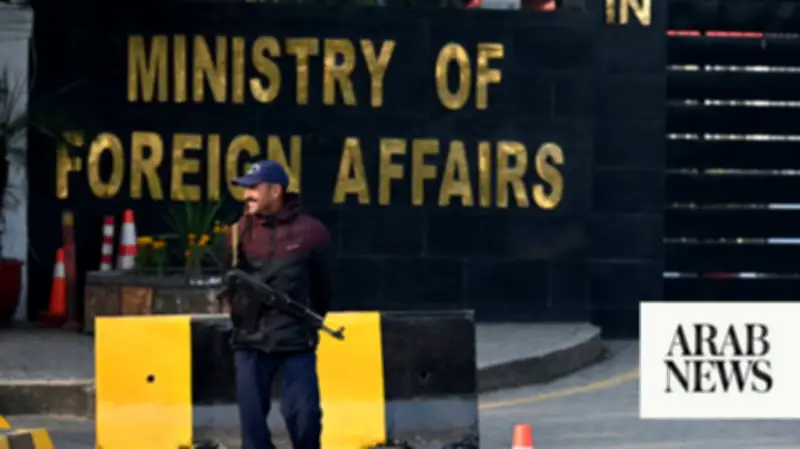
Pakistan on Sunday reaffirmed its resolve to continue working toward peace and stability in the Middle East, the foreign office in Islamabad said, following renewed attacks in the region.
Renewed Attacks in the Gulf
The statement came after Iran’s Islamic Revolutionary Guard Corps (IRGC) said early Sunday its navy and aerospace forces had launched a joint missile and drone operation targeting US military sites in Kuwait and Bahrain. The attack came hours after US forces struck multiple Iranian military targets on Saturday, saying the move was in retaliation for what Washington said were attacks on commercial shipping in the Strait of Hormuz.
Diplomatic Engagement
The Pakistani foreign office said Foreign Minister Ishaq Dar held an in-depth discussion with his Saudi counterpart Faisal bin Farhan on the developments, with both leaders expressing “deep concern” over the evolving situation. “FM [Dar] reiterated Pakistan’s resolve to continue working toward prevalence of peace in the region in pursuance of the ‘Islamabad MoU’,” the foreign office said.

Background of the Islamabad MoU
Pakistan led a diplomatic push together with Qatar, Saudi Arabia and other regional states for a resolution to the US-Iran conflict, leading to the signing of a 14-point framework agreement, known as the Islamabad Memorandum of Understanding (MoU) on June 18, to end the months-long US-Iran war and reopen the Strait of Hormuz. The interim agreement started a 60-day negotiating clock to reach a final deal on the future of Iran’s nuclear program, immediately allowing Tehran to sell its oil freely in a major concession from Washington.
Iran’s Demands and Regional Reactions
However, Iran has insisted that ships must obey its orders and is warning it will start charging fees for transit through the strait, through which a fifth of the world’s oil and natural gas once passed. The US and Gulf Arab states have rejected Iran’s demands. The strait is considered around the world as an international waterway, despite being the territorial waters of Iran and Oman.
Separately, Saudi Arabia and other Gulf countries condemned Iran’s latest attacks on Kuwait and Bahrain as well as on the security and freedom of navigation in the Strait of Hormuz. “The Kingdom reiterates that these violations undermine international efforts aimed at restoring security and stability in the region,” the Saudi foreign affairs ministry said on Sunday.
Pakistan’s Stance on Maritime Navigation
Pakistan Prime Minister Shehbaz Sharif also said on Saturday that the right of free maritime passage and freedom of navigation were an “absolute necessity” for the entire world.