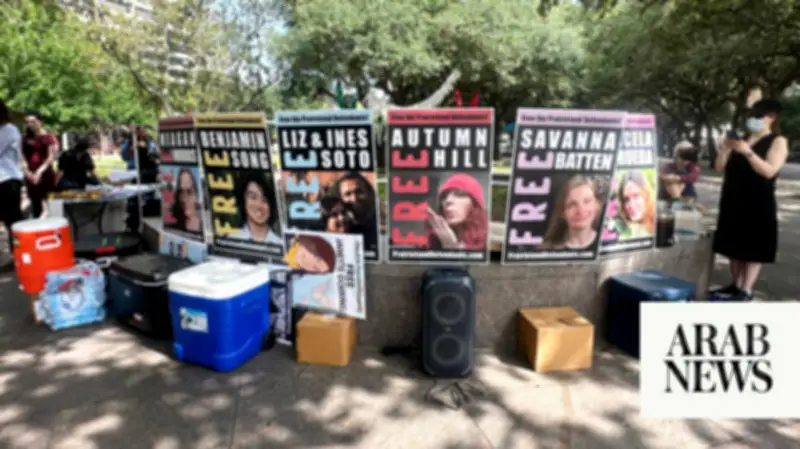
A demonstrator who shot and wounded a police officer outside a Texas immigration detention center last July 4 was sentenced to 100 years in federal prison on Tuesday, while seven other protesters convicted on terrorism charges received prison terms ranging from 30 to 70 years.
Shooting at Prairieland Detention Center
Benjamin Song, a former Marine, was convicted of attempted murder last March after prosecutors said he opened fire and wounded a police officer at the Prairieland Detention Center in Alvarado, Texas. The eight defendants were accused of having links to antifa, a decentralized anti-fascist movement that the Trump administration has designated as a domestic terrorist organization.
Philip Hayes, Song's attorney, expressed disappointment outside the federal courthouse in Fort Worth. “Our issue with this case has always been this isn’t a bunch of terrorists. This is a bunch of kids and young adults who really have a big heart and really wanted their voice to be heard,” Hayes said. “It was never intended that anybody get hurt. It was never intended that any shots would be fired.”

Judge Condemns the Protest as 'Assault on Democracy'
US District Judge Reed O'Connor, one of two judges overseeing the proceedings, said the July 4 event was not a protest but “an assault on democracy.” He emphasized, “The need to deter this type of conduct is high.” Hayes confirmed that Song will appeal the sentence, arguing that “Song, aside from this day, has had an impeccable life. A former Marine. A good student. He had a lot of good qualities that were just ignored. The judge went ahead and gave as much as he could.”
Sentences and Convictions
Daniel Sanchez Estrada was convicted of corruptly concealing a document and conspiracy to conceal documents, receiving a 30-year prison term. Other defendants pleaded guilty to providing material support to terrorists rather than going to trial. Prosecutors alleged that the eight are members of antifa, which is not a single organization but an umbrella term for far-left militant groups that confront neo-Nazis and white supremacists. President Donald Trump last fall signed an executive order designating antifa a domestic terrorist organization, though there is no domestic equivalent to the State Department's list of foreign terror groups.
Defendants Deny Antifa Affiliation
The defendants deny any affiliation with antifa, maintaining they attended the demonstration to show support for immigrants inside the detention center. Critics warn the case could have wide-reaching impact on protests, given that organizations operating within the US are supposed to be protected by First Amendment free-speech rights.
Broader Implications for Protesters
Last week, federal prosecutors charged 15 people with impeding the Trump administration's immigration crackdown in Minnesota. They claimed the demonstrators were members of antifa who conspired to block arrests and deportations by setting up blockades around government buildings and throwing chunks of ice at federal vehicles, among other actions.