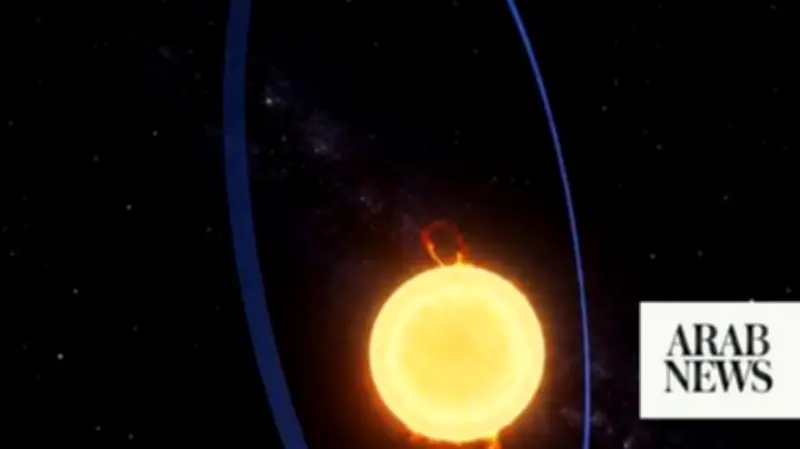
Earth reached its annual aphelion on Monday, July 7, 2026, at 8:30 p.m. Makkah time, passing the farthest point in its orbit around the Sun at a distance of approximately 152 million kilometers. This regular astronomical event was reported by the Saudi Press Agency (SPA), citing the Jeddah Astronomy Society and the Noor Astronomy Society.
Aphelion and Seasonal Misconceptions
Majed Abu Zahra, director of the Jeddah Astronomy Society, explained that Earth's greater distance from the Sun during aphelion does not result in cooler temperatures. Seasonal changes are caused by the approximately 23.4-degree tilt of Earth's rotational axis. During the Northern Hemisphere's summer, that tilt allows the Sun's rays to strike the region more directly despite the planet being at its most distant point from the Sun.
Elliptical Orbit and Its Effects
Abu Zahra noted that Earth's orbit is elliptical, causing its distance from the Sun to vary by about five million kilometers over the course of a year. As a result, the Sun appears slightly smaller at aphelion than at perihelion, although the difference is too small to be seen with the naked eye. He added that Earth travels more slowly at aphelion, making summer in the Northern Hemisphere slightly longer than winter. Such orbital variations help scientists better understand Earth's climate and the long-term evolution of the seasons.

Noor Astronomy Society's Perspective
The Noor Astronomy Society described aphelion as a natural annual phenomenon resulting from the elliptical shape of Earth's orbit. Society President Issa Al-Ghafili said the event has no effect on the succession of the seasons or the intensity of solar radiation received by Earth. He emphasized that the four seasons are determined by Earth's 23.5-degree axial tilt as it revolves around the Sun, not by changes in its distance from the star. Al-Ghafili added that Earth reaches aphelion during the Northern Hemisphere's summer and perihelion — its closest point to the Sun — during the winter.
Educational Opportunity
The Noor Astronomy Society encouraged the public and astronomy enthusiasts to use such celestial events as opportunities to deepen their understanding of Earth's motion, planetary science, and the fundamental principles governing the solar system, while helping dispel common misconceptions about the causes of the seasons.