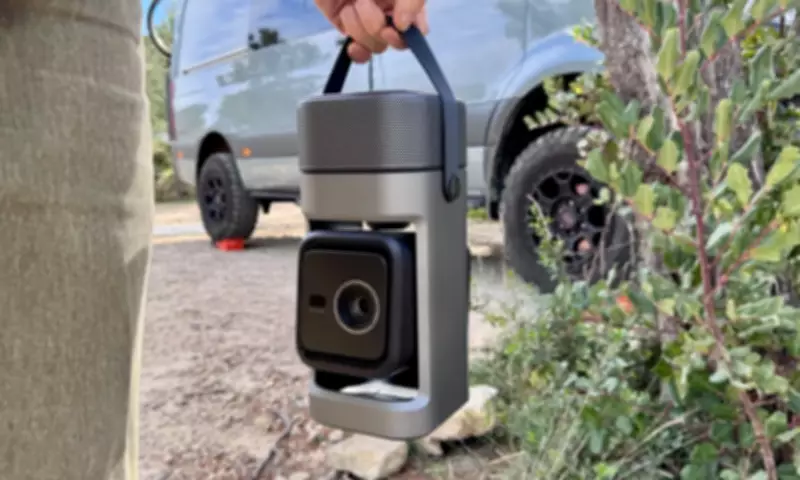
Anker Nebula P1 Projector: A Sound-First Portable Entertainment Solution
The Anker Soundcore Nebula P1 projector distinguishes itself in the crowded portable projector market by prioritizing audio excellence over sheer portability or peak brightness. Unlike many competitors, this device does not include a built-in battery, yet it carves out a niche for users who value immersive sound in a compact form factor.
Key Features and Design Philosophy
Weighing just 5.3 pounds, the Nebula P1 represents a significant reduction from Anker's earlier models like the 72-pound Nebula X1 series. This makes it genuinely portable for scenarios such as van life or spontaneous movie nights, provided you have access to a power outlet or a substantial USB-C battery pack. The projector's standout innovation is its pair of detachable 10W speakers, which magnetically separate to create authentic left- and right-channel audio separation.
This design addresses a common flaw in all-in-one portable projectors, where integrated speakers often direct sound from beside or below the viewer rather than from the screen. By placing the speakers near the projection surface, the Nebula P1 delivers a more cinematic audio experience. The speakers are IP54 rated for dust and rain resistance, while the projector itself has an IP33 rating for light rain protection.

Performance and User Experience
In terms of visual performance, the Nebula P1 produces a satisfying 1080p image with its 650 ANSI Lumens LED light source, suitable for dark rooms but struggling in brightly lit environments. The projector operates quietly at 26dB from one meter away, ensuring minimal distraction during viewing. It boots into Google TV in approximately 50 seconds from a cold start, with a near-constant 6W power consumption in sleep mode.
However, the device's Intelligent Environment Adaptation 4.0 system, which promises automatic focus, keystone correction, obstacle avoidance, and screen fitting, proved inconsistent in testing. The companion Nebula Connect app's "VisionFit" feature, requiring users to photograph the projection surface for calibration, was criticized as cumbersome. Manual overrides for focus and keystone correction remain reliable alternatives.
Audio Capabilities and Battery Considerations
The detachable speakers excel in creating a wide, pleasant soundscape, with a battery life of up to 20 hours per charge. They can function independently as Bluetooth speakers, offering sufficient volume to fill a living room or RV. Audio quality shines with detailed tracks like Madeleine Peyroux's "La Vie En Rose," though bass-heavy music such as Kendrick Lamar's "Not like Us" may sound thin due to the absence of a subwoofer.
A significant drawback is the lack of a built-in battery. During testing, the projector consumed 51Wh of battery capacity per hour of Netflix streaming at maximum brightness, meaning a standard 99Wh power bank cannot sustain a full-length film without recharging. This makes the Nebula P1 less ideal for completely cord-free use compared to rivals like the TCL PlayCube, which includes a three-hour internal battery.
Comparison and Market Position
Priced at $799 (often on sale for $639), the Nebula P1 faces competition from devices like the TCL PlayCube and Xgimi MoGo. While the PlayCube offers greater portability with its integrated battery and slightly higher brightness, it cannot match the Nebula P1's audio performance. The Nebula P1 is best suited for users who prioritize sound quality and are willing to manage external power sources.
Specifications include a DLP 0.23” DMD display, 2GB RAM, 32GB storage, and connectivity options like HDMI 2.1 with eARC, USB-A, and USB-C ports. The projector supports Dolby Audio and features a swivel base for flexible placement, along with preset saving for repeated use in fixed locations.
In summary, the Anker Nebula P1 projector is a compelling choice for audio-focused portable entertainment, despite its dependency on external power. Its detachable speaker system and solid 1080p performance make it a valuable option for mobile setups and impromptu viewing sessions, as long as users plan for its power needs.