Ireland's women's cricket team secured their first ever T20 World Cup victory on June 27, 2026, defeating the West Indies by seven wickets in Bristol. The historic win came just days after the men's team beat India in a T20I in Belfast, marking Ireland's first victory over India in any format.
Women's Team Breaks Through
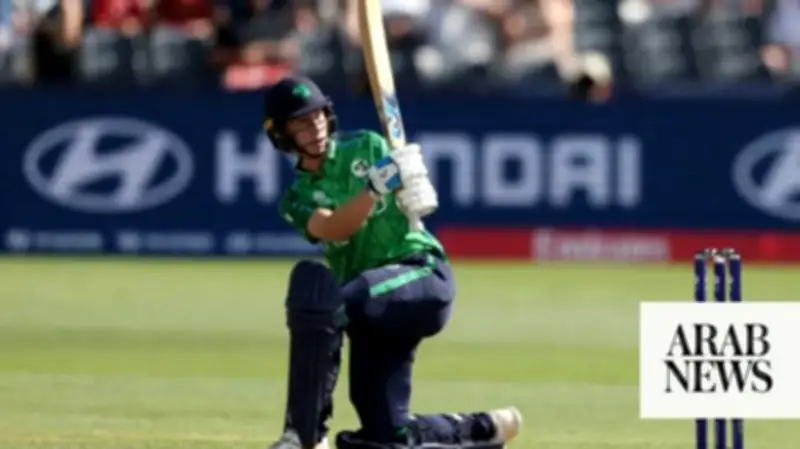
The Irish women's team had come close to a landmark win earlier in the tournament, losing to New Zealand by just four runs on June 19 after failing to score 34 runs from the last 24 deliveries. That experience proved valuable against the West Indies, as Ireland's bowlers restricted the opposition to 128 for seven after a brisk start of 31 in three overs. Orla Prendergast, Ireland's top all-rounder, led the chase with a steady innings, steering the reply to 108 for three in the 16th over before being dismissed. Rebecca Stokell then guided the team home, scoring the required 21 runs in 27 deliveries to secure the historic victory.
Men's Team Stuns India
The men's team had set the stage on June 26, beating India by 34 runs in the first T20I in Belfast. India, preparing for a series against England, were caught off guard by Irish conditions. In the second match on June 28, Ireland posted 154 for eight after being asked to bat first. India's chase faltered early, losing two wickets for one run to Jai Moondra, a Rajasthan-born player who moved to Ireland in 2021 for an MTech degree and gained citizenship in 2025. He also dismissed India's captain Shreyas Iyer. Irish-born debutant Matt Hollard claimed three wickets. India needed 44 runs from 18 deliveries at the end of the 17th over, which was reduced to 20 from the final over. Despite a dramatic last over featuring two wides, a no-ball, a four, and a wicket, India fell two runs short. The win broke India's 16-series winning streak and was achieved without four first-choice Irish players.

Investment in Infrastructure
On June 16, the first sod was turned at a site north-west of Dublin that will become Ireland's international cricket stadium at the National Sports Campus. The facility, primarily funded by the Irish government through Sport Ireland and the Department of Sport, is scheduled to be ready for the ICC T20 World Cup in 2030, which Ireland will co-host with England and Scotland. Investment in facilities, developmental pathways, and strong domestic competitions are seen as crucial for deepening Irish cricket's roots.
West Indies' Challenges and Funding Gaps
West Indies captain Hayley Matthews highlighted the need for investment after her team's semifinal loss to Australia on June 30. She spoke about the pressures on senior players to mentor younger, less experienced players and the lack of funds compared to teams like Australia. Without additional investment, development of the next generation will be hampered. In the semifinal, the West Indies started well, scoring 55 runs midway through the ninth over, but Matthews' dismissal sparked a collapse to 91 for six after 17 overs, eventually reaching 125 for seven. Australia chased the target in 13 overs, winning by eight wickets.
Semifinal Scheduling Controversy
Concerns were raised about the allocation of semifinal matches. The identity of the second-placed team in Group A was not determined until June 28, when South Africa beat Bangladesh to edge out India. Had India beaten Australia earlier that day, they would have progressed. The semifinals were scheduled at 2:30 p.m. and 6:30 p.m. local time (7 p.m. and 11 p.m. India time), with the earlier time attracting maximum attention in India. Former England player Alex Hartley and current player Kate Cross questioned why India, if they qualified, had already been allocated the first semifinal. Their comments led to an unprecedented backlash, including abusive comments and death threats on social media.
Cricket as a Force for Good
Amid the controversies, a positive event took place on July 1 when the Afghan women's team played an exhibition match against the British Army women's team at Hampstead Cricket Club near Lord's. The Afghan players, exiled mainly in Australia, were funded to visit England for coaching and to watch the women's T20 World Cup final. Their journey over the past three years has been challenging, but the support they received demonstrates cricket's capacity for good.