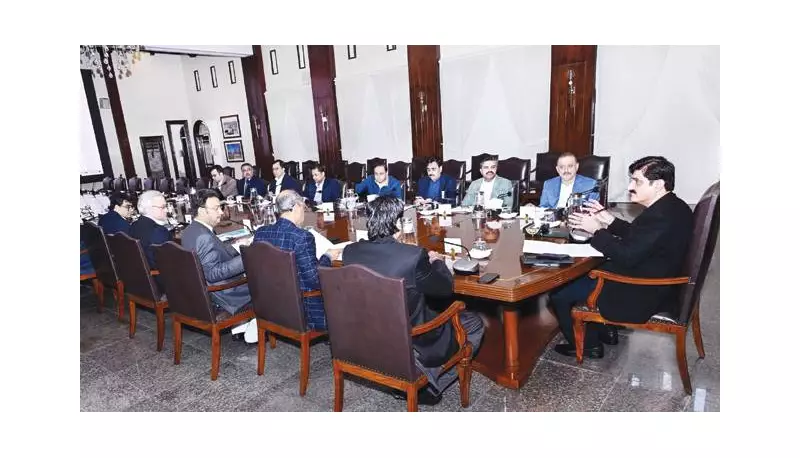
Sindh Chief Minister Syed Murad Ali Shah on Friday took a comprehensive review of the progress on development initiatives across the province, issuing strict directives to ensure their timely and quality completion. The high-level meeting, convened at the CM House in Karachi, saw the participation of key provincial ministers, Mayor Karachi Murtaza Wahab, Chief Secretary Asif Hyder Shah, and senior officials from various departments.
Massive Budget Growth and Project Completion
During the briefing, it was revealed that Sindh's development budget has witnessed an extraordinary surge. The allocation has skyrocketed from Rs 55 billion in the 2008-09 fiscal year to a staggering Rs 1,018 billion for 2025-26. This substantial budget includes Rs 367 billion from Foreign Project Assistance (FPA) and Rs 76 billion under the federal Public Sector Development Programme (PSDP).
The Chief Minister was informed that during this period, over 13,000 development schemes were initiated across multiple sectors. Officials reported the successful completion of 9,193 projects in crucial areas including road infrastructure, irrigation, water and sanitation (WASH), education, health, agriculture, and social development.

Strict Directives Against Delays and Poor Quality
Expressing clear dissatisfaction with delays and cost overruns plaguing some schemes, CM Murad Ali Shah issued firm instructions. He directed all concerned departments to shift their focus from making new announcements to ensuring the completion and operational functionality of ongoing projects.
The Chief Minister warned that negligence, substandard workmanship, and weak supervision would not be tolerated. He emphasized that quality control mechanisms and third-party validation must be strengthened to uphold standards.
Focus on Flood Rehabilitation and Urban Uplift
A significant part of the review was dedicated to post-flood rehabilitation efforts under the Sindh Flood Emergency Rehabilitation Project (SFERP). The meeting was briefed on the rehabilitation of 141 flood-affected roads covering 825 kilometres and the restoration of 500 water supply and drainage schemes. Furthermore, cash-for-work programmes have already benefited over 139,000 households.
For these rehabilitation projects, the CM directed authorities to strictly enforce climate-resilient construction standards under the "Build Back Better" approach to mitigate future disaster impacts.
Reviewing urban development, the meeting discussed the Karachi Neighbourhood Improvement Project (KNIP), which has upgraded roads, parks, drainage, sewerage, public spaces, and street lighting. The Chief Minister stated that such successful neighborhood-level interventions should be replicated in other urban centres of Sindh based on their documented performance and positive impact on mobility, safety, and livability.
Emphasis on Sustainability and Technology
The Sindh Municipal Services Delivery Programme (MSDP), which has improved water supply and waste management in Jacobabad, was also reviewed. CM Shah instructed local governments to ensure the long-term sustainability of assets through proper operation and maintenance after project handover.
Commending the Planning & Development Department for digitizing processes, introducing online approvals, GPS-based tracking, QR codes, and third-party monitoring, the Chief Minister stressed a crucial point. He stated that technology should facilitate real-time decision-making and prompt corrective actions, not merely serve as a tool for reporting.
Progress on urban master planning was also examined, with the CM directing that notified master plans be strictly enforced to control unplanned urban sprawl, protect public land, and guide future infrastructure investments wisely.
In his concluding remarks, Chief Minister Murad Ali Shah issued clear, actionable mandates for all departments:

- Strict adherence to approved timelines and financial limits.
- Completion of all ongoing projects before the launch of any new schemes.
- Enhanced focus on quality assurance and independent validation.
- Submission of detailed quarterly progress reports for his personal review to ensure accountability.