Sindh Chief Minister Syed Murad Ali Shah hosted a significant delegation from the 27th National Security Workshop at the CM House in Karachi on Thursday, emphasizing the provincial government's commitment to strengthening civil-military coordination for national security.
Strategic Engagement with Future Leaders
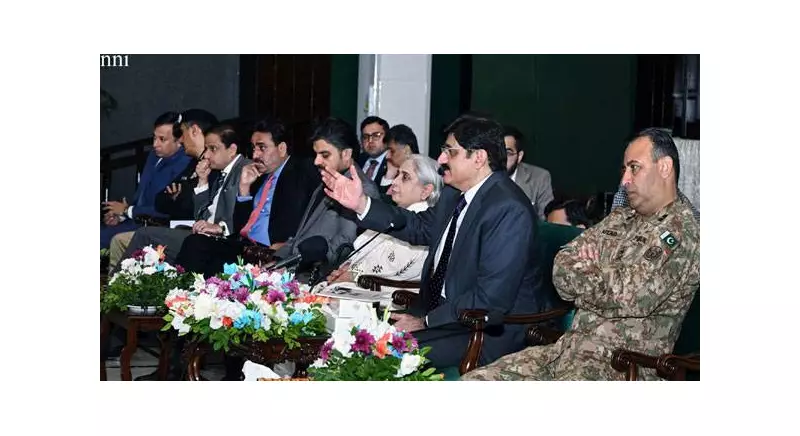
A 95-member delegation led by Major General Muhammad Raza Aizad visited the Sindh Chief Minister House, where CM Murad Ali Shah personally received them and presided over an extensive briefing session. The Chief Minister described the visit as highly significant, noting that the participants represent Pakistan's future strategic leadership.
"The Sindh Government attaches high value to institutional engagements that promote coordination between civil administration and national security institutions," stated Chief Minister Shah during his welcome address.

Sindh's Development Vision and Priorities
The comprehensive briefing covered Sindh's development policy, which focuses on inclusive, equitable, and climate-resilient growth. Key priority areas include education, healthcare, safe drinking water, sanitation, agricultural productivity, road connectivity, energy infrastructure, and poverty reduction.
Chief Minister Shah highlighted the substantial Annual Development Programme (ADP) 2025-26 with an allocation exceeding Rs 1 trillion, demonstrating the government's strong commitment to enhancing public service delivery and strengthening socio-economic foundations.
Participants received detailed information about the Sindh Development Portfolio 2025-26, including sectoral allocation trends, completed schemes, financial performance, and the government's long-term development framework. The delegation learned about major initiatives under the ADP and foreign-assisted programs designed to improve infrastructure, modernize governance, and achieve Sustainable Development Goals.
Post-Flood Reconstruction and Climate Initiatives
CM Murad Ali Shah provided extensive details about Sindh's large-scale post-flood rehabilitation efforts, particularly highlighting the Sindh People's Housing for Flood Affectees (SPHF) program. This initiative represents one of the world's largest climate recovery and housing reconstruction projects, aiming to restore 2.1 million flood-damaged homes.
Significant achievements under this program include the opening of 1.3 million beneficiary accounts, substantial job creation, and women's empowerment through land title distribution. The delegation also received updates on WASH projects, infrastructure rehabilitation, and community-based resilience programs.
Major urban development initiatives in Karachi were also discussed, covering municipal reforms, road network development, mass transit infrastructure, and the Solid Waste Emergency and Efficiency Project (SWEEP) that is transforming the city's waste management system.
Global Recognition for Environmental Efforts
The briefing also featured information about the Delta Blue Carbon Project, a globally acclaimed mangrove restoration and climate mitigation initiative that has already generated verified carbon credits and substantial foreign exchange earnings for Pakistan.
Chief Minister Murad Shah concluded the session by thanking the National Security Workshop participants for their interest in Sindh's development trajectory. He emphasized that economic resilience, climate adaptation, and sustainable development have become fundamental components of national security that require strong civil-military institutional synergy.
The delegation expressed appreciation for the detailed briefing and acknowledged the scale of efforts being undertaken across various sectors in Sindh. The meeting was attended by Chief Secretary Asif Hyder Shah, IG Police Ghulam Nabi Memon, PSCM Agah Wasif, Chairman P&D Najam Shah, and provincial secretaries from various departments.