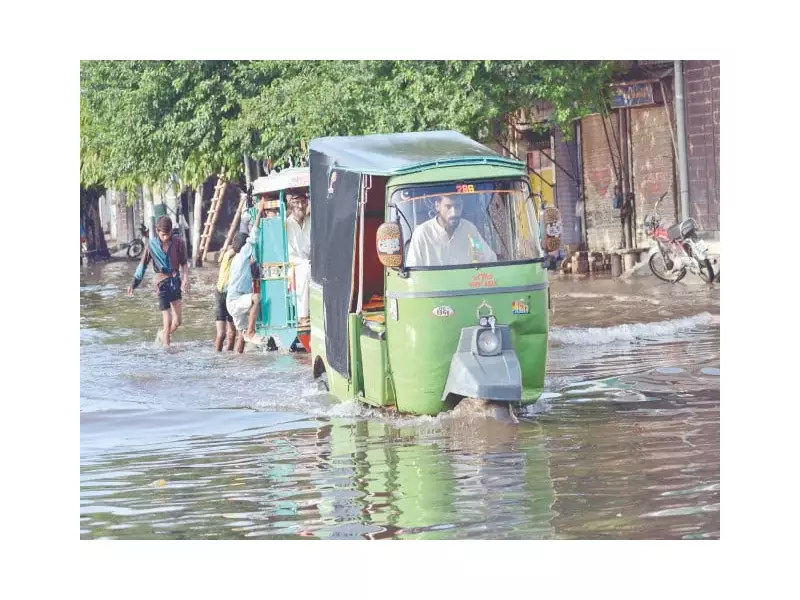
For the residents of Lahore, the annual monsoon brings a dual reality: a welcome respite from the oppressive summer heat, and a dangerous game of navigating the city's rapidly deteriorating and sinking roads. This recurring crisis has escalated into a major public safety hazard, with data revealing a disturbing pattern of infrastructure failure.
A City Sinking: The Alarming Data
Over the past three monsoon seasons, Lahore has witnessed more than 100 reported incidents of collapsing sewerage lines, bursting water pipelines, and roads caving in. These are not mere inconveniences; they have resulted in injuries to over 50 citizens and significant damage to dozens of vehicles. The problem is systemic, rooted in an aging underground network. Large sections of the city's sewerage system are between 30 to 40 years old, and their structural weaknesses are brutally exposed under the pressure of heavy seasonal rains.
Residents' Plight and Faulty Fixes
Professor Asif Tanveer, a resident of Johar Town, describes a frustrating cycle that repeats every year. "Roads in various localities develop massive sinkholes during the rains," he shared. He alleges that complaints to the Lahore Development Authority (LDA) yield only superficial repairs. "The authorities just cover the damaged surface with stones and gravel without addressing the leaking sewer or water lines underneath. The pipes continue to burst, and the roads collapse again," Tanveer revealed.

Another local, Khalid Javed, pointed to a fundamental flaw in urban planning. He estimates that 60 per cent of Lahore's roads have sewer and water pipelines running directly beneath them. "To save on development costs, roads were built right over these pipelines, sometimes even through residential areas. This design flaw massively increases the risk of damage every monsoon," Javed explained.
Hotspots of Hazard and Expert Analysis
Documents indicate that Johar Town, particularly Khayaban-e-Firdousi, has been a major hotspot, with several vehicles falling into deep cavities. Incidents have also been reported in areas like Gowalmandi, where motorcyclists have been injured after suddenly plunging into potholes. An internal survey by the Water and Sanitation Agency (WASA) lists over 25 areas affected by road sinking this year alone, including:
- Bostan Colony & Satu Katla
- Faisal Town & Green Town
- Gulshan Ravi, Islampura, and Shahdara
- Akbar Shaheed Chowk Road and Baba Azam Chowk
Urban planner Mian Sohail Hanif Bhandara places the blame squarely on poor planning by WASA and LDA. "Pipelines have a limited lifespan, but in Lahore, roads were constructed over decades-old pipes without replacing them," he stated. He argues that leaking old pipes, pressurized by rainwater, eventually burst and create sinkholes. Bhandara advocates for a complete replacement of the old pipeline network instead of temporary repairs to ensure long-term safety.
Official Response and Future Projects
In response to the crisis, WASA's Managing Director Ghufran Ahmed announced that Punjab Chief Minister Maryam Nawaz has approved a multi-billion-rupee project to replace pipelines beneath 26 key roads. "This initiative is expected to drastically reduce such incidents and enhance infrastructural stability," Ahmed said. He added that ongoing government-funded development projects aim to provide permanent solutions for sewerage and water supply.
Specifically for the hard-hit Johar Town area, WASA's spokesperson Abu Zar detailed a major protective project. A five-kilometre trunk sewerage line will be laid along Khayaban-e-Firdousi, stretching from Shaukat Chowk to Shaukat Khanum Hospital, aiming to shield the area from further monsoon damage.