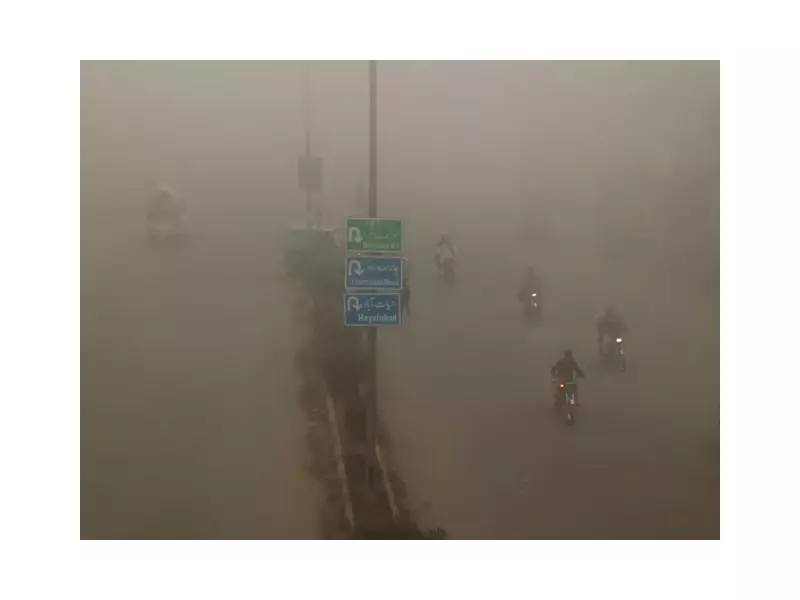
The provincial capital of Punjab, Lahore, along with several other major urban centers, found itself gasping for breath on Thursday as air pollution levels skyrocketed into the hazardous zone, triggering serious health concerns among the public and authorities alike.
Alarming AQI Readings Across Punjab
According to official data released by the Punjab Environmental Protection Department (EPD), the average Air Quality Index (AQI) for Lahore was recorded at 278 between 8:00am and 3:00pm, firmly placing the city in the "very unhealthy" category. The situation was even more dire at specific monitoring stations. Government Teaching Hospital Shahdara registered a dangerously high AQI of 396, followed by University of Engineering and Technology at 343, Kahna Nau Hospital at 327, and Lahore Waste Management Company at 315, painting a grim picture of widespread smog enveloping the city.
Punjab's Most Polluted Cities
The environmental crisis was not confined to Lahore alone. A provincial EPD report highlighted that Gujranwala was ranked as the most polluted city in Punjab with an AQI of 318. It was closely followed by Lahore (278), Khanewal (275), Faisalabad (243), and Kasur (240). All these cities registered air quality levels that are classified as either "very unhealthy" or "hazardous" for human health. The severity of the situation gained a global perspective when the international monitoring platform IQAir listed Lahore as the second most polluted city in the world, reporting an average AQI of 237.

Health Risks and Official Advisories
Environmental experts have issued stern warnings, stating that such high AQI readings fall deep within the hazardous zone and pose a severe threat to residents. They emphasized that children, the elderly, and individuals with pre-existing respiratory or cardiac conditions are at the highest risk. Prolonged exposure to this toxic air could lead to long-term respiratory damage and increased cardiovascular stress. In response, health authorities have issued urgent advisories, urging people to minimize outdoor activities, wear N95-grade masks, and avoid unnecessary travel, especially during the early morning hours when smog density peaks. Schools and offices have been directed to implement precautionary measures, and hospitals are already reporting a surge in patients complaining of breathing difficulties.
Meteorological department officials have pinpointed the cause of this intense smog to stagnant weather conditions. They cited a combination of light winds, low temperatures, and high humidity, which act like a lid, trapping harmful pollutants close to the ground and preventing their dispersal.