Renewed Displacement Grips Tirah Valley Amid Security Operation Talks
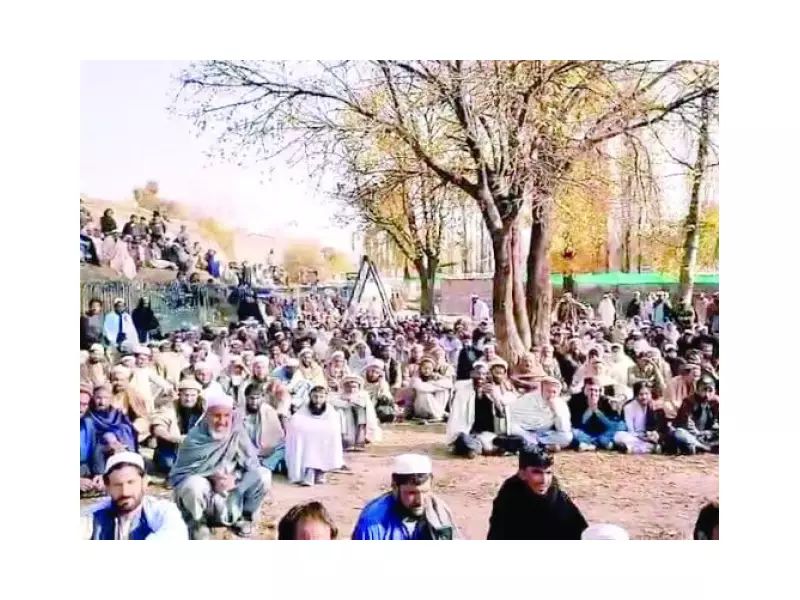
A fresh wave of displacement has swept through the picturesque Tirah Valley in Khyber-Pakhtunkhwa's Khyber tribal district, as discussions of a limited offensive against the proscribed Tehreek-e-Taliban Pakistan (TTP) gain momentum. This latest exodus adds another painful chapter to the region's turbulent history, where local communities repeatedly find themselves trapped between militant threats and governmental failures.
Political Blame Game Overshadows Humanitarian Crisis
As residents abandon their homes during harsh winter conditions, a bitter blame game unfolds between the federal government and the Pakistan Tehreek-e-Insaf-led provincial administration. Rather than collaborating on solutions, both sides appear more focused on political point-scoring, leaving affected populations to bear the devastating consequences. Over the past two decades, tribal areas and the Malakand division have endured at least twelve major counterterrorism operations, each promising definitive results against militant threats.
Yet the Taliban have evolved into a more sophisticated and brazen force, while the region remains ensnared in persistent violence. The people of Tirah Valley, along with residents across tribal districts, confront a haunting question: will this destructive cycle ever truly end?

Broken Promises and Neglected Rehabilitation
Following each military operation, authorities have pledged comprehensive stability, reconstruction, rehabilitation, and institution-building programs. These commitments consistently fail to materialize as post-operation phases receive inadequate attention compared to political maneuvering in Islamabad, Peshawar, Lahore, and Karachi. The current government's vow to eradicate militancy echoes hollowly against this backdrop of unfulfilled promises.
Will a new operation yield different outcomes? Or will history repeat itself, condemning Tirah Valley residents to yet another round of violence and displacement? At present, locals maintain minimal trust in governmental assurances, given the legacy of broken commitments. Nevertheless, they have once again vacated their homes, placing fragile faith in the state's word during severe winter conditions.
Media Misrepresentation and Systemic Exclusion
Mainstream and social media platforms increasingly feature problematic narratives that bash Pashtuns from Khyber-Pakhtunkhwa generally, and former Federally Administered Tribal Areas (FATA) specifically. These portrayals often rely on out-of-context information, insinuations, and harmful stereotyping, fostering alienation rather than supporting the integration goals of the 2018 FATA merger.
Authorities routinely deflect blame for their own shortcomings while utilizing media as a strategic tool. Analysts and journalists lacking fundamental understanding of tribal area realities dominate media discussions, shaping national discourse while key Pashtun stakeholders remain sidelined. Some apolitical locals report that months before the current operation, mainstream outlets launched campaigns depicting Tirah Valley as a center for drug cultivation, trafficking, and terrorism financing.
They contend the operation appears more focused on score-settling between provincial and federal governments than genuinely addressing regional terrorism. Government officials occasionally convene grand tribal jirgas as formalities, but consistently exclude them from crucial policy decisions affecting tribal futures. This systemic marginalization further alienates tribal populations, preventing their meaningful participation in state affairs.
Governance Gaps and Counterproductive Approaches
The priorities of both federal and provincial governments reveal significant representation gaps. The federal cabinet includes just one Pashtun minister, while the current Khyber-Pakhtunkhwa provincial cabinet contains no ministers from southern districts—the region most severely impacted by militancy. On counter-narrative efforts, authorities deploy individuals largely unfamiliar with complex ideological drivers behind violence conducted in jihad's name.

Renowned Islamic scholars from schools of thought that produce most jihadists could potentially challenge extremist narratives on purely ideological grounds—organically and independently, without state pressure. However, some media channels quickly co-opt such statements, portraying them as state-sponsored initiatives with misleading captions that immediately undermine credibility.
When independent scholars do speak out, militants frequently respond with death threats. Rather than providing protection, authorities often abandon these voices, resulting in fatalities or forced hiding. This pattern discourages other scholars from engaging publicly, weakening ideological countermeasures.
Operational Patterns and Strategic Shortcomings
Kinetic operations consistently follow predictable patterns: when militant groups cannot confront military forces directly, they retreat into rugged terrain within other tribal districts or cross into Afghanistan, returning once military pressure diminishes. They simply relocate, regroup, and reorganize for future strikes. Meanwhile, local civilians suffer most from operations' unintended consequences.
Winter typically brings militant hibernation periods, with activities resuming in spring—a pattern established during two decades of Afghan Taliban-led insurgency in Afghanistan. The TTP follows this same cyclical approach. Spring offensives traditionally mark winter's "lull" conclusion and fighting season commencement, as warmer weather improves accessibility through snow-covered mountain passes.
Launching operations during harsh winter rarely achieves intended objectives, primarily because militant presence in areas like Tirah remains limited during heavy snowfall. This dynamic occurred during last year's short-term "targeted operation" in Bajaur District's Lowi and War Mamund sub-districts, which displaced approximately 55,000 residents according to local lawmaker Nisar Baz.
Recent ground reports indicate militants have returned to these same areas, albeit in smaller numbers than pre-operation levels. This may represent tactical testing before deploying additional reinforcements. Security operation success is frequently measured through body counts and reclaimed territory rather than strategic, long-term stability achieved via good governance, institution-building, and extending state writ through service delivery and local stakeholder engagement.
Legal Ambiguities and Governance Failures
The most pressing question surrounding any Tirah operation concerns its legal standing. A 24-member local jirga's decision to vacate houses by January 10 appears highly questionable, as neither the jirga nor its draft possesses legal authority. Following FATA's merger into Khyber-Pakhtunkhwa and Frontier Crimes Regulation (FCR) abolition—which previously provided legal cover for jirga decisions—the provincial government now holds authority to approve such operations.
Beyond legal ambiguities, Khyber-Pakhtunkhwa Chief Minister's Special Assistant on Information Shafi Jan alleged during a television talk show that coercive measures were used against the 24 jirga elders to secure agreement signatures—an allegation authorities have rebutted. Earlier, federal lawmaker Iqbal Afridi informed BBC Urdu that elected representatives from affected areas received neither information nor consultation regarding operations or tribal displacement.
This reflects utter disregard for established protocols and procedures, likely deepening mistrust between provincial and federal authorities. Effectively addressing militancy's root causes requires unified federal-provincial strategy, as provincial governments implement post-operation measures tackling socio-economic challenges arising from counterterror operations.
Persistent Neglect and Bleak Prospects
If provincial governments don't support federal initiatives, kinetic action risks becoming counterproductive on humanitarian, political, and strategic fronts—ultimately benefiting militants. Treatment of former FATA since its Khyber-Pakhtunkhwa merger suggests historical neglect during autonomous status persists. On-ground conditions show minimal improvement despite official claims.
This reality is exemplified by Prime Minister's Special Assistant on Tribal Affairs Mubarak Zeb's appointment, who has proven largely ineffective addressing regional plight. His conspicuous absence during key developments, including the ongoing Tirah crisis, illustrates continued state apathy toward the region. Successive federal and PTI-led provincial governments have mishandled FATA, treating it worse than during semi-autonomous periods.
Despite committing 3% of the divisible pool under NFC award to accelerate FATA development and integration, the federal government has failed to ensure consistent, equitable distribution. Moreover, funds allocated to former FATA have lapsed due to successive Khyber-Pakhtunkhwa governments' gross incompetence and mismanagement. With no visible attitude shift among federal or provincial authorities, prospects for meaningful regional improvement remain profoundly bleak.