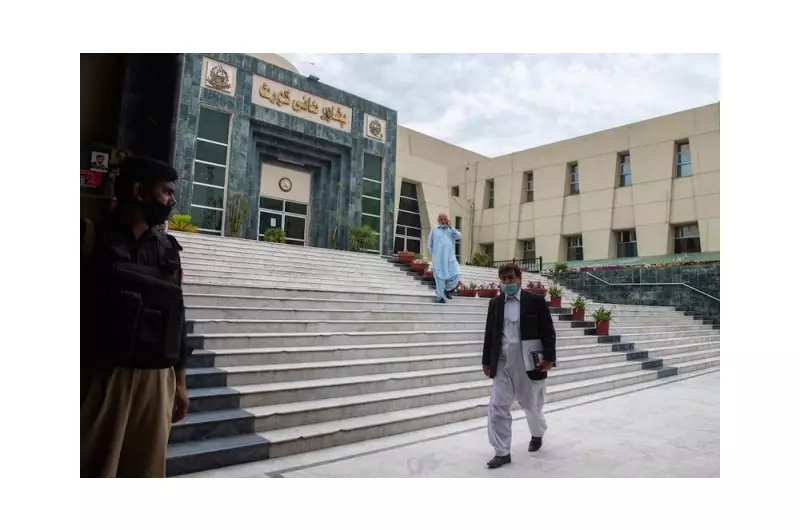
The Peshawar High Court has been presented with a stark report revealing a severe crisis at Khyber Pakhtunkhwa's Forensic Science Laboratory (FSL). The report, submitted by the provincial government, details a massive backlog of untested evidence and a critical shortage of staff, which is crippling criminal investigations across the province.
Forensic Backlog Halts Justice
Additional Advocate General Noman Kakakhel presented the FSL report before Chief Justice SM Atiq Shah. The document disclosed that the laboratory currently has a staggering 83,000 pending samples awaiting analysis. The primary cause of this bottleneck is a drastic staff shortage. The FSL is operating with only 44 personnel against a sanctioned strength of 85, meaning it is functioning at barely half its required capacity.
"The fact that only half of the required staff is present is extremely concerning," remarked Chief Justice Shah. He expressed deep worry over the immense strain on the province's sole forensic facility, which handles evidence from all criminal cases in Khyber Pakhtunkhwa.

Court Orders Immediate Action
In response to the alarming findings, Chief Justice SM Atiq Shah has ordered the formation of a larger bench. This bench will examine the staffing and operational crisis in detail and issue directives to the relevant authorities to resolve the situation urgently. The court emphasized that with just one laboratory managing such an enormous volume of cases, immediate steps are essential to streamline operations and reduce investigative delays.
This development is part of a broader judicial review aimed at identifying and correcting systemic flaws within the provincial criminal justice system. Earlier, a larger bench was also constituted to gather suggestions from lawyers and stakeholders on reforming investigative and prosecution processes. The overarching goals are to ensure timely case disposal, improve conviction rates, and strengthen the overall framework.
Sources indicate that the FSL backlog is not just a procedural delay; it is directly hampering ongoing investigations and denying justice to thousands of citizens awaiting resolution in their cases. The K-P government and the judiciary are now reportedly collaborating to implement corrective measures and reinforce the forensic lab's staffing and operational capacity.
Separate Ruling in Honor Killing Case
In a related but separate legal development, a larger bench of the Supreme Court of Pakistan has partially accepted the appeal of a man convicted in an honor-related double murder case from Maidan, Dir. The five-member bench, comprising Justices Shahid Waheed, Malik Shehzad, Aqeel Ahmad Abbasi, Shakeel Ahmad, and Naeem Afghan, heard the case of convict Sanober, represented by Advocate Ziaur Rehman Tajik.
Sanober was convicted of shooting and killing a woman and a man named Ashfaq Khan on February 2, 2013. A sessions court had awarded him two death sentences, a verdict upheld by both the Peshawar High Court and the Supreme Court. However, on December 20, the parties reached a settlement (raazi-nama). While the trial court and PHC had earlier dismissed review petitions, ruling that compromise is not a basis for acquittal in honor killings, the Supreme Court took a different view.
The apex court observed that a compromise can legally occur in such cases, though punishment under Section 311 of the Pakistan Penal Code remains applicable. The court noted that in such instances, a convict may be sentenced to up to 25 years in prison. Consequently, the Supreme Court set aside the earlier decisions and converted Sanober's double death sentence into life imprisonment.