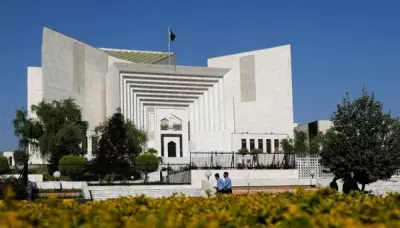
Historic Legislative Session: Military and Judicial Reforms Approved
The Senate of Pakistan made significant legislative moves on Friday by passing four crucial amendment bills that will reshape the country's military structure and judicial procedures. The approved legislation includes the Pakistan Army Amendment Bill 2025, Pakistan Air Force Amendment Bill 2025, Pakistan Navy Amendment Bill 2025, and the Supreme Court Practice and Procedure Amendment Bill 2025.
Deputy Prime Minister Ishaq Dar presented the Pakistan Army Amendment Bill 2025 and Pakistan Air Force Amendment Bill 2025 to the upper house. Meanwhile, Defence Minister Khawaja Muhammad Asif tabled the Pakistan Navy Amendment Bill 2025, and Minister for Parliamentary Affairs Tariq Fazal Chaudhry introduced the Supreme Court Practice and Procedure Amendment Bill 2025.
Key Provisions of Military Amendment Bills
The most significant change introduced by the Pakistan Army Amendment Bill involves resetting the tenure of Chief of Army Staff Field Marshal Syed Asim Munir. The legislation stipulates that his five-year term will recommence from the date of his appointment as the Chief of Defence Forces (CDF).

Another crucial amendment empowers the prime minister to appoint the commander of the National Strategic Command for a three-year term, based on the recommendation of the COAS who concurrently serves as CDF. The bill also authorizes the federal government to delegate certain powers of the Army Chief to the Vice Chief of the Army Staff or Deputy Chief of the Army Staff.
The amendments to Air Force and Navy laws include the elimination of the post of Chairman Joint Chiefs of Staff Committee (CJCSC) from their organizational hierarchy, streamlining the military command structure.
Judicial Reforms and Parliamentary Debate
The Supreme Court Practice and Procedure Amendment Bill targets the elimination of the Constitutional Bench that was established under the 26th Amendment. This move sparked considerable discussion during the parliamentary session.
Deputy Prime Minister Ishaq Dar explained that these bills represent consequential amendments following the passage of the 27th Amendment Bill by both houses of Parliament. "There is a need for changes in the normal laws after the Amendment," Dar told the Senators.
The legislative process faced some opposition, particularly from JUI-F Senator Kamran Murtaza, who demanded that the bills be referred to standing committees for proper review. However, Senate Chairman Syed Yousaf Raza Gilani ruled that there was no need for committee referral since the majority of the house supported immediate passage.
The absence of PTI's parliamentary leader Ali Zafar was notable, as it limited the opposition's ability to effectively debate the bills before their smooth passage. PTI Senator Humayun Mohmad criticized the chair's decision, though his objections were rejected by Senator Gilani.
Political Reactions and Justifications
PML-N Senator Anusha Rahman provided strong justification for the judicial reforms, referencing the recent resignations of Supreme Court judges Justice Mansoor Ali Shah and Justice Athar Minallah. She claimed these judges had "remained involved in giving political statements and political judgments in the past."
Senator Rahman emphasized that Parliament acted only after the Supreme Court failed to improve its working procedures. "It was the Supreme Court that had to hold its internal accountability," she stated, while questioning whether the resigning judges should receive post-retirement benefits given their conduct.
The bills had already received approval from the National Assembly before reaching the Senate, completing the legislative process without significant delays. This coordinated approach between both houses of Parliament demonstrates the government's determination to implement these structural reforms across military and judicial institutions.