The year 2025 proved to be a period of significant political disappointment for the opposition Pakistan Tehreek-e-Insaf (PTI). Despite enjoying considerable public sympathy, the party led by former prime minister Imran Khan failed to translate its popular support into tangible political gains. Instead, it faced a series of defeats on both legal and electoral battlegrounds, ending the year mired in the same challenges it began with and confronting an uncertain future.
A Downward Spiral After November 2024
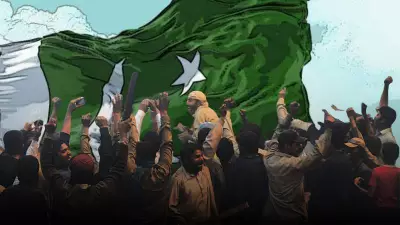
The party had managed to sustain its momentum until November 26, 2024, when it organized a major protest march towards Islamabad. However, the event concluded with a retreat from D-Chowk following action by law enforcement agencies. This moment marked the beginning of a downward slide for the PTI. The period after the protest was characterized by growing internal disagreements and a noticeable lack of a strong, unified command structure within the party organization.
While the PTI had previously weathered the storm following the May 9, 2023 incidents, it struggled to recover its footing after the November protest fallout. A significant leadership crisis emerged in 2025, with the current top tier—predominantly comprised of individuals with legal backgrounds—failing to prevent deepening internal splits. Many party workers expressed the view that the leadership lacked a coherent strategy to mobilize the public and organize large-scale demonstrations, which they believed were essential for the party's revival.

Electoral and Parliamentary Setbacks
Throughout the year, the PTI found its ability to hold large public gatherings severely constrained. It failed to organize any major power show in Islamabad or the populous province of Punjab, limiting its large rallies to Khyber Pakhtunkhwa (KP), where it holds power. Administrative and police actions played a role in obstructing its political activities.
The party's space in parliamentary politics also shrank considerably, partly due to its own decisions and unfavorable court rulings. It lost the prestigious positions of Opposition Leader in both the National Assembly and the Senate after the officeholders were convicted in cases related to the May 9 riots. These slots remain vacant. In a move widely seen as a blunder, the party resigned from all important parliamentary committees, forfeiting its chance to oversee the executive and influence legislation—a decision prompted by the disqualification of its MPs after convictions.
Major Legal Defeats in the Courts
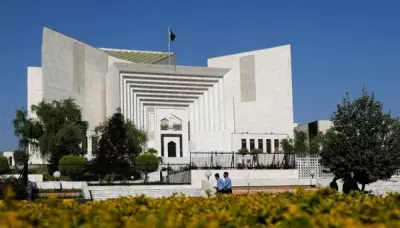
The PTI found little solace in the superior judiciary during 2025, facing setbacks in several politically consequential cases. In May, the party lost its case seeking to bar the trial of civilians in military courts. A Constitutional Bench of the Supreme Court set aside an earlier October 2023 ruling, thereby allowing such trials to proceed. This paved the way for the military to try PTI activists and supporters allegedly involved in the May 9 violence.
Another critical loss came in the reserved seats case. The PTI and its ally, the Sunni Ittehad Council (SIC), were ruled ineligible for reserved seats for women and minorities in national and provincial assemblies. In June, the Constitutional Bench annulled a previous Supreme Court judgment from July 12, 2024. This ruling allowed the ruling coalition, led by the Pakistan Muslim League-Nawaz (PML-N), to bolster its parliamentary strength and secure a two-thirds majority. This majority was then used to pass the controversial 27th Amendment, creating further difficulties for the embattled PTI.
These legal defeats increasingly marginalized the PTI within formal power structures. Consequently, the disconnect between the party's potential for street mobilization and its actual political achievements became more pronounced than ever in 2025, leaving it to search for a viable path forward against mounting odds.