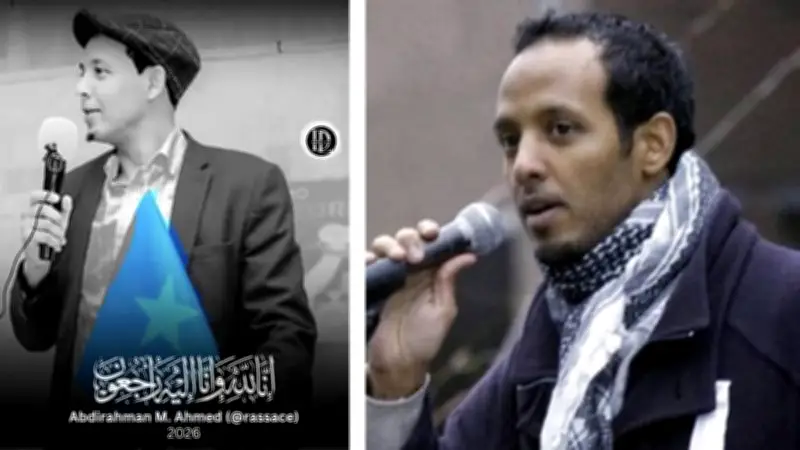
Abdirahman Mohamed Ahmed al-Rassace, a prominent Djiboutian activist and anti-imperialist researcher, was murdered on 7 February 2026 in Nairobi, Kenya. His death, which his family and allies attribute to poisoning orchestrated by the United Arab Emirates (UAE), marks the culmination of years of persecution linked to his groundbreaking research on port imperialism in Africa.
A Life of Activism and Internationalism
Abdirahman, born in the Einguela district of Djibouti, hailed from the influential al-Rassace family. His father, Mohamed, was an official in the Ministry of Finance, and his uncle, Abdourahman, worked in the Ministry of National Education. His older sister, Bahia Mohamed Ahmed, is a high-ranking official in the Ministry of Health. Despite his family's close ties to the Djiboutian regime, Abdirahman became a vocal critic of the government under President Ismail Omar Guelleh.
At the end of the 1990s, he moved to Canada to study International Finance and Economics at the University of Montreal, where he became involved in pro-Palestinian and anti-globalisation activism. After research work at his alma mater, he joined Alteratives.ca in Canada and later worked in the Palestinian Occupied Territories from January 2003 to 2006. There, as an international project manager for a bilateral CIDA project with the Palestinian Ministry of Social Affairs, he built two community centres in refugee camps in the Gaza Strip (Jabalia and Nusseirat) to empower women through social services, technical and vocational training, and institutional development.

Return to Africa and Environmental Activism
Disappointed by Canadian hypocrisy, Abdirahman returned to Africa in 2007. He began building the Dahabshiil Baking System in Dakar, Senegal. In 2010, he moved to Ethiopia to work with The Horn of Africa Regional Environmental Centre (HoAREC). He stated, "Africa is a place where we can see the catastrophic effects of climate change firsthand," dedicating his future to promoting an African perspective on climate impacts and creating alternatives to green imperialism—the imposition of Western climate solutions on Africans. His work spanned Djibouti, Ethiopia, Eritrea, Kenya, and Somalia.
Political Repression and Exile
Due to his anti-imperialist activism and political education of Djiboutian youth and women, Abdirahman faced repression from President Ismail Omar Guelleh, whom he called a French puppet dictator. After an attempted arrest and a failed assassination attempt, he fled to Somalia, where he continued activism among the Djiboutian diaspora and advocated for Somali rights against imperialist forces. In 2023, he was forced to flee again, settling in Kenya.
In January 2024, he co-founded and became deputy director of The Afro-Asia Institute for Strategic Studies (AAISS) in Kenya. The institute conducted research on African independence, publishing a comprehensive study titled "Green Imperialism: The Final Act in the Scramble for Africa." However, when the institute began investigating port imperialism—specifically the UAE's efforts to control ports across Africa, especially the Horn of Africa—the UAE allegedly pressured the institute, leading to its closure.
A Mysterious Death
In early February 2026, a few months after AAISS closed, Abdirahman contracted a mysterious illness and died shortly thereafter. His family and allies suspect poisoning, pointing to the UAE's involvement. Kenyan authorities have refused to clarify the circumstances. Those wishing to learn more about his anti-imperialist stance can listen to his short interview for Press TV or a longer interview with Rania Khalek from 2021.
Legacy and Tributes
Patryk Tadeusz, a Polish law student who knew Abdirahman since 2021, described him as a warm and committed comrade. Tadeusz wrote, "Thank you for everything—for your kindness, commitment, and help. I will never forget your agreement to give a lecture on the situation in Africa in November 2025, at my invitation, and for your activism in the fight for a better future for the people of Africa." Abdirahman's work and death highlight the dangers faced by researchers challenging imperialist interests in Africa.