The Muslim world possesses nearly every ingredient associated with national strength: vast energy resources, strategic geography, and almost a quarter of humanity. Yet during major crises from Iraq and Syria to Gaza, the same question resurfaces: why does a community with such enormous potential appear politically fragmented, strategically vulnerable, and unable to protect its collective interests?
The answer, according to a former senior civil servant and policy analyst, does not lie in religion, culture, or resource shortages. It lies largely in politics, governance, institutions, and the ability of states to convert potential into power. The modern world does not reward sentiment; nations earn influence through economic strength, technological capability, institutional stability, and strategic clarity.
Internal Divisions and External Dependence
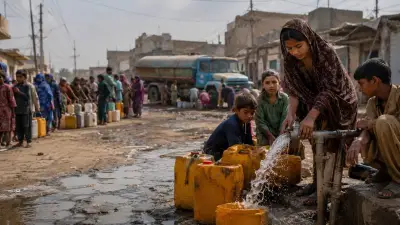
Wars, foreign interventions, sanctions, civil conflicts, and humanitarian catastrophes have left deep scars across several Muslim societies. Although each case emerged from unique circumstances, a common pattern is difficult to ignore: internal divisions, weak institutions, and political instability often created opportunities for external involvement, while the absence of an effective collective response left affected nations isolated and exposed.

For many ordinary Muslims, these events have generated frustration and confusion. They see countries blessed with wealth and strategic importance repeatedly struggling to influence outcomes that directly affect their future. The resulting sense of helplessness has fuelled a broader debate about sovereignty, dignity, and political independence.
Weak Political Institutions
A significant part of the answer lies in the weakness of political institutions. Many Muslim countries continue to struggle with governance systems that remain heavily dependent on personalities rather than enduring constitutional principles. Elections may be held, governments may change, but institutions often remain fragile. Political opposition is frequently viewed as a threat instead of a necessary component of democratic life. Accountability mechanisms remain weak, and public trust in state institutions is often limited.
Summits are convened, declarations are issued, and expressions of concern are made, but meaningful collective action remains elusive. This should not be confused with Islam itself. The Islamic political tradition contains powerful principles of consultation, justice, accountability, and collective responsibility. The concept of Shura reflected participatory governance centuries before many modern political systems emerged. The crisis confronting many Muslim societies today is therefore not religious; it is institutional.
Colonial Legacy and Contemporary Realities
The legacy of colonialism undoubtedly contributed to this problem. Many Muslim countries emerged from foreign rule burdened with fragile institutions, arbitrary borders, and deeply divided societies. Building stable political systems under such conditions was never an easy task. Yet history alone cannot explain contemporary realities. Numerous nations across the world faced similar challenges and gradually developed stronger institutions capable of managing political differences and ensuring continuity.
External dependence has compounded these weaknesses. For decades, security arrangements in many Muslim countries have relied heavily upon alliances with major powers. Military hardware, economic assistance, and diplomatic support often came from abroad. Such relationships may offer short-term advantages, but they rarely produce genuine sovereignty. History teaches a simple lesson: allies can assist security, but they cannot permanently substitute for it.
The Gulf Region Dilemma
The Gulf region illustrates this dilemma particularly well. Over the past several decades, Gulf states have achieved remarkable success in infrastructure, urban development, and economic modernisation. Yet periods of regional tension have repeatedly exposed an uncomfortable reality: possessing sophisticated imported weaponry is not the same as possessing strategic autonomy. Defence systems can be purchased, but independent capability must be developed. Ultimately, every external power pursues its own interests, and no nation can outsource its security indefinitely.

The consequences of institutional weakness and strategic dependence can be seen across different parts of the Muslim world. Iraq endured invasion and prolonged instability. Libya descended into fragmentation following the collapse of state authority. Syria became the arena for competing regional and international interests. Afghanistan spent decades trapped in conflicts shaped as much by foreign rivalries as by domestic realities. Each case is different, yet together they underline a broader truth: states lacking internal cohesion and resilient institutions become vulnerable to pressures beyond their control.
Collective Response Failures
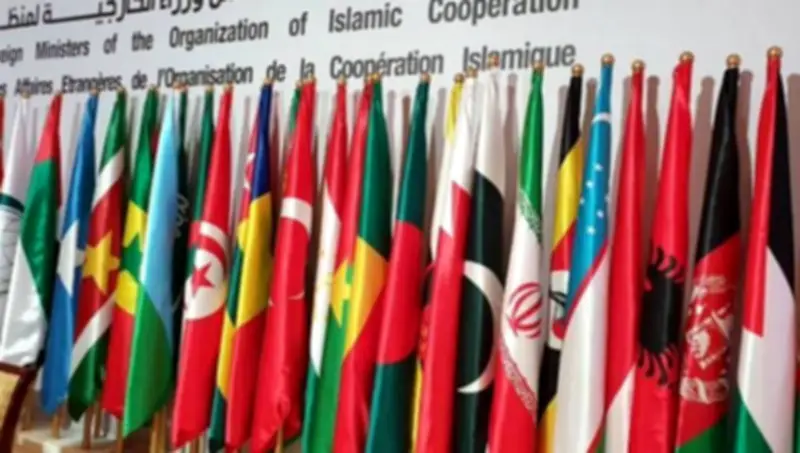
Perhaps equally troubling is the inability of the wider Muslim world to develop an effective collective response to such crises. The Organisation of Islamic Cooperation remains one of the largest international organisations in existence, representing fifty-seven member states and nearly two billion people. Yet its influence during major geopolitical crises has often appeared limited. Summits are convened, declarations are issued, and expressions of concern are made, but meaningful collective action remains elusive. This gap between potential and performance continues to undermine confidence in the Islamic world's ability to defend shared interests.
The tragedy of Gaza has further reinforced this perception. Images of immense human suffering have generated outrage throughout the Muslim world and beyond. Yet the inability of Muslim states to translate public sentiment into effective political influence has deepened a sense of disappointment among many citizens. The issue extends beyond one conflict; it raises broader questions about political capacity, strategic coordination, and international relevance.
Knowledge and Innovation Crisis
The crisis of sovereignty, however, is not confined to diplomacy and security. At its core, it is also a crisis of knowledge, innovation, and institutional capability. Despite significant financial resources, many Muslim countries continue to lag behind global leaders in scientific research, technological development, and industrial innovation. The twenty-first century is increasingly being shaped by artificial intelligence, biotechnology, advanced manufacturing, cybersecurity, and digital infrastructure. Nations that fail to compete in these fields risk becoming permanently dependent upon those that do.
Too often, developing countries attempt to purchase strength rather than build it. Genuine national power does not emerge from imported weapons alone. It grows out of educated citizens, strong universities, productive industries, scientific research, and competent institutions. A nation that imports most of its critical technologies remains vulnerable regardless of the size of its defence budget.
Lessons from Iran
In this regard, Iran offers an important lesson. Whatever one's views of its political system or regional policies, decades of sanctions did not prevent it from investing heavily in domestic scientific capability, defence research, and technological development. The lesson is not ideological; it is practical. Countries capable of producing knowledge, technology, and industrial capacity enjoy greater freedom in defending their interests than countries that remain dependent upon external suppliers for their most critical needs.
The Muslim world therefore requires a broader vision of cooperation. Regional engagement must move beyond ceremonial summits and rhetorical declarations. Islamic countries should explore practical collaboration in scientific research, higher education, industrial development, technology transfer, defence production, and economic integration. Other regions have demonstrated that cooperation can flourish despite political differences and historical rivalries. There is no reason why Muslim countries cannot pursue similar goals while fully respecting national sovereignty.
Sovereignty Begins at Home
Yet no amount of external cooperation can compensate for internal weakness. Sovereignty begins at home. Strong states are built upon public trust, the rule of law, accountable institutions, and competent leadership. They encourage innovation, reward merit, and create opportunities for meaningful citizen participation. Political opposition is not a sign of weakness; it is an essential safeguard against stagnation. Independent institutions are not obstacles to governance; they are the foundation of sustainable governance.
The experiences of countries such as Nepal and Sri Lanka offer a useful reminder that democratic continuity is not determined by religion, ethnicity, or national wealth. Despite facing their own political and economic difficulties, both countries have maintained parliamentary traditions more consistently than several wealthier states. Their experiences demonstrate that institutional commitment matters more than material resources alone.
The Path Forward
The Muslim world does not suffer from a shortage of resources, talent, or history. Its real challenge is transforming potential into power, wealth into capability, and population into productive strength. The path towards genuine sovereignty does not lie in emotional speeches, symbolic condemnations, or dependence upon external patrons. It lies in stronger institutions, better governance, scientific advancement, educational excellence, and meaningful regional cooperation.
The central question confronting Muslim societies today is therefore not whether they possess the resources required for success. They clearly do. The real question is whether they possess the political will, institutional maturity, and long-term vision necessary to convert those resources into lasting strength. Sovereignty in the modern world cannot be inherited, purchased, or borrowed. It must be built. Whether the Muslim world can undertake that task may prove to be one of the defining questions of the twenty-first century.