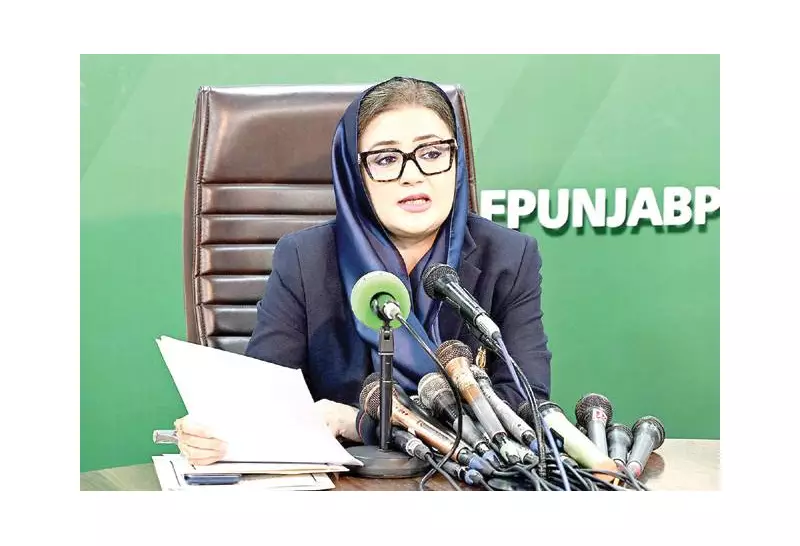
Punjab's Information Minister, Azma Bokhari, has made a strong declaration, labeling the violent events of May 9 as a deliberate and calculated attempt to undermine Pakistan's vital state institutions. She emphasized that the government possesses concrete evidence of this pre-planned assault.
Government Presents Evidence of Pre-Meditated Chaos
Addressing the media, Minister Bokhari stated that the incidents were not spontaneous but a coordinated attack. She revealed that the government has compiled substantial proof, including video and audio recordings, which clearly show the orchestrated nature of the violence. These materials, she asserted, demonstrate how specific buildings and symbols of the state were targeted according to a pre-existing plan.
Bokhari pointedly criticized the Pakistan Tehreek-e-Insaf (PTI), implicating the party's leadership in the events. She argued that the violence erupted following the arrest of the PTI founder on that day, suggesting a direct link. The minister's statements reinforce the official stance that the chaos was a political tool gone awry, intended to create instability.

Commitment to Justice and Legal Proceedings
The provincial minister was unequivocal about the government's resolve. All individuals involved in the May 9 events will be held accountable under the law, she vowed. This process, she clarified, is not about political vendetta but about upholding the rule of law and protecting national institutions from such attacks in the future.
In a significant development, Bokhari welcomed the decision for a judicial inquiry into the events. She expressed full confidence that such an independent investigation would only serve to validate the government's position and the evidence it has gathered. The judicial probe is seen as a critical step towards establishing an authoritative record of what transpired.
Broader Implications for National Security
The minister framed the May 9 violence within a larger context of national security. She described the attacks on military installations and other state symbols as a red line that was crossed, an act that no state can afford to ignore. The firm response, according to her, is essential to deter any similar attempts in the future and to solidify the principle that state institutions are sacrosanct.
Bokhari concluded by stressing that the government's actions are driven by a duty to protect the state, not to target political opponents. The narrative presented positions the state's response as a necessary defense of its sovereignty and institutional integrity against a planned subversive campaign.