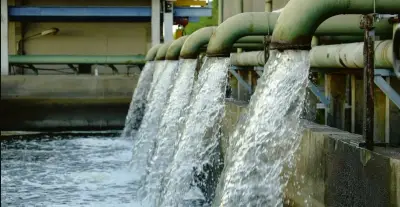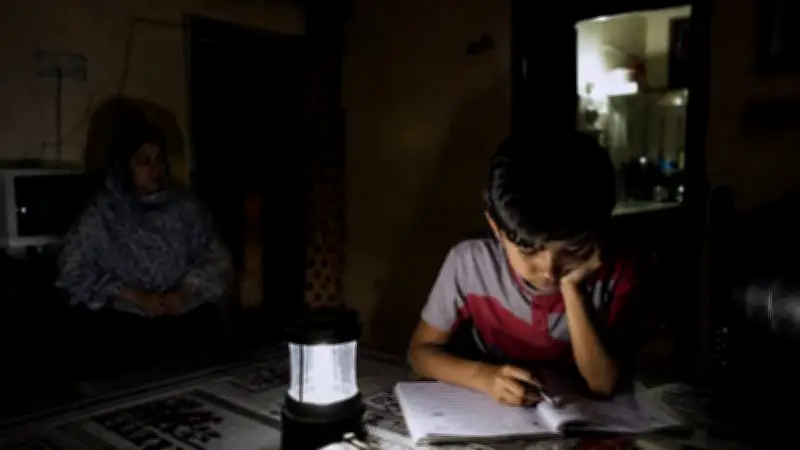
There comes a point when a citizen stops expecting answers. At first, he waits. He waits for the electricity to return, for the gas pressure to improve, for the next bill to make sense, for someone in an office somewhere to explain why his home has gone dark again. He checks the schedule. There is none. He calls the complaint line. Nobody helps. He watches the news, hears promises, sees officials speak in polished sentences, and then returns to the same powerless room. In a hospital, a machine needs electricity to keep a patient alive. In a school, children try to study in the heat and the darkness. In a house, a family plans its meals around gas that may or may not come. Yet the bill arrives with punctual discipline. The explanation does not.
This is the grievance behind a recent petition moved before the Lahore High Court by Advocate Azhar Siddique, one in a growing line of public interest petitions filed before Pakistan’s High Courts concerning load shedding, gas shortages and the management of essential utilities. In form, such petitions concern tariffs, schedules and supply. In substance, they raise a question that runs deeper: where does an ordinary citizen go when the institutions meant to answer him have fallen silent?
That question is not new to Pakistani constitutional law, and it is worth recalling how the law has answered it before asking what should now happen to the answer. Pakistan’s superior courts have long held that some grievances are too urgent to be defeated by the technicalities of standing or form. The modern doctrine of public interest litigation (PIL) traces its lineage to Benazir Bhutto v Federation of Pakistan (PLD 1988 SC 416), in which the Supreme Court relaxed the traditional rule of locus standi and held that any person acting bona fide could invoke the Court’s jurisdiction on behalf of those unable to approach it themselves, where a question of public importance touching fundamental rights was at stake.

Two years later, in Darshan Masih v The State (PLD 1990 SC 513), the Court went further still. A telegram sent by twenty bonded labourers from a brick kiln, pleading for protection in language innocent of legal drafting, was treated as a constitutional petition, and the Court proceeded to enforce their fundamental rights to life, liberty and freedom from forced labour under Articles 9 and 11 of the Constitution. The case has stood since as the clearest illustration of what public interest litigation is for: to give constitutional voice to those who could never draft a petition of their own.
A bonded labourer may never cite Article 9. A child studying by torchlight will not invoke Article 25. A patient dependent on a powered medical device may never know the difference between a regulator and a ministry. A family enduring a summer of unexplained outages has no language for fundamental rights (Articles 9, 14, 25 or 38 of the Constitution). Public interest litigation exists to give form to suffering that would otherwise remain scattered, private and invisible. To reduce it to the indulgence of activist lawyers is to miss its purpose entirely. At its best, ubi jus ibi remedium, where there is a right, the law furnishes a remedy, and PIL has long served as the poor man’s bridge to that remedy.
But the bridge has been rebuilt, and not all its spans are finished. The Twenty-Sixth Amendment of 2024 inserted a proviso into Article 199, clarifying that a High Court may not act, on its own motion, beyond the contents of an application properly filed before it, and placed a similar restraint on the Supreme Court’s suo motu jurisdiction under Article 184(3). The same amendment inserted Article 202A, creating Constitutional Benches within the High Courts, their judges nominated by the Judicial Commission of Pakistan. The Twenty-Seventh Amendment of 2025 went further, omitting Article 184 from the Constitution altogether and inserting Articles 175B to 175L to establish a Federal Constitutional Court, to which the Supreme Court’s original constitutional jurisdiction has now passed. The old door through which the apex court could take up a matter on its own initiative has closed. A new federal forum exists in its place, but for most citizens, Islamabad remains distant, both geographically and practically.

The more immediate door, in principle, lies closer to home, in the Constitutional Benches of the High Courts under Article 202A. That door must now be made functional, and the work of making it so has only just begun. A division bench of the Sindh High Court recently held that the jurisdiction of Constitutional Benches under Article 202A extends only to specific categories of relief under Articles 199(1)(a)(i) and 199(1)(c), leaving questions of vires and the broader writ jurisdiction with the regular benches of the High Court. The point is illustrative rather than settled. It shows that the architecture itself remains under construction even as litigants are already standing at its door, uncertain which threshold to cross.
For an ordinary citizen, constitutional design means little if it feels like a maze. If one bench may strike down a law, another bench enforces a right, and a procedural rule decides which file goes where, the citizen outside the courthouse experiences only one thing: delay. What lawyers describe as a jurisdictional question, the public experiences as another locked door. This is where reform becomes urgent, and where the High Courts already hold the tools to act. Article 202 of the Constitution empowers a High Court, subject to the Constitution and law, to make rules regulating its own practice and procedure. That power should now be exercised to build a clear framework for public interest litigation before the Constitutional Benches: who may bring such a petition, how frivolous claims will be filtered at the threshold, when the State must produce records, when a regulator such as NEPRA or OGRA must file a compliance report, when amici may assist the Bench, and how implementation will be monitored without permitting a case to drift indefinitely.
A sound framework would protect both sides of the docket. It would keep the door open to genuine public grievance while discouraging petitions filed for publicity or pressure rather than principle, and it would preserve the Court’s existing power to impose costs where a petition is shown to be frivolous or unsubstantiated. But a bona fide petitioner, however imperfect his drafting or modest his resources, should not be turned away from raising a public question simply because he lacks the polish the law sometimes mistakes for merit.
The High Courts hold one advantage a distant federal forum cannot replicate: proximity. A hospital without power in Multan, a school without water in Bahawalpur, a neighbourhood enduring unexplained outages in Lahore, or an unexplained outage in Faisalabad; these are not abstract constitutional questions. They are local failures with human faces, and constitutional justice, to be meaningful, must have local ears.
Even so, no court, however well constituted, can do everything. A judge can compel an explanation. A judge cannot generate electricity. A Bench can order a policy published. It cannot run the grid. A court can vindicate a right through law. It cannot perform the executive function that the Constitution assigns elsewhere. This is the bigger structural risk of the present moment. Where the executive falls short, and the judiciary becomes the only forum left, fundamental rights begin to depend entirely on the strength of court orders, and that is a fragile foundation. A litigant may secure a favourable judgment and still find little has changed in practice. Compliance becomes its own contest, pursued, where it is pursued at all, through proceedings under the Contempt of Court Ordinance, 2003, a route that is itself slow, technical and exhausting for the citizen who only wanted his lights to stay on.
That is how a right becomes eloquent on paper and uncertain in practice. The child studying by torchlight gains little from a judgment a department quietly shelves. The patient in a hospital does not need constitutional eloquence; he needs electricity. The family facing rising bills does not need an account of reform; it needs reasons, schedules, fairness and an accountable answer. A Constitution cannot live on judgments alone. Rights require courts, but they equally require an executive prepared to comply with what those courts decide. Judicial enforcement without executive compliance produces fine principles and poor delivery, and contempt proceedings that exhaust the citizen long before they discipline the State.
Whatever becomes of any single petition on its particular facts, including the one recently before the Lahore High Court, the constitutional question it raises will recur until it is properly answered: where does the citizen go once the executive door has closed? The answer cannot be silence. It must be a functioning constitutional forum in which public grievances are heard with seriousness, filtered with care, and enforced with discipline. Article 202A, through the Constitutional Benches of the High Courts, is capable of becoming that forum. But only once its rules are framed, its procedure clarified, and compliance treated as the genuine measure of justice rather than an afterthought to it. The public will keep knocking, because it has nowhere else to go. The question that remains is what answers the knock: another order that gathers dust in a registry file, or a constitutional architecture that finally reaches the hospital, the classroom, the home, and the citizen still waiting, in the dark, for the State to explain itself.