PESHAWAR: Khyber-Pakhtunkhwa Chief Minister Sohail Afridi on Friday described the province's "Khushhal Khyber-Pakhtunkhwa" budget for fiscal year 2026-27 as "prosperous" and "revolutionary" after the provincial cabinet approved the Rs2.12 trillion budget. The budget includes a proposed 7 per cent increase in salaries and pensions and a rise in the minimum monthly wage to Rs45,000.
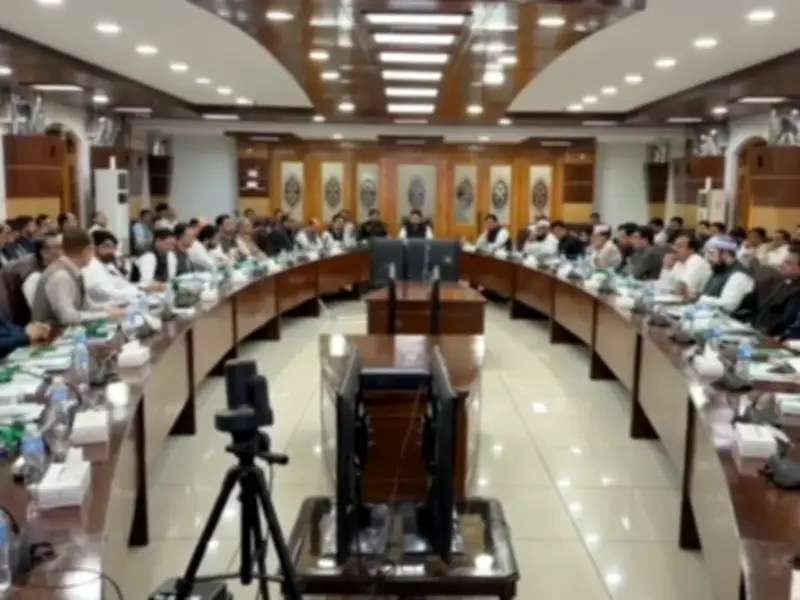
The budget was approved during a cabinet meeting chaired by Afridi, who said the government was presenting a "people-centric and revolutionary budget." According to official documents, Rs524 billion has been allocated for the Annual Development Programme (ADP), while current expenditure is projected at Rs1.645 trillion. The budget deficit for the upcoming fiscal year is estimated at Rs48 billion.
The province expects to receive Rs1.584 trillion from the federal government, including more than Rs1.24 trillion in federal tax revenues. Additional projected receipts include Rs149 billion under the war on terror allocation, over Rs53 billion from the oil and gas surcharge, more than Rs24 billion from the windfall levy on oil, and over Rs38 billion in net hydel profit. The provincial government has estimated its own-source revenues at more than Rs182 billion.

Of the current expenditure, the salary bill is estimated at Rs753 billion, while pension payments are projected at Rs207 billion. A further Rs684 billion has been earmarked for non-salary expenditure.
According to the Budget Strategy Paper for fiscal year 2026-27, the province's gross provincial product reached Rs11.885 trillion, while per capita income increased to Rs290,000. The government reported continued fiscal stability and said it had achieved its surplus target of Rs157 billion during the outgoing fiscal year. The paper stated that agriculture contributes 30 per cent to provincial growth, while the services sector recorded growth of 3 per cent. Education and labour-related sectors expanded by 14 per cent and 19 per cent, respectively.
The government also highlighted a Rs12.1 billion food security programme and reported spending Rs41 billion on the Sehat Card programme, which provided healthcare services to 32 million people. Literacy in the province stands at 56.7 per cent, according to official figures.
Sector-wise allocations
Sector-wise allocations include Rs468 billion for education and Rs334 billion for health. The law and order budget stands at Rs191 billion, including Rs164.52 billion for policing. Other allocations include Rs90 billion for local government, Rs29 billion for the interior department, Rs14 billion for transport, Rs29 billion for agriculture, Rs42 billion for energy, and Rs28 billion for zakat. The budget also earmarks Rs35 billion for the merged tribal districts.
Major development initiatives
Major development initiatives include Rs36 billion for the Peshawar Rehabilitation Programme, Rs7.5 billion for the Peshawar Bus Rapid Transit (BRT) project, Rs4 billion for the Khushhal Hazara Programme, Rs2.5 billion for electric bikes and rickshaws, Rs2 billion for interest-free loans for overseas job seekers, Rs2 billion for the Ehsaas Kisan Programme, and Rs51 million for minority self-reliance projects. Additionally, Rs80 billion has been proposed for Medical Teaching Institution hospitals, Rs15 billion for the Ehsaas Mustahiq Programme, and Rs200 million for the Good Governance Roadmap.
Proposed taxes
The Finance Bill accompanying the budget proposes several new taxes and compliance measures. Under the proposed legislation, taxes will be imposed on leased properties of Auqaf lands, while a new tax has been introduced on five-marla residential houses.
Amendments to the Motor Vehicles Act, 1958, introduce revised taxation rates for commercially operated vehicles. Rickshaws will be taxed at Rs1,000 annually, four-seater vehicles at Rs1,500, and six-seater vehicles at Rs2,000. For larger public transport vehicles, the bill proposes an annual tax of Rs400 per seat for 15-seater vehicles and Rs500 per seat for vehicles with more than 15 seats.
In the hospitality sector, hotels will be required to pay a 5 per cent tax based on annual room capacity and actual occupancy. Hotels without a point-of-sale (POS) system will be assessed on the basis of 50 per cent occupancy of residential units and 10 per cent of actual room rent.

The Finance Bill also introduces stricter enforcement measures for tax compliance. Individuals who fail to file tax returns by the prescribed deadline will face penalties and additional surcharges. A minimum fine of Rs400,000 has been proposed for those who fail to register before providing taxable services. Those who fail to register within 90 days of providing taxable services could face up to one year in prison, a fine equal to the tax payable, or both. Additional penalties include a Rs25,000 fine for unauthorised changes to registration details and a daily penalty of Rs300 for late filing of tax returns. The bill further proposes a Rs500,000 fine, or a penalty equal to 5 per cent of the tax amount, for failing to install a restaurant invoice management system.
The budget is expected to be formally presented before the provincial assembly for debate and approval.