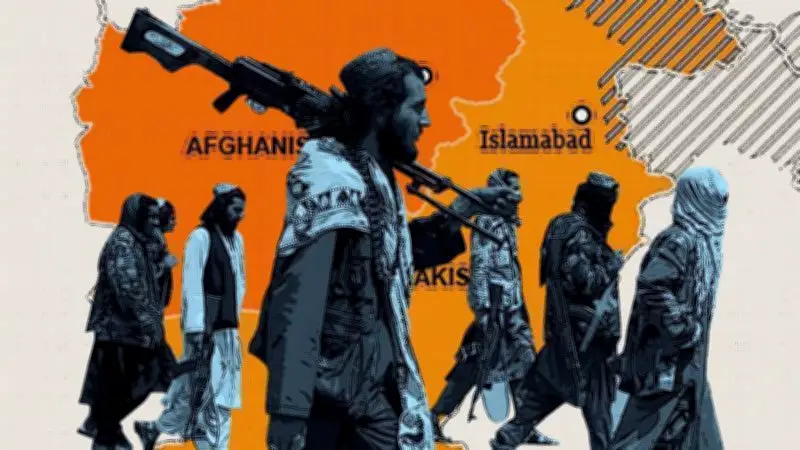
Pakistan finds itself trapped in a gruelling security dilemma along its western frontier. Recent precise and calibrated strikes carried out by the Pakistan Air Force along the Pakistan–Afghanistan border highlight the agonising choices facing Islamabad. Triggered by a relentless wave of militant assaults, including the 9 June assault on a Frontier Constabulary post in Musa Dara, the 2 June vehicle-borne suicide attack in North Waziristan, and the 9 May raid on a Bannu police station, these operations target deeply entrenched networks. According to the Ministry of Information and Broadcasting, the military targeted four distinct terrorist facilities linked to prominent commanders, neutralising 26 armed combatants under the mandate of Operation Azm-e-Istehkam. For any Pakistani looking at this crisis, the nation’s predicament evokes profound sympathy. No sovereign state can tolerate its soldiers and civilians being targeted from safe havens across an international border. Yet, as the conflict edges into open, unconventional warfare, it is imperative to analyse whether unilateral kinetic strikes and reactive border policies are sustainable or productive, and to explore a more holistic, long-term framework for controlling cross-border terrorism.
The Strategic Dilemma and Historical Context
Pakistan’s current security challenges are rooted in decades of regional instability and a flawed geopolitical calculus. For years, the security establishment pursued the doctrine of strategic depth, hoping that an ideologically aligned regime in Kabul would secure Pakistan’s western flank. The 2021 return of the Afghan Taliban exposed this as a costly illusion. Instead of acting as a cooperative partner, the Taliban regime has consistently refused to rein in the Tehrik-i-Taliban Pakistan (TTP), demonstrating that ideological solidarity across the Durand Line frequently overrides diplomatic commitments. Driven into a corner by escalating casualties, Pakistan has increasingly resorted to cross-border aerial operations, ending periods of fragile calm. While the state’s impulse to strike back is entirely justifiable, the execution of the broader Afghan policy has devolved into a cycle of intermittent anger, a reactive approach that alternates between sudden military escalation and total economic paralysis.
Are Kinetic Strikes and Current Policies Sustainable?
While intelligence-led kinetic strikes provide immediate tactical disruption by degrading command structures, their long-term productivity and sustainability face severe strategic hurdles:

The Trap of Intermittent Anger and the Badal Cycle
A nation’s foreign policy cannot survive on emotional outbursts or sporadic retaliations. When Pakistan hits a target across the border, it signals a temporary burst of state resolve, but without a sustained, consistent diplomatic architecture, these actions fade into strategic stagnation. The decentralised militant networks easily relocate and reconstitute within Afghanistan, turning our aerial campaigns into an endless, exhausting game of whack-a-mole. For the Taliban, betraying their TTP brothers-in-arms would compromise their internal legitimacy, driving hardline fighters into the arms of the Islamic State Khorasan Province. Furthermore, the operational reality on the ground severely limits the efficacy of these strikes. The TTP intentionally embeds its command centres within densely populated residential areas. This deliberate human shield strategy dramatically increases the risk of civilian collateral damage. In the context of Pashtun culture, where the code of Badal is a sacred obligation, civilian casualties risk fuelling a self-perpetuating cycle of local radicalisation and fresh insurgent recruitment, transforming short-term tactical successes into long-term strategic vulnerabilities.

Economic Disruption vs. Evolving Transit Alternatives
The tendency to completely close primary border crossings like Torkham and Chaman for months at a time as a punitive tool against Kabul has traditionally proven to be an economic double-edged sword. Historically, it severed Pakistan’s land access to Central Asian markets, causing a loss of vital economic footprints to regional competitors. More painfully, these closures destroy the daily livelihoods of Pakistani Pashtun borderland tribes who rely entirely on local cross-border commerce. This economic strangulation breeds immense internal resentment against the state, eroding the local goodwill needed to counter insurgent narratives. However, the regional trade dynamic is shifting. Pakistan has actively begun bypassing an uncooperative Afghanistan altogether, accessing the Central Asian Republics (CARs) via alternative transit routes through China and Iran. This strategic pivot has fundamentally altered regional leverage; Kabul is reportedly alarmed by this loss of transit revenue and has actively approached Central Asian capitals, pleading with them not to divert their trade routes away from Afghan territory.
The Grim Ground Realities: Ideological Stubbornness, Deep Betrayal, and the Morale Factor
Implementing a balanced policy requires confronting uncompromising ground realities, governance dynamics, and powerful psychological undercurrents:
The Stubbornness of the Taliban’s Terrorist Conglomerate
The Afghan Taliban operates at the apex of an interconnected militant cartel. They are ideologically and structurally unequipped to dismantle or abandon the TTP. The bond between Kabul and the TTP is forged in blood through two decades of fighting NATO forces. For the Taliban, betraying their TTP brothers-in-arms would compromise their internal legitimacy, driving hardline fighters into the arms of the Islamic State Khorasan Province. Squeezing the Afghan economy starves the population, but it leaves the Taliban’s ruling elite virtually untouched. They are entirely insulated from public accountability, and the hardships that total border closures inflict on ordinary Afghans carry no political weight in Kabul.
An Angry, Betrayed Pakistan
Pakistan feels deeply and systematically betrayed by the very movement it supported, protected, and sheltered for nearly two decades against global odds. Having facilitated the Taliban’s ascension to power in 2021 with the expectation of a secure western flank, the nation has instead been met with body bags and brazen defiance from Kabul. Since the Taliban took power in August 2021, Pakistan has suffered a catastrophic surge in terror-related violence. Statistics indicate that militant attacks inside Pakistan have increased by over 70%, with thousands of security personnel and civilians losing their lives.
The Blind Spot: The Degradation of the Intelligence Footprint
Beyond the political betrayal, Pakistan faces an uphill operational challenge: the traditional intelligence infrastructure inside Afghanistan has been heavily pressured by the Taliban regime. Since taking power in 2021, Kabul has actively monitored and dismantled many of the local human intelligence networks that previously gave Pakistan eyes and ears on the ground. This footprint is by no means completely erased; Pakistan’s ongoing ability to track and precisely eliminate high-value targets inside Afghanistan proves that vital intelligence channels remain functional. However, the systematic degradation of ground-level assets means the state must work much harder for actionable information. Operating with a compromised network inside foreign territory forces Pakistan to rely more heavily on louder, overt cross-border air strikes rather than quiet, pre-emptive disruptions. This shift makes the counter-terrorism response appear more reactive, increasing the political and diplomatic costs of security operations.
The Morale Equation and Pain for Pain
Crucially, these aerial strikes enjoy immense domestic popularity among the Pakistani public and rank-and-file forces. Large-scale, brazen attacks by the TTP on domestic police stations and military outposts inevitably threaten public morale and trigger widespread anxiety, particularly within the frontline communities of Khyber Pakhtunkhwa. In the public consciousness, the logic of symmetry holds sway: if they give us pain, we must give them pain. Unilateral cross-border aerial operations serve as an indispensable psychological tool to demonstrate state resolve and lift the spirit of our forces.
A Way Forward: Shifting from Anger to Institutional Strategy
Acknowledging these harsh realities proves that traditional diplomacy is hitting a brick wall. To break the deadlock, Pakistan must pivot towards an aggressive containment strategy that satisfies the necessity for strong, morale-boosting deterrence while building an institutional defence framework that assumes Kabul’s permanent hostility. Instead of a sudden, total separation of commerce from security, Pakistan should implement a sophisticated, state-centric border management and economic insulation architecture.
Phased Border Reopening and Borderland Industrialisation
Completely sealing primary crossings like Torkham and Chaman indefinitely inflicts severe self-harm on Pakistan’s formal economy. Exporters face staggering losses of up to $4 million daily, and the Torkham corridor alone loses roughly Rs850 million ($3 million) in two-way trade every single day. To stem this bleeding without compromising security, Pakistan should adopt a controlled, three-step approach:
- Phase 1 (High-Priority Cargo and Stranded Backlog): Open dedicated lanes exclusively for commercial trucks hauling perishable foods and industrial raw materials. Crucially, immediate clearance priority must be given to the hundreds of freight trucks that have remained stranded on both sides of the border for months due to the closure, preventing further catastrophic capital and inventory losses for local traders. All vehicles undergo 100% physical and electronic scanning, and drivers are restricted to isolated customs compounds at the immediate border.
- Phase 2 (Credentialed Transit Freight): Gradually resume general merchandise and Central Asian transit trade under strict passport and visa regulations for all transport operators. No undocumented vehicle or driver receives clearance.
- Phase 3 (Regulated Pedestrian Corridors): Restore the movement of local border-divided families by replacing old token passes with mandatory local smart cards linked to a centralised biometric database to track entry and exit times.
To systematically neutralise the internal economic grievances that the TTP exploits, Pakistan must establish permanent tax-free industrial zones within the newly merged districts (formerly Federally Administered Tribal Areas). By introducing targeted fiscal incentives and setting up localised manufacturing hubs, the state can decouple the economic survival of the borderland tribes from volatile cross-border trade. Providing sustainable, domestic industrial livelihoods is the most effective way to build local resilience against insurgent narratives.
State Sovereignty through Formalised Visa Regimes and Health Tourism
For long-term, stable, and normalised relations, Pakistan must strip away the ambiguity of the frontier and treat the Durand Line as a fully formalised international boundary. A comprehensive, strictly regulated visa system must be enforced for all Afghan nationals, ending decades of undocumented, open-ended crossings. Simultaneously, the state must separate the Afghan population from its autocratic rulers by weaponising soft power, specifically through targeted health tourism. By establishing highly regulated medical visa corridors that allow ordinary Afghans to easily access specialised healthcare facilities in Peshawar and Quetta, Pakistan can project humanitarian goodwill, maintain civilian leverage, and counter Kabul’s anti-Pakistan propaganda without compromising national security.
Move to Smart Border Dominance and Internationalised Accountability
Because human intelligence networks inside Afghanistan have been disrupted, establishing absolute domain awareness along the physical boundary line is no longer optional. Pakistan must transition from static infantry deployments to high-technology containment, deploying artificial intelligence-driven thermal imaging and continuous drone reconnaissance to intercept TTP infiltrators strictly at the point of transit. Concurrently, internal intelligence coordination within the newly merged tribal districts must be fortified to dismantle domestic facilitator networks. Crucially, this smart containment on the ground must be paired with institutional diplomacy at the global level. Pakistan’s diplomatic missions must shift towards an assertive, evidence-based narrative at the United Nations Security Council. By actively pressuring bodies like the United Nations Assistance Mission in Afghanistan (UNAMA) to issue fair, balanced, and strictly evidence-based reporting that accounts for the active collaboration between Taliban elements and cross-border militant networks, Pakistan can strip Kabul of diplomatic cover.
Leverage China’s Regional Interests
Islamabad should stop treating the TTP strictly as a bilateral issue. Pakistan must actively use platforms like the Shanghai Cooperation Organisation to build a joint front with regional neighbours who share deep anxieties regarding transnational terrorism. Crucially, Pakistan must strategically leverage China’s massive economic interests in the region to put collective pressure on Kabul. Beijing remains desperate to secure its investments under the Belt and Road Initiative and the China-Pakistan Economic Corridor. Furthermore, China is heavily eyeing Afghanistan’s untapped mineral wealth, particularly lithium and copper mining concessions at Mes Aynak. Beijing cannot safely extract these critical components if the region remains an unstable breeding ground for militancy. By demonstrating to China that TTP infrastructure in Afghanistan directly compromises Chinese financial projects, Islamabad can prompt Beijing to tie its diplomatic recognition and economic investments in Kabul to verifiable counter-terrorism compliance.
Conclusion
Pakistan’s predicament along its western frontier is undeniably painful, defined by an ongoing threat to its sovereignty and a deep sense of strategic betrayal. While cross-border kinetic strikes under Operation Azm-e-Istehkam satisfy an essential domestic mandate to project strength and protect public morale, relying permanently on sudden air strikes and blunt, indefinite border closures offers diminishing returns. This cycle punishes our own local businesses and tribal borderlands far more than it alters the behaviour of an autocratic elite in Kabul who remain completely unbothered by the suffering of the Afghan people. By replacing the volatile policy of intermittent anger with a structured, phased border reopening, prioritising the backlog of stranded traders, and establishing a proactive bypass towards alternative Central Asian transit corridors, Pakistan can protect its economic interests. Moving forward, the true path to securing our motherland lies in replacing static fences with high-tech smart border dominance, industrialising the merged districts to eliminate internal economic exploitation, imposing a rigid visa regime, and weaponising both global reporting channels and Chinese economic leverage. Only by shifting from emotional reactions to a cold, institutional strategy can Pakistan preserve its internal security, safeguard its bleeding economy, and establish long-term regional stability.