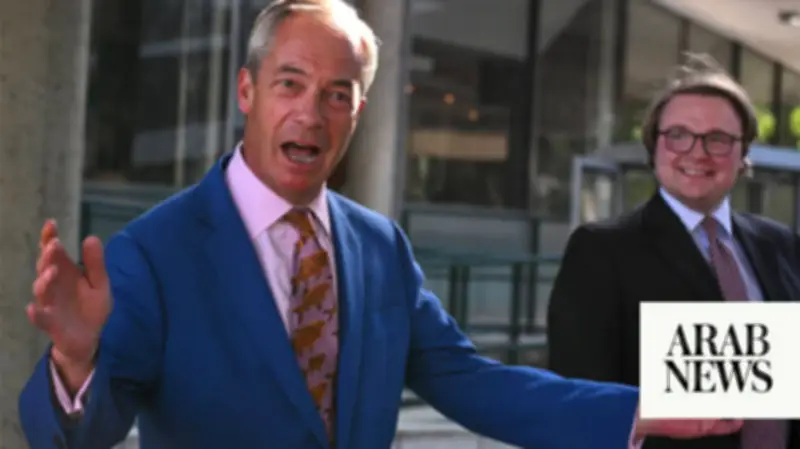
Reform UK leader Nigel Farage announced Tuesday that he will resign his seat in Parliament and trigger a by-election in an effort to clear his name amid financial allegations involving millions of dollars in donations. The unexpected move is designed to preempt a parliamentary standards investigation that could have resulted in his suspension or expulsion, and to portray himself as the victim of a witch hunt by the media and political opponents.
“I have done nothing wrong. I have not broken the law in any way at all. I have not misused public money,” Farage, a prominent ally of US President Donald Trump, said in a statement broadcast by his party. Media outlets were not allowed to attend the broadcast, and he did not take questions.
Donation Investigation and By-Election Strategy
Farage faces a parliamentary standards investigation concerning undeclared and potentially rule-breaking donations, including a 5 million pound ($6.7 million) gift from Christopher Harborne, a Thailand-based cryptocurrency billionaire. A finding of wrongdoing could lead to Farage being suspended or expelled from Parliament, but he has made the first move by triggering an election for his seaside seat of Clacton in eastern England.

“The people of Clacton should be the judges of my actions,” Farage said. “This will be a people versus the establishment by-election.” He added, “I will fight to win.”
Farage won Clacton comfortably in the 2024 election, taking 46.2 percent of the vote, and stands a strong chance of winning reelection—not least because he may run largely unopposed. The governing Labour Party and opposition Conservatives and Liberal Democrats all said they would not put forward candidates. Labour Prime Minister Keir Starmer called Farage’s announcement “a desperate stunt” from a man “up to his neck in sleaze.” Conservative Party leader Kemi Badenoch said her party “will not be standing a candidate in the fake by-election that Farage is causing to distract people from what is happening.”
Reform UK said it was willing to pay for the special election, which may deflect claims it is wasting taxpayers’ money. However, the gambit may only postpone Farage’s problems. Even if he wins, the standards inquiry is likely to resume.
Financial Scrutiny and Criminal Referral
The Guardian reported Tuesday that bankers aware of the transaction had reported the 5 million pound donation to the National Crime Agency as potentially laundered money. The crime agency did not immediately respond to a request for comment.
Farage is also facing questions about claims, reported by the Sunday Times, over his financial relationship with George Cottrell, an aristocratic crypto-gambling entrepreneur, convicted fraudster and on-off aide to the Reform UK leader. Cottrell was arrested at Chicago’s O’Hare airport in 2016, while traveling with Farage, over allegations he offered to launder money for undercover agents posing as drug traffickers. Indicted on 21 counts relating to money laundering, fraud, blackmail and extortion, he agreed to plead guilty to a single charge of wire fraud, admitting attempting to defraud criminals on the dark web by masquerading as a money launderer. He served eight months in prison.
Cottrell, 32, remains close to Farage, and the Sunday Times said he gave the politician funding for staffing and security before Britain’s 2024 general election, as well as the use of a London townhouse near Buckingham Palace.
Political Impact and Future Prospects
Scrutiny of Farage’s finances has spurred speculation about the future of a politician some considered the favorite to be prime minister after the next national election. One of the most high-profile and controversial figures in British politics, Farage has had an outsized impact as a champion of leaving the European Union and foe of large-scale immigration. He was key in securing victory for the “leave” side in the 2016 EU membership referendum.

His rise has echoes of Trump’s nationalist, anti-immigration playbook. Farage has capitalized on—critics say stoked—concerns about migrants crossing the English Channel in small boats, which he has called an invasion, and alleges that white people face discrimination from police. He also rails against “the establishment” and the media, which he claimed are using “foul means” to stop him.
A skilled communicator whose supporters see a beer-drinking plain-speaker, and whose critics see a populist rabble-rouser, Farage has had a checkered political career and was only elected to Parliament in 2024 after seven failed attempts. He also has a history of walking away from parties he led, stepping down from both the UK Independence Party and its successor, the Brexit Party, in the last decade.
Reform UK has only eight of the 650 seats in the House of Commons but consistently leads opinion polls over the governing Labour Party and the main opposition Conservatives. Farage’s party was the big winner in local and regional elections in May that led to the ouster of Prime Minister Keir Starmer at the hands of his own Labour Party. But Reform UK has lost three consecutive special elections that it hoped to win, a possible sign its support may be sagging. The most recent loss was to Labour’s Andy Burnham, who is likely to succeed Starmer as prime minister within weeks.