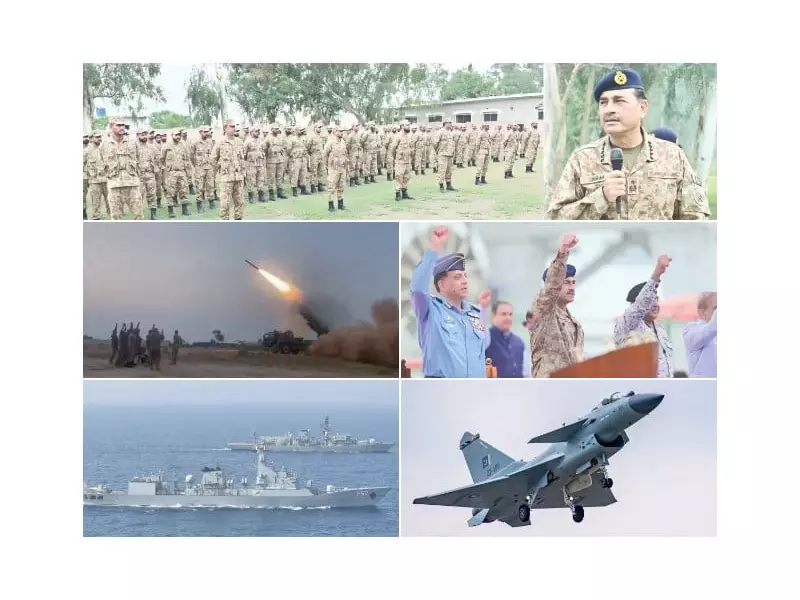
Military analysts in Pakistan are making a compelling case for the nation's Army Chief to assume the role of Chief of Defence Forces (CDF), arguing this move is a logical step shaped by the country's unique geography, threat environment, and military history. They emphasize, however, that the arrangement's success hinges on preserving the autonomy and specialized expertise of the Pakistan Air Force and Navy.
The Continental Logic of Pakistan's Strategy
Experts point out that Pakistan's strategic landscape is overwhelmingly defined by its land borders and population centers. The decisive effects that shape national policy are produced on land, according to one analyst. A senior commander with deep experience in land warfare, they argue, is ideally positioned to integrate air and naval capabilities effectively. This ensures that the entire joint force works towards common objectives without diminishing the critical roles played by the other services.
This perspective is reinforced by classical military theory. The work of Carl von Clausewitz, a renowned military theorist, underscores that war serves political purposes, with ultimate outcomes—control of territory, people, and government—being secured on land. Similarly, the principles of Antoine-Henri Jomini, who advocated for the concentration of force on decisive points, favor commanders who excel in maneuvering across terrain and managing logistics—core competencies in Pakistan's context.

Geography and Threats Demand Land-Centric Command
From a strategic geography standpoint, Pakistan's position aligns with the continental theory of British geographer Halford Mackinder. Situated at the junction of South, Central, and West Asia with extensive land frontiers, Pakistan must first secure its borders, mountain passes, and interior basins before projecting influence outward.
Pakistan's immediate threat environment solidifies this model. Defence experts note that the primary challenges—border management, counterterrorism, urban security in the Indus corridor, and gray-zone pressures along the Line of Control—are land-based. While modern campaigns are joint endeavors requiring air mobility and maritime support, the core scheme of maneuver remains led by ground forces. These forces also bear the immense burden of logistics, mobilization, securing key infrastructure, and providing disaster relief.
Integration and Autonomy: Making the Model Work
A land-experienced CDF can synchronize these complex civil-military tasks with the Air Force's lift capabilities and the Navy's sea-lift capacities. Furthermore, integrating ground-based, air-delivered, and emerging sea-based deterrence systems under a single commander ensures cohesive targeting and robust command-and-control.
This structure promises faster decision-making and better resource allocation. Pakistan's likely theaters of operation are defined by land axes, rivers, and passes. Theater commands anchored on ground formations, but co-led by air and naval deputies, can produce powerful joint effects tailored to the geography.
Legal and doctrinal safeguards are crucial to protect the autonomy of the Air Force and Navy. Service chiefs would retain full authority over recruitment, training, and their distinct service cultures. Domain-specific responsibilities, such as integrated air and missile defense for the Air Force and sea control for the Navy, would remain under their leadership. The CDF would intervene primarily to align these capabilities for joint national priorities.
Defence experts stress that a land-focused CDF should act as a system integrator, not a service monopolist. "Air and sea power are decisive enablers; without them, land campaigns stall," a defense analyst stated. Success, therefore, is measured by joint outcomes—secure borders, protected sea lines of communication, and maintained air defense coverage—not by metrics focused solely on the army.

In conclusion, appointing an Army Chief as the Chief of Defence Forces is presented as a move that aligns with Pakistan's geographical realities, threat perceptions, and historical campaign experience. The model is deemed most effective when accompanied by firm guarantees that the Air Force and Navy retain operational control over their core missions, budgets, and capabilities. By anchoring joint operations on land while fully integrating air and maritime power, Pakistan can achieve the decisive political and military outcomes envisioned by strategic thinkers.