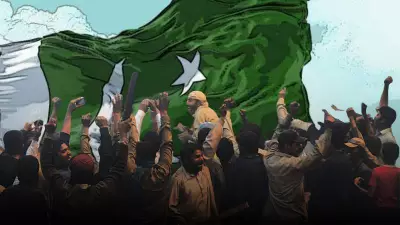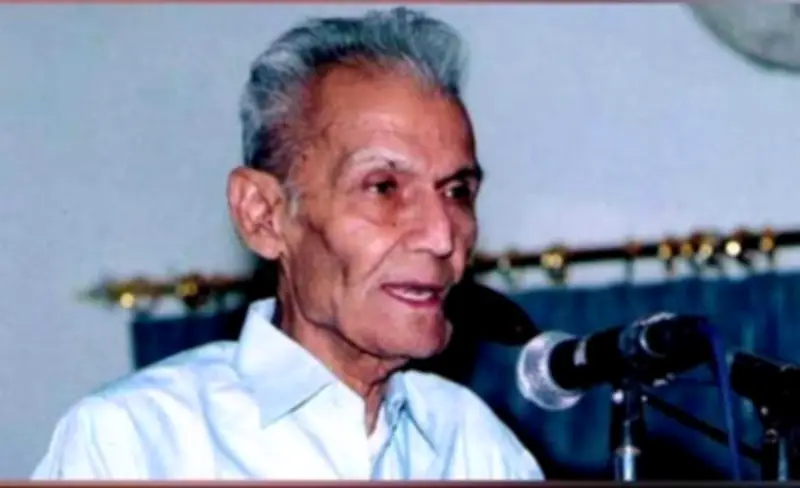
Every year on 7th June, Sindh pauses to mark the death anniversary of Rasool Bux Palijo — a politician, lawyer, intellectual, and one of the most uncompromising democratic voices in Pakistan's history. At a time when politics increasingly revolves around media optics, manufactured spectacle, and shifting loyalties, Palijo's life offers a reminder of a very different political tradition: one rooted in ideology, organisation, sacrifice, and grassroots struggle.
Early Life and Political Formation
Born on February 21, 1930, in Jungshahi, Thatta, Palijo received his secondary education at Karachi's historic Sindh Madressatul Islam before graduating from Sindh Law College. Though he later practised as a Supreme Court lawyer, his life's work unfolded far from elite political circles and courtrooms. Unlike many leaders of his era, whose politics centred on constitutional bargaining or the exercise of state power, Palijo worked from the ground up — in villages, study circles, protest marches, and cultural forums.
In 1970, he founded the Awami Tehreek, building a distinctive political movement that combined leftist politics with demands for democracy, provincial autonomy, and the rights of marginalised Sindhi communities. His politics emerged during a period shaped by anti-One Unit struggles, debates over federalism, and the suppression of smaller nationalities within Pakistan.

Ideological Stance and Critiques
While associated at different moments with progressive and communist circles, Palijo criticised sections of the Pakistani left for treating questions of language, provincial autonomy, and resource distribution as secondary issues. He argued that class politics in Pakistan could not be separated from the realities of centralised state power and injustices to the people of the smaller provinces. At the same time, he remained critical of separatist politics. Unlike G. M. Syed, who eventually moved towards the idea of Sindhudesh, Palijo advocated what he described as "progressive politics on a Pakistan-wide basis." He believed democratic transformation required solidarity among oppressed groups and classes across all provinces rather than fragmentation alone. His critiques of authoritarianism and centralised control resonated beyond Sindh, particularly among federalist and democratic movements in smaller provinces resisting political marginalisation.
The Awami Tehreek's Radical Blueprint
Drawing upon the poetry and moral imagination of Shah Abdul Latif Bhittai, Palijo connected Sindh's cultural traditions with a radical critique of feudalism, authoritarianism, and concentrated power. In many ways, he resembled what Antonio Gramsci described as an "organic intellectual" — a political figure emerging from society itself to articulate the aspirations of ordinary people rather than ruling elites. Though he rejected personality cults and dynastic politics, his personal integrity itself became politically influential.
Edward Bernays, often described as the father of modern public relations, argued in his 1928 book Propaganda that politics must be "sold" to the public like a commercial product. In this framework, politicians become performers skilled at shaping public perception through image and spectacle. Palijo represented the opposite impulse. Rather than treating politics as performance, he approached it as a process of political education and collective organisation. His methods relied less on patronage networks or media visibility than on long marches, sit-ins, voluntary arrests, and sustained grassroots mobilisation.
Women's Empowerment and the Sindhiani Tehreek
Perhaps Palijo's most transformative contribution to Pakistan's political landscape was his integration of women into the organisational core of nationalist and democratic struggle. In 1980, he founded the Sindhiani Tehreek (Sindhi Women's Movement), which became one of South Asia's most significant rural women-led political movements. At a time when women were often confined to symbolic political roles, Palijo encouraged peasant and lower-middle-class women to become full-time political workers, organisers, and frontline activists.

During the Movement for the Restoration of Democracy (MRD) against General Zia-ul-Haq's military regime in the early 1980s, women of the Sindhiani Tehreek marched in protests, courted arrests, and faced state violence alongside male activists. This feminist dimension gave Palijo's politics a social depth that distinguished it from many contemporary nationalist movements. Decades later, this defiance found powerful symbolic expression when women members of the Sindhiani Tehreek carried Palijo's coffin at his funeral — a striking act of cultural defiance in a deeply patriarchal society.
Personal Sacrifice and Intellectual Legacy
Palijo's resistance came at immense personal cost. He spent nearly eleven years in prison under different regimes, including long periods of solitary confinement. Yet despite repeated pressure to reconcile with authoritarian power structures, he emerged from prison with his politics intact. During his imprisonment in Kot Lakhpat Jail, he wrote a prison diary in Sindhi that was later appreciated in literary and political circles for its social and intellectual depth.
Alongside his activism, Palijo remained a prolific intellectual who authored and translated dozens of books on politics, history, nationalism, and literature. His seminal political work Subh Theendo ("Dawn Shall Come") outlined a vision of democratic and class-based struggle rooted in Sindh's social realities. Through literary critiques such as Andha Oondha Wej ("Blind, Confused Healers") and Sandi Zaat Hanjan ("Virtuous We Are"), he challenged conservative stagnation as well as what he viewed as depoliticised and nihilistic trends in Sindhi literature. For Palijo, intellectual work was inseparable from political struggle.
Electoral Challenges and Enduring Influence
His refusal to compromise with feudal, military, and authoritarian structures ultimately limited his mainstream electoral success. After the end of military rule in 1988, the Awami Tehreek struggled to compete against the vast patronage networks and populist machinery of the Pakistan Peoples Party (PPP). Palijo himself contested a National Assembly seat from Thatta and lost to a PPP candidate, illustrating the structural limitations faced by principled grassroots politics in a political culture dominated by dynastic and feudal power.
Yet these electoral limitations also explain why he continues to command respect across ideological lines. Palijo neither founded a state nor governed one. His politics unfolded instead in prisons, protest marches, village gatherings, and political study circles across Sindh. While many politicians pursued office and influence, Palijo devoted his life to cultivating a democratic political consciousness rooted in resistance to feudal domination, centralised authority, authoritarianism, and injustices such as the proposed Kalabagh Dam.
Conclusion: A Legacy of Democratic Resistance
On his death anniversary, Rasool Bux Palijo's legacy survives less in institutions than in the generations of activists, students, and women organisers he helped politicise across Sindh. He demonstrated that politics does not have to culminate in personal rule, dynastic inheritance, or spectacle. It can also endure as a practice of democratic resistance, political education, and collective dignity.