A significant diplomatic and security plan, reportedly crafted by the United States and Israel, is currently under discussion. Its central objective is the disarmament of the Lebanese militant group Hezbollah. This initiative emerges against a backdrop of escalating cross-border hostilities between Hezbollah and Israeli forces, raising fears of a wider regional conflict.
The Core of the US-Israeli Proposal
The proposed strategy, as revealed by sources familiar with the matter, involves a multi-stage process. The initial phase would focus on de-escalating the current violence along the volatile Lebanon-Israel frontier. This would be followed by intensive diplomatic negotiations aimed at persuading Hezbollah to withdraw its elite Radwan forces north of the Litani River, a key demand from Israel.
The long-term and most contentious goal, however, is the complete dismantling of Hezbollah's substantial military arsenal. The plan envisions integrating Hezbollah's fighters into the official Lebanese state army and security apparatus. This would fundamentally alter the group's role, transitioning it from an independent armed faction into a political entity within Lebanon's state structure.

Hezbollah's Firm Rejection and Regional Stakes
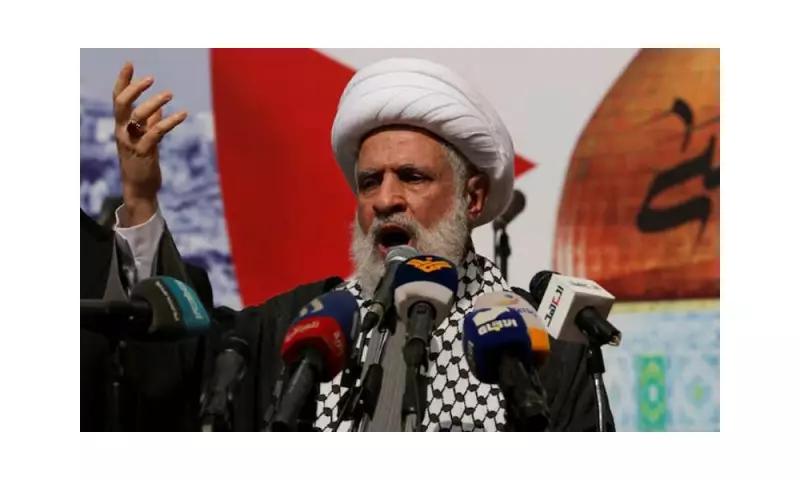
Hezbollah's leadership has unequivocally rejected any discussion of disarmament. Hezbollah's deputy leader, Sheikh Naim Qassem, stated that the group's weapons are "non-negotiable." He framed the arsenal as an essential deterrent against Israeli aggression and a cornerstone of Lebanon's defense strategy. This hardline position presents a major obstacle to the proposed plan.
The situation is further complicated by the ongoing war in Gaza. Hezbollah has positioned its border attacks as acts of solidarity with Palestinians, creating a direct link between the two conflicts. American officials, including Special Envoy Amos Hochstein, have been shuttling between Beirut and Jerusalem, attempting to prevent the skirmishes from spiraling into a full-scale war. The US fears such a conflict could draw in Iran, Hezbollah's principal backer, and destabilize the entire Middle East.
Challenges and Potential Consequences
Analysts point to several formidable challenges facing the disarmament plan. First, Hezbollah's power within Lebanon is deeply entrenched, both militarily and politically. Forcing the group to surrender its weapons, which it views as a sacred resistance tool, would be an immense undertaking likely met with fierce resistance.
Second, the plan's success is heavily dependent on broader regional diplomacy. A permanent ceasefire in Gaza is seen by many as a prerequisite for calming the Lebanon-Israel border. Furthermore, the role of Iran is pivotal; any agreement would require at least its tacit approval, which is currently unlikely.
The consequences of failure are severe. Continued strikes and counter-strikes have already displaced tens of thousands of people on both sides of the border. A miscalculation could trigger a conflict that would be devastating for Lebanon, already mired in a profound economic crisis, and could lead to significant casualties in Israel. The international community remains deeply concerned about the potential for a rapid and uncontrollable escalation.
In conclusion, while the disclosed US-Israeli plan outlines a clear path toward resolving a persistent security threat, its implementation faces almost insurmountable hurdles. Hezbollah's outright refusal to consider giving up its arms, the interconnected nature of regional conflicts, and the complex internal politics of Lebanon all converge to make disarmament a distant prospect. For now, diplomatic efforts remain focused on the more immediate goal of containing the violence and preventing a second major war from igniting in the region.