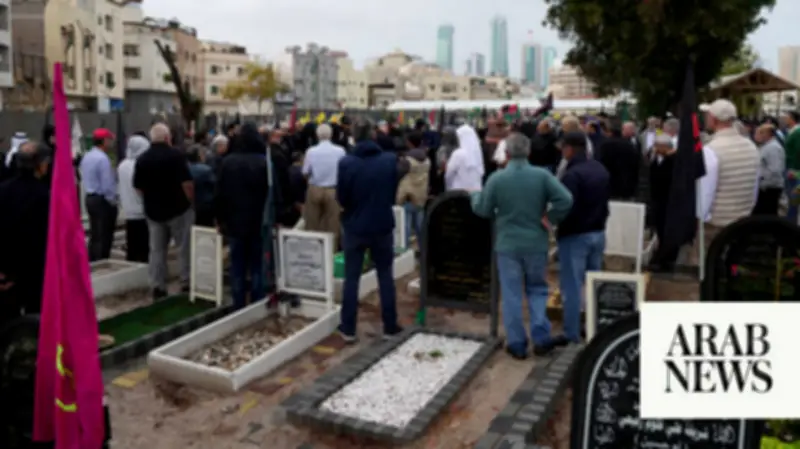
Despite a ceasefire between the US and Iran, residents of Bahrain and Kuwait were jolted awake by sirens on June 28. Two Iranian ballistic missiles were intercepted over Kuwait, and an Iranian drone struck a residential building in Bahrain. No casualties were reported, but the attacks underscored that Gulf residents and critical infrastructure remain exposed to a conflict whose international coverage has focused largely on oil prices, shipping disruptions, and the Strait of Hormuz.
Economic Effects Dominate Headlines
John Calabrese, a senior fellow at the Middle East Institute, told Arab News: “Economic effects such as oil prices or shipping disruptions get the most attention because they are easy to see quickly and affect everyone outside the conflict zone. If oil prices rise, it shows up immediately in global markets, fuel costs and inflation. That makes the conflict feel ‘real’ to people far away.” In contrast, civilian suffering is often difficult to document amid internet blackouts and restricted access for journalists. “So even when it may be more important morally, it is less visible,” Calabrese said. “In short: Markets are visible everywhere; people on the ground are often not.”
Victim Identity Shapes Coverage
Calabrese explained that the identities of victims influence whether their deaths receive sustained international attention. Media organizations are most responsive when their own nationals are affected or when victims are closely linked to the dominant geopolitical narrative. “Expatriate workers often fall outside those categories, even though they make up a very large share of the population in Gulf states,” he said. “As a result, their deaths may be reported, but they are less likely to be tracked closely or remain in the headlines over time.” South Asian workers, heavily represented in construction, transport, logistics, and services, are often near industrial areas, ports, and other infrastructure exposed during conflict. “The pattern reflects who is most present in vulnerable locations, not who is being specifically targeted,” Calabrese added.

Muhanad Seloom, assistant professor of international politics and security at the Doha Institute for Graduate Studies, said reporting constraints are only part of the explanation. “Western coverage indexes on what is instrumentally legible to Western audiences: shipping insurance, fuel, inflation,” he told Arab News. “Civilian suffering enters the frame when victims are photogenic or ‘relatable,’ and recedes when they are not. Identity absolutely shapes salience.” Seloom described an “implicit hierarchy” in attention given to different victim groups, arguing that South Asian workers, Kurds, and Iranian civilians often receive less sustained coverage. He attributed this to nationality-based news priorities, limited diplomatic and media advocacy, and restrictions on information from the countries involved.
Gulf Vulnerabilities Beyond Oil
Beyond immediate casualties, Seloom said the conflict has exposed vulnerabilities in systems on which everyday life in the Gulf depends. Gulf Cooperation Council states rely heavily on imported food, desalinated water, and expatriate labor. Much of the region’s population, industry, power generation, and transport infrastructure is concentrated along its coastline. “The story that markets crowd out is that the Gulf’s prosperity rests on a small number of catastrophic single points of failure that have nothing to do with crude prices,” Seloom said. Among the most serious is desalination. Gulf states depend heavily on desalination plants that could leave millions without drinking water if damaged. More than 85 percent of food consumed across the GCC is imported through vulnerable regional supply chains.

“These plants are few, coastal, co-located with power generation — most are co-generation — and backed by only days, not weeks, of strategic water reserves. A successful hit is not like losing a refinery; it is a countdown clock on potable water for millions.” Whereas damage to a refinery may interrupt exports and industrial production, a prolonged shutdown at a desalination plant could quickly threaten drinking-water supplies in countries such as Bahrain and Qatar, which derive more than half of their supply from desalinated seawater. The close relationship between water and electricity generation creates potential for wider disruption. A strike on one facility could affect multiple services, and debris from intercepted missiles or drones may itself damage infrastructure or injure civilians. “The Gulf development model concentrated population, water, power and economy into a handful of coastal megaprojects,” Seloom said. “That concentration is an efficiency in peace and a catastrophic fragility in war.”
Food and Environmental Risks
Food supplies are similarly exposed to disruption. A 2025 report by UAE-based investment banking advisory firm Alpen Capital found that more than 85 percent of food consumed in the GCC is imported, making the availability and price of essential goods sensitive to interruptions at ports, airports, and on shipping lanes. Oil spills, refinery fires, and strikes on chemical facilities could cause long-term damage to the Gulf’s marine and coastal environments. From abroad, such disruption may appear as a rise in freight costs or commodity prices. For those living in the Gulf, however, it can determine whether food, medicine, and drinking water remain readily available. “That is a human-security event — water and calories for tens of millions — and it received a fraction of the coverage of Brent (crude oil) crossing $120,” Seloom said.
Long-Term Human Costs
Other effects may take longer to emerge and may never appear in official casualty figures. Seloom identified four overlapping risks: water insecurity, environmental contamination, public-health deterioration, and displacement. Oil spills, refinery fires, and strikes on chemical facilities could cause long-term damage to the Gulf’s marine and coastal environments. Its shallow, relatively slow-flushing waters make the region especially vulnerable to persistent pollution. Contamination could also affect the seawater intakes used by desalination facilities, compounding the risk to drinking-water supplies. “A damaged plant produces no immediate body count but renders territory uninhabitable, driving displacement weeks later,” Seloom said. Damage to hospitals, power systems, and pharmaceutical supply chains could also result in deaths and illnesses never directly attributed to the conflict. Interruptions to treatment for chronic illnesses, maternal care, and emergency services may continue long after the immediate danger of an attack has passed. “The visible casualties are the tip,” Seloom said. “The larger harm is the degradation of the systems that sustain civilian life.”
Civilian Toll Inside Iran
Inside Iran, civilians have also experienced deaths, injuries, and disruption to essential services. One of the deadliest incidents occurred in Minab, in the southern province of Hormozgan, on February 28, the first day of the war. A missile struck the Shajareh Tayyebeh Elementary School, killing 155, some 120 of whom were pupils, according to Iranian state media. While the Minab strike briefly drew international attention through images of grieving families and funerals for children and teachers, it also illustrated how even a mass-casualty incident can quickly recede behind negotiations, battlefield developments, and questions about energy security. The deaths at Minab formed part of a wider toll inside Iran that has included strikes affecting homes, hospitals, clinics, and other civilian infrastructure, as well as electricity outages and disruption to medical care. Seloom said the suffering of Iranian civilians is often interpreted through international attitudes toward the Iranian government. “Western outlets filter their suffering through the regime, reluctant to humanize for fear of appearing to side with Tehran,” he said.
Kurdish Communities Suffer
The conflict’s human toll has also extended into the Kurdistan Region of Iraq, where Iran has carried out repeated drone and missile attacks against camps and communities associated with Iranian Kurdish opposition groups. Hejar Berenji, the US representative of the Democratic Party of Iranian Kurdistan, said Iranian Kurds were not parties to the wider confrontation but had nevertheless suffered a “direct, serious and disproportionate” impact. He said strikes had damaged residences, schools, medical centers, and libraries, killing and injuring residents and forcing families to leave their camps. “Internationally, the conflict is often portrayed as a geopolitical confrontation between states,” Berenji said. “For Kurdish communities, it is experienced as drones over civilian camps, destroyed homes, fear for children in schools, attacks near medical facilities, displacement of families, arrests, executions and constant militarization.” He said Kurdish suffering had received far less attention than oil markets, nuclear negotiations, and military strategy. “Those issues matter, but they cannot be the whole story,” Berenji said. “Kurdish civilians have been living under drone and missile attacks while the world talks about ceasefires and negotiations. A ceasefire that does not protect Kurdish civilians is incomplete.”
Wealth Does Not Shield Gulf Populations
The conflict has also challenged the assumption that the Gulf’s wealth necessarily shields its population from the human consequences of war. “The biggest misconception is that wealth buys resilience, that because the Gulf is rich, its people are insulated from war’s human costs. The opposite is closer to true,” Seloom said. “The money bought spectacular development and almost no redundancy.”