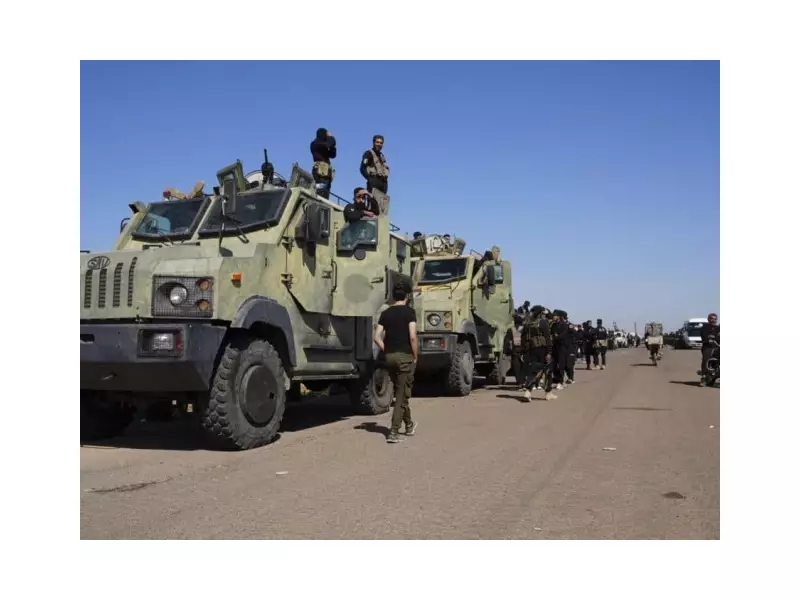
The Syrian Arab Army, bolstered by allied forces, has significantly escalated its military operations in the northern province of Raqqa, moving to tighten a strategic siege around the city that once served as the de facto capital of the Islamic State (ISIS) group. This latest push represents a critical phase in the long-running campaign to dismantle the militant organization's territorial control within Syria.
Strategic Advances and Encirclement
Military sources and reports from the ground indicate that Syrian army units have achieved substantial progress on multiple fronts surrounding Raqqa. The operation focuses on severing supply lines and isolating remaining militant factions within the city and its outskirts. Key villages and towns in the southern and western countryside of Raqqa have reportedly been secured by government troops, effectively closing in on the urban center.
This encirclement strategy aims to choke off logistical support and prevent the movement of fighters, thereby weakening the defensive capabilities of the entrenched groups. The advances follow a period of intensified airstrikes and artillery bombardment targeting ISIS positions, command centers, and weapon storage facilities in the region.

Context of the Raqqa Campaign
The city of Raqqa fell under the complete control of the Islamic State in early 2014, transforming into the administrative and operational heart of its self-declared caliphate. It became synonymous with the group's brutal rule. While a U.S.-backed coalition of Kurdish and Arab fighters known as the Syrian Democratic Forces (SDF) led a major offensive that culminated in Raqqa's physical liberation in October 2017, the province has remained unstable.
Remnant ISIS cells have continued to launch guerrilla-style attacks, ambushes, and assassinations from desert hideouts. The Syrian government's current offensive is part of broader efforts to assert control over the entire province, which is seen as crucial for national security and the restoration of state authority. The operation also underscores the complex geopolitical landscape, where various forces, including the Syrian army, the SDF, and Turkish-backed factions, maintain a presence in different parts of northern Syria.
Implications and Future Challenges
The tightening grip on Raqqa by the Syrian army carries significant implications for the region's security and political future. A successful takeover by Damascus would mark a symbolic victory in President Bashar al-Assad's quest to reclaim all Syrian territory. However, it also raises questions about governance, reconstruction, and the potential for renewed conflict with other actors present in the area, particularly the SDF which controls parts of the province.
The humanitarian situation remains a pressing concern, with civilians caught in the crossfire and facing displacement. Clearing the vast desert areas of Raqqa province of hidden ISIS militants presents a long-term security challenge that will require sustained military and intelligence efforts well after the urban centers are secured. The stability of Raqqa is pivotal for the overall security of Syria and the prevention of an ISIS resurgence.
As the Syrian army continues its methodical advance, the world watches to see if this campaign will finally extinguish the lingering embers of the so-called caliphate in its former capital. The outcome will significantly influence the next chapter in Syria's protracted and devastating conflict.