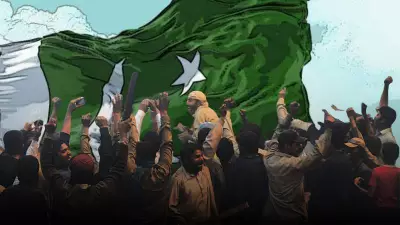
The year 2023 will be remembered in Pakistan's history not for a single seismic event, but for a profound and collective shift in national consciousness. It was the year the country, long accustomed to seeking a seat at the global high table and yearning for external validation, decided to stop waiting. A series of interconnected challenges and strategic recalculations prompted a move towards a more self-defined, resilient, and pragmatic stance on the world stage.
A Convergence of Crises Forcing a New Calculus
The impetus for this change was not born of luxury but of necessity. Pakistan entered 2023 grappling with a perfect storm of internal and external pressures. A devastating economic crisis, with foreign exchange reserves plummeting to critically low levels and inflation soaring, threatened domestic stability. On the political front, intense polarization created an environment of uncertainty. Externally, the traditional pillars of its foreign policy demanded reassessment.
The war in Ukraine and its global repercussions disrupted supply chains and inflated commodity prices, hitting Pakistan's import-dependent economy hard. Meanwhile, the strategic calculus in its immediate region was in flux. The withdrawal of US forces from Afghanistan had altered the geopolitical landscape, and Pakistan's historically complex relationship with India remained in a deep freeze. Perhaps most significantly, the nation felt a growing sense of being taken for granted by traditional allies, whose support often came with stringent conditions that were perceived as infringing on national sovereignty.

The Diplomatic Pivot: From Pleading to Partnering
This context set the stage for a noticeable shift in diplomatic posture. Instead of reactive diplomacy focused on crisis management and aid appeals, 2023 saw Pakistan attempting to proactively diversify its partnerships and assert its own priorities. A key manifestation of this was the renewed and vigorous engagement with Russia, including discussions on energy imports like discounted oil, which directly addressed the economic crisis.
Simultaneously, Pakistan worked to deepen ties with Middle Eastern nations, not just as sources of financial assistance but as partners in investment and trade. The mantra of "geo-economics" gained practical traction, with the government emphasizing connectivity and trade corridors like the China-Pakistan Economic Corridor (CPEC) as central to its future, rather than purely security-centric alliances. This represented a conscious effort to frame Pakistan's role as a trade and transit hub rather than solely a frontline state.
Economic Self-Preservation and the IMF Dilemma
The most stark illustration of the "stop waiting" philosophy played out in economic negotiations, particularly with the International Monetary Fund (IMF). While Pakistan eventually entered a standby arrangement, the protracted and difficult negotiations highlighted a nation straining against the traditional prescription. There was a palpable, though often frustrated, desire to find a path that balanced necessary fiscal discipline with social and political realities at home.
The government faced immense public pressure to resist measures seen as overly harsh, symbolizing a broader weariness with external diktats. This tough bargaining, though born of desperation, reflected a nascent attempt to negotiate from a position of asserted national interest rather than passive acceptance. The drive to boost exports, attract foreign direct investment on its own terms, and explore barter trade agreements were all facets of this push for greater economic autonomy.
Internal Reckoning and the Path Forward
Importantly, this external shift was mirrored by an internal dialogue. The crises of 2023 forced a painful but necessary national conversation about chronic issues: tax reform, energy sector inefficiencies, and political instability. The realization grew that without addressing these internal weaknesses, no amount of foreign policy maneuvering would ensure sustainable sovereignty. The move away from waiting for recognition was thus coupled with an understanding that self-reliance begins at home.

In conclusion, 2023 did not see Pakistan suddenly become a global powerhouse free from external constraints. The challenges remain immense. However, it unequivocally marked the year the country's strategic narrative began to change. The paradigm shifted from one of seeking rescue and endorsement to one of navigating a complex world through diversified alliances, economic pragmatism, and a firmer assertion of its own interests. It was the year Pakistan decided to chart its own course, however turbulent the waters, recognizing that in an increasingly multipolar world, agency and resilience are the truest forms of recognition.