Mediators Avert Crisis After Trump Threatens Strikes
On June 11, as the US and Iran exchanged escalating strikes, a plane carrying Qatari mediators sat stranded on the tarmac in Tehran. They had been engaged in intensive talks through the night, attempting to halt what appeared to be a spiral back into all-out war, a diplomat briefed on the talks said. The scene on the runway encapsulated the tumultuous diplomatic process, led by Pakistan and Qatar, that led to last week’s deal to end a war that destabilized the Middle East and damaged the world economy. It was one of several moments in which social media threats or actual hostilities threatened to reignite the war.
On the same day, US President Donald Trump again threatened military action, saying the US would hit Iran “VERY HARD TONIGHT” and take “total control” of its oil and gas industry. Regional players launched a desperate push to convince Trump to give diplomacy another chance. Qatar’s emir, Sheikh Tamim bin Hamad Al Thani, spoke directly with Trump and urged him to hold off on more strikes because the deal was close, the diplomat said. The efforts paid off. Trump announced that he had canceled the planned strikes.
Pakistan Emerges as Chief Mediator
Previous US-Iran negotiations had been facilitated by Oman and Qatar, but they came under fire early in the war as Iran lashed out at Gulf countries hosting American forces. Pakistan, bordering Iran and maintaining good relations with both Tehran and Washington, quickly emerged as the chief mediator. The negotiating team used a secure system to relay messages between Iranian and US officials. Staff were warned that leaking information could lead to a life sentence, one of the Pakistani officials said.

Pakistan’s army chief, Field Marshal Asim Munir, played a key role and had a direct line to Trump, officials said. “As the US-Iran war began to drag on and both parties became keen to strike a deal, Munir’s unique network across Washington and Tehran became valuable,” said Charles Lyons-Jones, an Australian former diplomat who worked in Pakistan and is now a research fellow at the Lowy Institute in Australia. A truce was reached in April, and days later, US and Iranian representatives met in Islamabad for their first high-level talks in years.
Qatar Steps In as Ceasefire Shaken
Within weeks, prospects of a permanent end to the war appeared to be slipping. Qatar had said it would not mediate while under fire from Iran, but in mid-May, with strikes on the Gulf country halted, both sides reached out asking Doha to help break the deadlock, the diplomat said. Working alongside Pakistan, Qatari officials began quietly traveling to Tehran. Egypt’s spy chief, Hassan Rashad, opened a line of communication with Gen. Ahmad Vahidi, the head of Iran’s paramilitary Revolutionary Guard, who is in touch with Iran’s Supreme Leader Mojtaba Khamenei, one of the regional officials said.
Iran wanted to delay discussing the fate of its highly enriched uranium, but mediators convinced it to include a commitment to dilute the stockpile in the draft text in response to US promises to waive sanctions on oil sales and gradually unfreeze billions in Iranian assets. The sides also compromised on financial relief for Iran, which initially demanded at least $500 billion in reparations, one of the regional officials said. Iran finally agreed to $300 billion in pledged investments linked to a final deal, though it’s unclear who would provide that funding.
Fighting in Lebanon Repeatedly Threatens the Deal
The Tehran-backed Lebanese militant group Hezbollah had launched missiles into Israel in response to the initial attack on Iran. Israel responded with a blistering aerial bombardment of Lebanon and a ground invasion. Iran’s stance throughout the talks, opposed by Israel and initially the US, was that any deal must include a Lebanon ceasefire, and language was put into the draft. On June 7, Pakistan’s Interior Minister Mohsen Naqvi was in Tehran to deliver a message bound for Khamenei, urging him to accept the deal. On that day, Israel struck Beirut, and Iran retaliated by firing missiles at Israel.

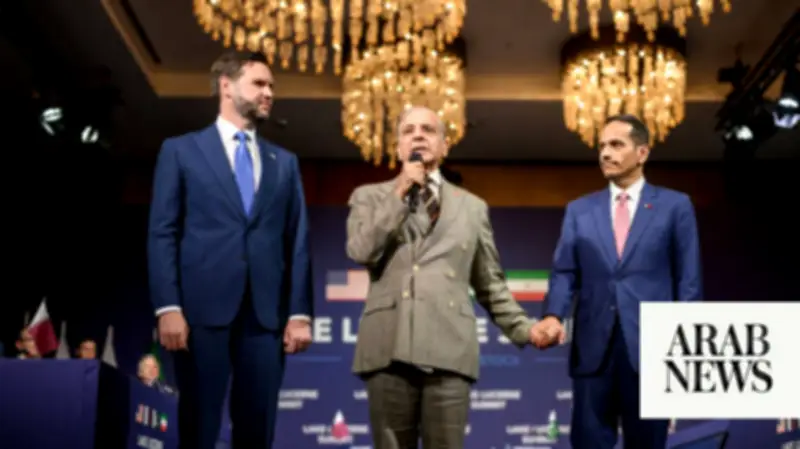
After the averted crisis on June 11, negotiations moved quickly. Trump announced on June 13 that a deal would be signed the following day. Qatari mediators returned to the Iranian capital for 17 hours of intensive negotiations. As they appeared to be nearing a successful conclusion, Israel struck Beirut again on June 14, crossing what Iran had described as a red line. Qatari mediators sought to convince Iran that retaliating “would only play into the hands of the deal’s opponents,” the diplomat said, adding that heading off the Iranian strikes was what “got the deal over the line.” At Iran’s demand, a pledge to ensure Lebanon’s sovereignty and territorial integrity was added to the memorandum. On June 17, the Memorandum of Understanding was signed.
Talks in Switzerland Resume After Delay
The US and Iran are now working on a final nuclear agreement with an August deadline. Those talks were delayed by two days because of ongoing violence in Lebanon, the diplomat said. Iran “viewed (the Lebanon ceasefire) as point number one, and if you can’t abide by point number one, then why should we discuss two, three, four?” the diplomat said. The US and Iran pushed Israel and Hezbollah to agree to a new truce, and the talks in Switzerland went forward on Sunday, focusing on creating a mechanism to solidify the ceasefire in Lebanon.
Trump and Iranian officials have continued to fire off tough public statements, and the Iranians briefly paused the talks in Switzerland after what they said was an insulting message from Trump. But the diplomat described the atmosphere in Switzerland as “quite positive,” with US and Iranian officials having coffee together during breaks.