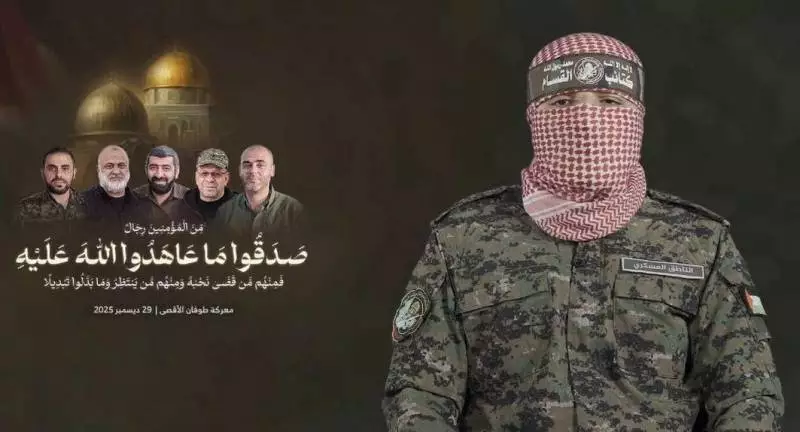
In a defiant statement, a senior Hamas official has declared the group's intention to continue its armed struggle and extend its military reach. The announcement comes amidst the ongoing conflict in Gaza and signals a firm rejection of international proposals for the group's disarmament after the war.
Hamas's Defiant Stance on Weapons and Resistance
During a press conference in Beirut on Monday, Hamas spokesman Osama Hamdan made a series of significant declarations. He stated unequivocally that Hamas plans to provide weapons to fighters in the occupied West Bank. This move is seen as a direct effort to escalate resistance against Israeli forces in that territory.
Hamdan's comments were a clear response to growing international discourse about the future of Gaza once hostilities cease. He dismissed any notion that Hamas would lay down its arms, framing the group's military capability as an integral and non-negotiable part of the Palestinian fight for freedom.

Rejecting the "Day After" Plans and Asserting Control
The spokesman directly addressed what he termed "illusions" regarding the governance of Gaza post-conflict. He asserted that Hamas is the only Palestinian faction with the strength to control the Gaza Strip and will remain a key player in any future arrangements. This statement challenges the plans put forward by Israel and some Western allies, who have suggested a different Palestinian authority or international administration for Gaza after the war.
Hamdan emphasized that the group has not only survived the intense Israeli military campaign but has also managed to preserve its leadership structure and operational capabilities. He claimed that Hamas's political and military leaders continue to guide the battle from within Gaza, countering Israeli claims of having dismantled the group's command.
Implications for the Region and the War
This hardline position from Hamas has major implications for the trajectory of the conflict and future peace efforts. By vowing to arm the West Bank, Hamas is potentially opening a new, volatile front in the Israeli-Palestinian conflict. The West Bank has seen increased violence and Israeli military raids, and an influx of weapons could significantly raise tensions there.
Furthermore, the outright rejection of disarmament sets the stage for a prolonged confrontation. It suggests that even if a temporary ceasefire is reached, the underlying conflict between Hamas and Israel is far from resolved. The group's insistence on maintaining its role as both a political and military force in Gaza complicates all international proposals for the territory's reconstruction and future administration.
Analysts suggest that Hamas's confidence, as displayed by Hamdan, is aimed at both its domestic Palestinian audience and the international community. The message is clear: despite the enormous destruction and loss of life in Gaza, Hamas considers itself undefeated and is preparing for the next phase of the struggle.