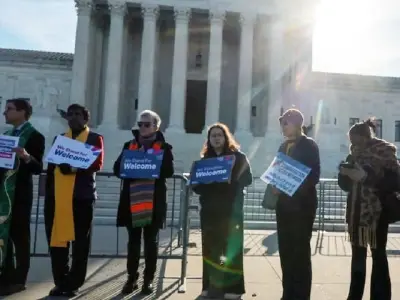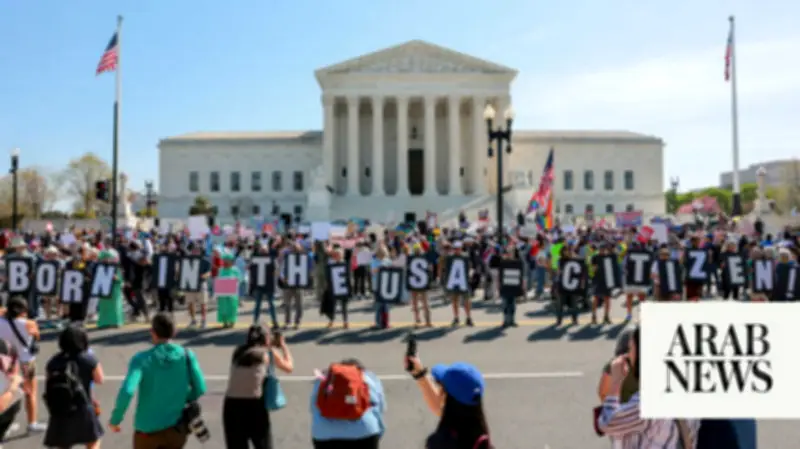
The Supreme Court on Tuesday delivered a landmark ruling upholding birthright citizenship, striking down President Donald Trump's executive order that sought to deny automatic citizenship to children born in the United States to parents who are in the country illegally or temporarily. The 5-4 decision, with Chief Justice John Roberts writing for the majority, reaffirmed the long-held interpretation of the 14th Amendment that anyone born on U.S. soil, with very limited exceptions, is a citizen.
Majority Opinion: 'The Right to Have Rights'
Chief Justice Roberts, joined by Justice Amy Coney Barrett and the three liberal justices, emphasized the historical and constitutional foundations of birthright citizenship. “Citizenship, then and now, was the right to have rights— to freely participate in our political community. The Framers of the Fourteenth Amendment extended that promise to ‘every free-born person in this land,’” Roberts wrote, citing congressional debate over the amendment. “We keep that promise today.” The majority relied on the amendment’s text, its post-Civil War context, and the 1898 Supreme Court precedent in Wong Kim Ark, which established that a U.S.-born child of Chinese nationals is a citizen. Roberts concluded that children born to parents illegally or temporarily in the United States “are citizens at birth.”
Dissenting View: 'Extraordinary Step'
Justice Clarence Thomas authored a 91-page dissent, more than three times the length of Roberts’ opinion, arguing that the court overstepped. “The Court today takes the extraordinary step of holding facially unconstitutional the President’s Order excluding from citizenship the children of foreign temporary visitors and illegal aliens,” Thomas wrote. He added that the 14th Amendment “has instead been repurposed for political projects that the Reconstruction Congress did not support.” Three other conservative justices joined Thomas in dissent, though Justice Brett Kavanaugh sided with the majority on narrower grounds, citing a federal law that grants citizenship to such children, rather than the Constitution itself. Kavanaugh’s concurrence leaves open the possibility that Congress could change the law to restrict birthright citizenship in the future.

Impact and Context
The executive order, signed on the first day of Trump’s second term, was part of a broader immigration crackdown. It had been blocked by multiple lower courts and never took effect. According to research by the Migration Policy Institute and Pennsylvania State University’s Population Research Institute, more than 250,000 babies born annually in the U.S. would have been affected, including children of undocumented immigrants as well as those legally present, such as students and green card applicants. During oral arguments in April, both conservative and liberal justices questioned the order’s legality, and Trump’s unprecedented attendance in the courtroom underscored the case’s significance. The ruling marks the second major defeat for Trump at the Supreme Court this year, following the justices’ late February decision striking down global tariffs imposed under emergency powers. Trump reacted angrily to that decision, calling the justices “unpatriotic” and expressing shame at their ruling.
Legal and Political Ramifications
The decision reinforces the principle that birthright citizenship is constitutionally protected, barring a future constitutional amendment or a change in Supreme Court precedent. The Trump administration had argued that children of noncitizens are not “subject to the jurisdiction” of the United States, a phrase in the 14th Amendment, and thus not entitled to citizenship. The court rejected that interpretation, upholding the consensus that has prevailed since the amendment’s ratification in 1868. The ruling also highlights the ongoing tensions between executive power and constitutional limits, as Trump has frequently criticized judges and justices who rule against his policies. With this decision, the Supreme Court has firmly embedded birthright citizenship in American law, closing the door on unilateral presidential action to redefine citizenship.