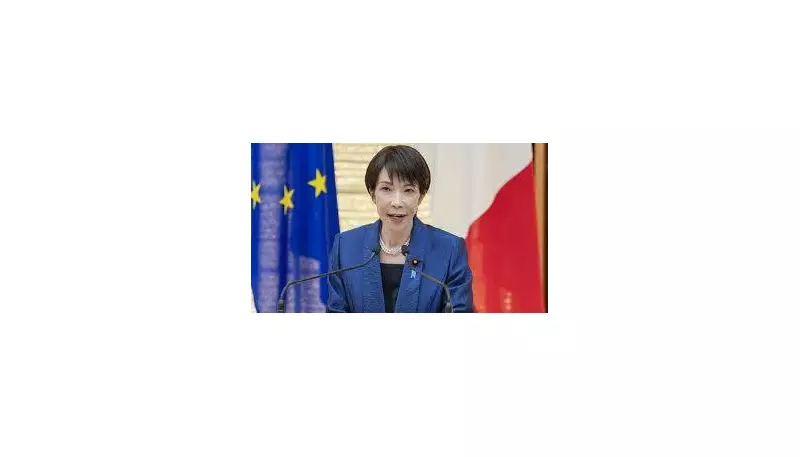
In a bold political move, Japan's Prime Minister Sanae Takaichi has announced she will dissolve the country's parliament on Friday. This sets the stage for an early general election scheduled for 8 February. Takaichi aims to convert her strong personal popularity into a powerful parliamentary majority for her ruling Liberal Democratic Party (LDP).
The Weighty Decision and the Public Mandate
Addressing a news conference in Tokyo, Takaichi described the dissolution as an "extremely weighty decision" that would determine Japan's future course alongside its people. Since taking office on 21 October last year, the nation's first female leader has enjoyed remarkably high public support. However, she revealed a constant concern: her cabinet had not yet faced the verdict of the people in a national election.
"Is Sanae Takaichi fit to be prime minister? I wanted to ask the sovereign people to decide," she stated. Having been elected by lawmakers, she is now seeking a direct public mandate in the more powerful House of Representatives. Campaigning for the 465 lower house seats begins on 27 January.

High Stakes and Political Challenges
The gamble comes with significant risks. The LDP, which has governed Japan almost continuously since 1955, currently holds 199 seats in the lower house. Its coalition with the Japan Innovation party provides a fragile majority. Takaichi is the country's fourth prime minister in five years, and her immediate predecessor's snap election led to one of the LDP's worst-ever results.
Furthermore, a new consolidated opposition bloc, the Centrist Reform Alliance, was formed last week, posing a fresh challenge. The election will also test voter appetite for Takaichi's signature policy: a revival of heavy government-led spending to stimulate growth, reminiscent of the "Abenomics" era, at a time when the cost of living is a top public concern.
Popularity, Policy, and Regional Tensions
Dubbed Japan's "Iron Lady," Takaichi, a protege of former PM Shinzo Abe, has seen approval ratings between 60-80% for her cabinet. Analysts suggest she hopes this personal popularity can secure a "sole majority" for the LDP, allowing her to push bolder policies more easily.
Her initial months have been marked by significant policy moves, including the approval of a record nine trillion yen ($57bn) defence budget in December. This comes amid growing regional concerns, particularly regarding China. Takaichi's comments last November suggesting Japan could respond if China attacked Taiwan sparked a diplomatic spat, sending bilateral ties to a low point. Concurrently, she has pursued closer relations with the United States.
Experts note that Takaichi's high ratings are likely to decline, and this snap election is an attempt to "lock in the benefits of a long honeymoon" and gain public trust to deliver on her economic and security promises.