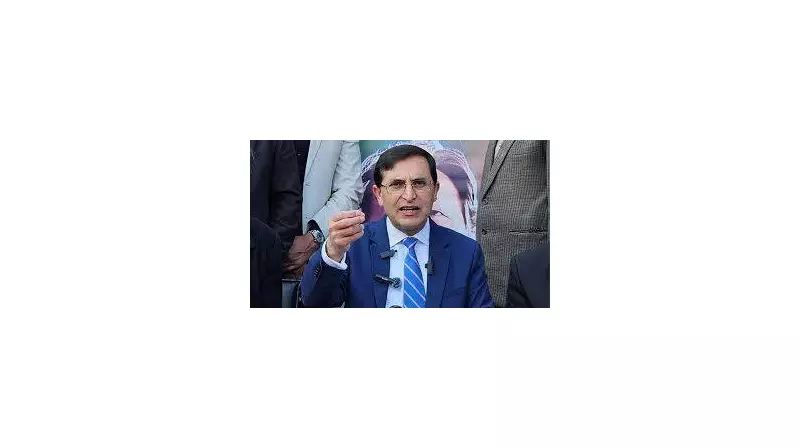
The political landscape of Pakistan witnessed a significant development as the Election Commission of Pakistan (ECP) delivered a crucial verdict concerning the leadership of the Pakistan Tehreek-e-Insaf (PTI). The electoral body formally declined to recognize Barrister Gohar Khan as the party's chairman, upholding the position of Omar Ayub Khan as the PTI's Secretary General and its recognized head.
The Core of the Dispute
This decision stems from a formal application submitted by Barrister Gohar Khan to the ECP, seeking official acknowledgment of his role as the PTI's chairman. The application, filed on December 2, 2025, was a move to solidify his position within the party's official records with the commission. However, the ECP's scrutiny of the matter led to a different conclusion.
The commission's ruling was clear and pointed. It stated that Barrister Gohar Khan failed to provide any substantial evidence or legal documentation that could substantiate his claim to the chairmanship. According to the ECP's official stance, there was no proof presented to demonstrate that Gohar Khan had been formally elected or appointed to the top party position through a proper intra-party electoral process.

Upholding the Existing Record
In contrast, the ECP's records firmly list Omar Ayub Khan as the Secretary General of PTI. Furthermore, in the absence of a recognized chairman, the commission's protocols designate the Secretary General as the party's de facto head for all official communications and legal purposes. This procedural rule played a pivotal role in the outcome.
By rejecting Gohar Khan's application, the ECP effectively reinforced the status quo. Omar Ayub Khan remains the principal point of contact and the authoritative figure for PTI in all matters pertaining to the Election Commission. This decision carries substantial weight, as recognition from the ECP is mandatory for a party's official operations, including its electoral symbol and candidate nominations.
Implications and Political Repercussions
This verdict from the Election Commission is more than a mere administrative note; it has deep political ramifications. It brings into sharp focus the ongoing internal dynamics and potential leadership questions within one of Pakistan's major political parties. The ECP's refusal to amend its records signals a validation of the existing party hierarchy as per its documentation.
For Barrister Gohar Khan, this represents a significant setback in his bid for official recognition as the party's leader. For Omar Ayub Khan, the decision consolidates his official standing as the party's leading representative before the state's electoral authority. The development underscores the critical importance of formal intra-party elections and transparent procedural compliance for political entities in Pakistan.
The ruling also highlights the ECP's role as a key arbiter in political and party disputes, emphasizing its reliance on documented evidence and established legal procedures over public statements or claims. As Pakistan navigates its political future, this decision regarding PTI's leadership structure is likely to influence the party's strategy, unity, and its approach to future electoral contests.