The Ideals and Realities of the Fourth of July
The Statue of Liberty bears the famous lines: 'Give me your tired, your poor, your huddled masses yearning to breathe free.' Its tablet commemorates July 4, 1776, America's independence from Britain. Each year, Americans celebrate with parades, barbecues, community picnics, and fireworks. I first experienced this in 1975, nine months after arriving from Karachi at the University of California, Davis. The Watergate scandal had just forced Nixon's resignation, and the Vietnam War was ending. Campus tensions were dissipating.
Over the years, I participated in many celebrations, but the charm faded. At county fairs, people walked with semi-automatic rifles, wearing T-shirts asserting their gun rights. Violence often erupted. Yet America seemed a nation where all ethnicities coexisted, with top universities, modern cities, and excellent infrastructure.
Discovering Deep Divisions
As I traveled across the US for business—from Northwest to Southeast, urban to rural—the facade crumbled. The racial divide from the Civil War (1861–1865) remained stark. In a Chattanooga library, I asked for the Civil War section; the librarian pointed to shelves labeled 'War of Northern Aggression.' Similar encounters occurred in Georgia, South Carolina, and Texas. In a Midwestern state, a client called me 'exotic'—a term I thought reserved for zoo animals or dancers. I later learned it meant non-white.

Divisions between states and urban-rural areas intensified after the 2016 elections. Brown-skinned people faced insults; a friend's son was called a 'Sand N****r' at a gas station. High school restroom stalls were spray-painted 'whites' and 'non-whites.' Today, the red-blue state divide is so sharp that the 'U' in USA might as well stand for 'Divided.'
A History of Conquest
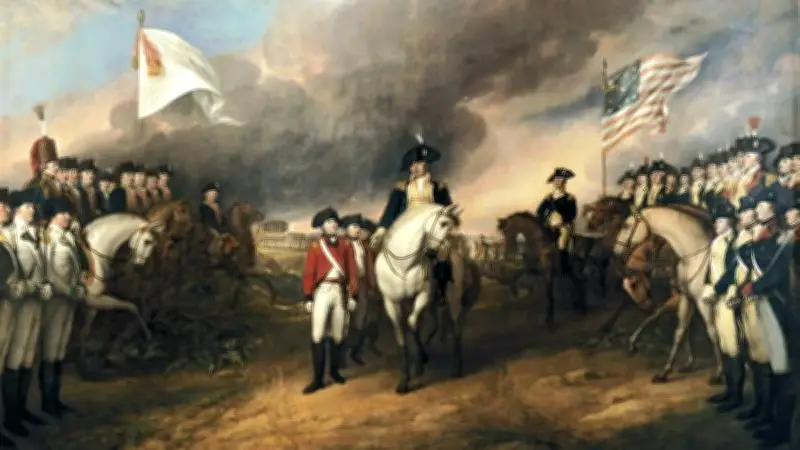
In 2022, walking Boston's Freedom Trail past a statue of Paul Revere, I reflected on America's birth. The land was colonized by the UK, Spain, and France. On July 4, 1776, 13 colonies broke away, culminating in the Stamp Act of 1765. But the land originally belonged to Native Americans, who were militarily defeated, tribe by tribe, and confined to reservations. Hollywood westerns glorified cowboys defeating 'Indians'—a misnomer from Columbus's geographical error.
Dee Brown's 1970 book Bury My Heart at Wounded Knee challenged this narrative. Brown documented the systematic destruction of Native American tribes between 1860 and 1890, highlighting leaders like Geronimo, Sitting Bull, Crazy Horse, and Red Cloud. He detailed broken treaties, betrayals, and massacres, culminating in the 1890 slaughter of 300 Sioux at Wounded Knee Creek. The US also seized Mexican land in California and the Southwest, acquired Alaska from Russia, and conquered Hawaii. In 1893, sugar planters and missionaries, with US officials, overthrew Hawaii's queen, leading to annexation in 1898. This destroyed Hawaiian culture and fuels a sovereignty movement today.
The Imperial March
Though America expelled Britain in 1776, it adopted imperial traits. Today, the US is the world's only superpower, with the largest economy. Its navies patrol all oceans, and its air and naval bases span the globe. It spends more on defense than the next nine nations combined, consuming nearly half of the discretionary budget. Yet nearly 40 million Americans live in abject poverty, unable to afford two meals a day. Almost a million are homeless; millions lack medical care or college funds. Infrastructure—roads, bridges, airports—is decaying. Urban crime rises. Despite this, the US claims to be the greatest nation.

Martin Luther King Jr., in his 1961 Lincoln University address, said, 'America is essentially a dream, a dream as yet unfulfilled.' He noted the paradox of technological progress versus moral lag. Today, inequalities are extreme: billionaires thrive, many paying no taxes, while millions suffer. The US maintains over 5,000 nuclear warheads—unnecessary, as no country would attack it. President Eisenhower warned in 1960 about the military-industrial complex, but his advice was ignored. Since then, the US has waged wars in Vietnam, Afghanistan, Iraq, Libya, Syria, and now Iran. Oliver Stone and Peter Kuznick's The Untold History of the United States details these wars and coups in Iran, Chile, and elsewhere, imposing dictatorships in the name of 'American Exceptionalism.'
Scholarly Critique and the Path Forward
Academics like John Mearsheimer and Jeffrey Sachs challenge the notion of American benevolence. Mearsheimer argues that US behavior follows structural realism: securing survival, then expanding ambitions. He criticizes post-Cold War foreign policy for wasting resources on liberal hegemony and unnecessary conflicts. Sachs analyzes the moral, economic, and legal costs of US militarism, accusing the US of neocolonialism, interventionism, and sanctions causing catastrophic suffering. He argues that the US acts as an empire flouting international law.
Mayor Zohran Mamdani of New York City, in a July 3 speech, stated: 'Patriotism has never been about pretending our nation is without flaws. Patriotism is every act of righteous dissent... Who loves America more than those who have sacrificed so much to make it free?' As Americans celebrate the 250th birthday, they should study the damage of misguided policies at home and abroad. Only then can Lincoln's dream from the Gettysburg Address be realized: 'that this nation, under God, shall have a new birth of freedom.'