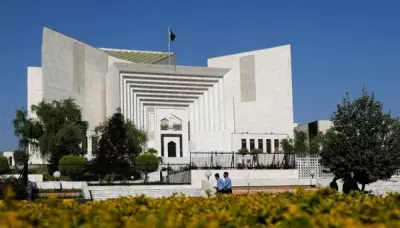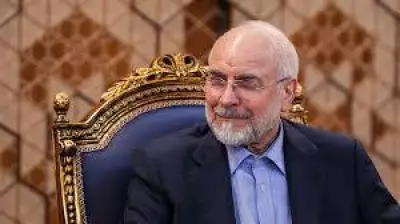
The Islamabad High Court (IHC) has taken a significant step in a constitutional and legal matter, issuing formal notices on Thursday in response to a writ petition. This petition challenges Huzaifa Rahman for publicly presenting himself as a 'Minister of State,' despite being appointed only as a Special Assistant to the Prime Minister.
Court Proceedings and Key Directives
A single-member bench of the IHC, led by Justice Khadim Hussain Soomro, presided over the hearing. The bench took decisive action by issuing notices to all respondents named in the petition. Furthermore, the court directed Huzaifa Rahman to submit para-wise comments on the allegations. Recognizing the need for constitutional clarity, the bench also issued a notice to the Attorney General for Pakistan, as the case involves the interpretation of specific legal provisions. The hearing has been adjourned and is scheduled to resume on February 12 for further proceedings.
The Petitioner's Core Arguments
The petition was filed by citizen Arham Mukhtar through his counsel, Advocate Idrees Ashraf. The respondents include Huzaifa Rahman, the Federation of Pakistan through the Cabinet Division, the Ministry of Information and Broadcasting, and the Pakistan Electronic Media Regulatory Authority (PEMRA).

The counsel argued that while Rahman was appointed as a Special Assistant to the Prime Minister on February 27, 2025, with a notification granting him the 'status of Minister of State,' he has been incorrectly portraying himself as holding the constitutional office itself. The petition emphasizes a critical legal distinction: the 'status' conferred relates only to certain perks and protocol, and does not equate to a formal appointment as a Minister of State under the Constitution.
Article 92 of the Constitution was cited, which stipulates that Ministers and Ministers of State must be appointed by the President on the advice of the Prime Minister and must take an oath before assuming office. The petitioner contends that Rahman has undergone no such constitutional appointment or oath-taking process.
Allegations of Misrepresentation and PEMRA's Role
Advocate Ashraf adopted the stance that Rahman's continued representation as a Minister of State in official and media circles is unlawful. This conduct, the petition states, misleads the public, distorts the constitutional framework of the federal government, and violates statutory obligations.
A significant part of the petition focuses on the role of PEMRA. It argues that as the electronic media regulator, PEMRA is obligated under the PEMRA Ordinance 2002 to prevent the dissemination of false or misleading information. The petitioner asserts that the continuous portrayal of Rahman as a Minister of State on television and other platforms constitutes such misinformation.
The petitioner has requested the court to:
- Issue a writ of quo warranto against Rahman, demanding he show the legal authority for his claim.
- Declare that he is not a Minister of State and that such portrayal is misleading and unconstitutional.
- Clarify that only individuals appointed under Article 92 can use the titles of Federal or State Ministers.
- Direct PEMRA to perform its duty and issue advisories to media platforms to stop broadcasting this allegedly incorrect information.
The case highlights important questions about the use of official titles, constitutional appointments, and the responsibility of media regulators in ensuring accurate public information.