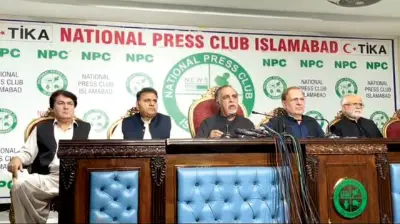
The National Dialogue Committee (NDC) convened a national conference in Lahore, urging all stakeholders to engage in dialogue and form a national government to address Pakistan's ongoing political and economic crises. The conference described resolving these challenges as a key national security requirement.
Conference Details and Participants
Held at a local hotel, the conference titled “Economic Crisis, Political Polarisation and Democratic Stability: Pakistan’s Current Crisis and Future Prospects” brought together politicians, lawyers, business community members, security experts, academics, and civil society representatives. Participants announced the launch of a National Unity Campaign aimed at building consensus and promoting political stability, which they deemed essential for economic growth.
Structural Reforms Proposed
Attendees argued that meaningful progress requires structural reforms, including the creation of new administrative provinces, restructuring of federal and provincial finance commissions, an effective local government system, and an end to dynastic politics. Former Sindh governor Imran Ismail emphasized the need for a policy framework focused on political stability and national cohesion, criticizing the current political environment where rivalries overshadow governance and public welfare.

Calls for Dialogue and Accountability
Former federal minister Mahmood Molvi stated that major political parties had failed to fulfill promises on economic recovery and public welfare. He offered to facilitate dialogue between imprisoned PTI founder Imran Khan and other stakeholders, asserting that the National Unity Campaign would help steer the country out of crises. Former information minister Fawad Chaudhry warned that continued political instability could deepen challenges, particularly in Kashmir, Khyber Pakhtunkhwa, and Balochistan. He criticized unequal resource distribution and called for accountability over corruption allegations at federal and provincial levels.
Fiscal and Governance Concerns
Senior politician Muhammad Ali Durrani argued that constitutional and fiscal arrangements had weakened the federal government financially, creating governance challenges. He called for a forensic audit of provincial resource allocations since the 18th Constitutional Amendment and reiterated his demand for fresh general elections under a national government. Former adviser Munir Ahmad Khan expressed concern over the country's economic direction, saying current budgetary and economic policies offered little prospect of sustainable improvement. He warned that Pakistan might need another agreement with the International Monetary Fund (IMF) and questioned the government's growing reliance on borrowing.
Additional Perspectives
Journalists and analysts, including Suhail Warraich, Mujeeb-ur-Rehman Shami, Habib Akram, Isar Rana, Brig (retd) Farooq Hameed, and Amna Al-Fat, also addressed the conference. The event underscored the urgency of national unity and comprehensive reforms to overcome Pakistan's multifaceted challenges.