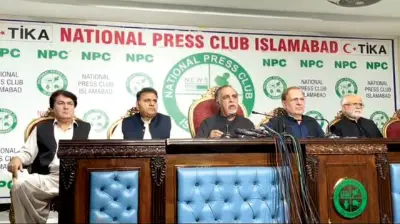
The National Assembly Standing Committee on Finance and Revenue, chaired by Syed Naveed Qamar, MNA, continued its clause-by-clause consideration of the Finance Bill, 2026 during a meeting at Parliament House, Islamabad. The committee reviewed remaining budgetary proposals and received briefings from the Ministry of Commerce, National Tariff Commission (NTC), Federal Board of Revenue (FBR), Petroleum Division, and Islamabad Capital Territory (ICT) Administration.
Tariff Reforms Under National Tariff Policy 2025–2030
The committee received a comprehensive briefing on Year-II reforms under the National Tariff Policy (2025–2030), aimed at simplifying Pakistan’s tariff structure, reducing the overall tariff burden, promoting industrial competitiveness, encouraging exports, and aligning with international best practices. Proposed reforms include rationalization of Customs Duty, Additional Customs Duty, Regulatory Duty, and exemptions under the Fifth Schedule, with reductions on thousands of tariff lines and removal of redundant exemption entries. The reforms are expected to reduce the overall average tariff with an estimated revenue impact of approximately Rs143.4 billion.
Chairman Naveed Qamar observed that tariff liberalization should be implemented in a balanced and phased manner to safeguard domestic industry while improving competitiveness and promoting exports. He emphasized that lower tariffs must translate into reduced production costs, affordable consumer prices, and increased value addition rather than merely benefiting importers. He stressed transparency and evidence-based policymaking, directing that all future fiscal proposals should be accompanied by comprehensive revenue impact assessments, noting that taxation must serve a clear economic purpose and not become an extractive exercise.

Concerns Over Domestic Industry and Environment
Members expressed concerns about the impact of tariff reductions on domestic manufacturing, revenue collection, and employment, as well as proposed relaxation of restrictions on used vehicle imports. The committee strongly opposed tariff concessions on environmentally hazardous imports such as shredded tyres, observing that such measures contradict Pakistan’s climate commitments and undermine domestic recycling efforts. The committee recommended phased implementation, periodic impact assessments, regular progress reports by the NTC, and adequate safeguards for strategic industries to ensure sustainable industrial growth while protecting national economic interests.
ICT Token Tax Revision
The committee examined the proposed revision of token tax for motor vehicles in Islamabad Capital Territory. Members expressed concern that shifting from a fixed-rate system to an invoice value-based taxation model for private vehicles, particularly in the 1300cc to 1800cc category, could disproportionately burden middle-income taxpayers. Chairman Naveed Qamar emphasized that any revision should be transparent, equitable, and proportionate to vehicle value without placing unnecessary financial pressure on ordinary citizens. The committee recommended that the proposed tax structure be implemented only after a comprehensive impact assessment and appropriate consultation to ensure consistency with provincial tax regimes while maintaining taxpayer affordability.
Petroleum Levy Amendments and Enforcement
The committee scrutinized proposed amendments to the Petroleum Products (Petroleum Levy) Ordinance, 1961, focusing on strengthening enforcement against defaulting Oil Marketing Companies (OMCs). Chairman Qamar observed that OMCs merely act as collection agents for government levies and cannot be permitted to retain public funds. Expressing serious concern over delays in recovery of petroleum levies, he directed the government to introduce a strict inbuilt enforcement mechanism providing for suspension of product supplies to any defaulting OMC after thirty days of non-payment, while eliminating discretionary extensions or installment facilities that weaken compliance. The committee also recommended linking petroleum levy compliance with regulatory enforcement to safeguard public revenue. The chair directed the Petroleum Division to redraft the proposed legislative amendments to explicitly eliminate installment powers for defaulting OMCs and institute immediate supply suspensions.

Next Sitting and Attendance
The committee decided to continue its consideration of the Finance Bill, 2026 at its next sitting scheduled for Sunday, 21st June 2026 at 11:00 a.m. The meeting was attended by MNAs including Rana Iradat Sharif Khan, Ali Zahid, Syed Sami ul Hassan Gillani, Bilal Farooq Tarar, Muhammad Usman Awaisi, Ms Zeb Jaffar, Dr Nafisa Shah, Ms Hina Rabbani Khar, Dr Sharmila Faruqui, Dr Mirza Ikhtiar Baig, Muhammad Javed Hanif Khan, Arshad Abdullah Vohra, and Ms Shahida Begum. Also present were the Minister for Finance, Minister of State for Finance, Secretary Finance, Secretary Aviation, Director General (Tax Policy Office), members of FBR, and senior officials from Finance Division, FBR, and other relevant ministries.