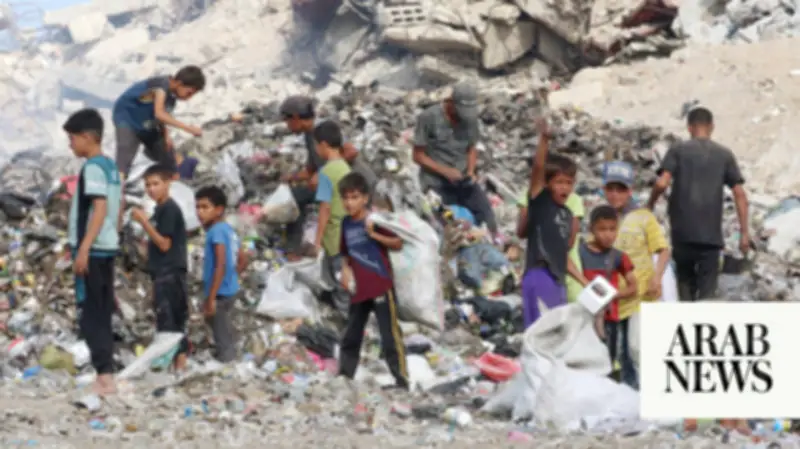
Gaza's public health emergency is deepening as the collapse of sanitation systems drives a surge in preventable diseases, with over 125,000 skin infections linked to rats and parasites reported between January and May 2026, according to the UN Relief and Works Agency (UNRWA).
Infrastructure Destruction Fuels Crisis
The World Health Organization (WHO) reports that nearly 90 percent of Gaza's water and sanitation infrastructure has been damaged or destroyed, while about 80 percent of the population now relies on trucked drinking water. The Final Gaza Rapid Damage and Needs Assessment by the World Bank, the EU, and the UN estimates that recovery and reconstruction will require $71.4 billion over the next decade, including $26.3 billion within the first 18 months.
In late June, temperatures reached 34 to 35 degrees Celsius, forcing families to cool off in polluted seawater. Prue Coakley, Medecins Sans Frontieres (MSF) Gaza emergency coordinator, told Arab News: "All the water networks, sewage systems, electricity, everything is damaged ... so effectively, you don't have a proper sewage system anymore. When it rains, all of that content that should normally be underground and out of sight is on the streets, and it's flooding through people's tents."

Disease Outbreaks Soar
From January 1 to May 7, 2026, more than 153,100 cases of acute watery diarrhea were reported, according to the WHO. In 2025, over 493,000 cases were recorded, with about 47 percent affecting children under five. Christian Lindmeier, WHO spokesperson, said: "The most immediate public health risks are communicable diseases associated with unsafe water, poor sanitation, inadequate waste management and overcrowded living conditions. These include acute watery diarrhea, hepatitis A, skin infections, scabies and other parasitic infestations, as well as respiratory infections."
Water quality testing from January 1 to May 2, 2026, showed that 73.6 percent of 2,627 samples failed to meet agreed standards, with some contaminated by fecal coliform bacteria.
Displacement Compounds Suffering
Coakley noted that MSF's Palestinian staff have been displaced multiple times, some as many as 15 or 16 times during the war. "The more people move, the more personal belongings they lose," she said, adding that each displacement means loss of livelihood and purchasing power. "People's ability to wash their clothes, take a shower, all of those things, are really severely impacted by the living conditions and the constant movement."
The spread of scabies and lice among children in displacement camps exemplifies the challenge: "You can do all the health promotion in the world and you can go to the clinic and get the treatment, but you go back to that same living environment and you'll be reinfected."
Fuel Shortages Threaten Response
The WHO warned that fuel shortages are affecting health facilities, laboratories, ambulances, water production, wastewater treatment, and solid waste management. Lindmeier said: "Shortages of laboratory equipment and reagents are affecting the ability to diagnose diseases and detect potential outbreaks in a timely manner. Shortages of medicines, laboratory reagents and medical supplies further weaken disease surveillance, diagnosis and treatment capacity."
Coakley warned that dwindling fuel supplies could force aid agencies to scale back operations just as demand for clean water rises: "A lot of agencies are saying they will have to decrease their activities because of shortage of fuel. In order to prevent, or help to prevent, these waterborne diseases and hygiene-related diseases, we need more water, not less, right now."
Aid agencies emphasize that medicine alone cannot solve a crisis rooted in collapsing infrastructure, chronic displacement, and dwindling access to clean water. For many families, the struggle is no longer just to survive the war, but to stay healthy in its aftermath.