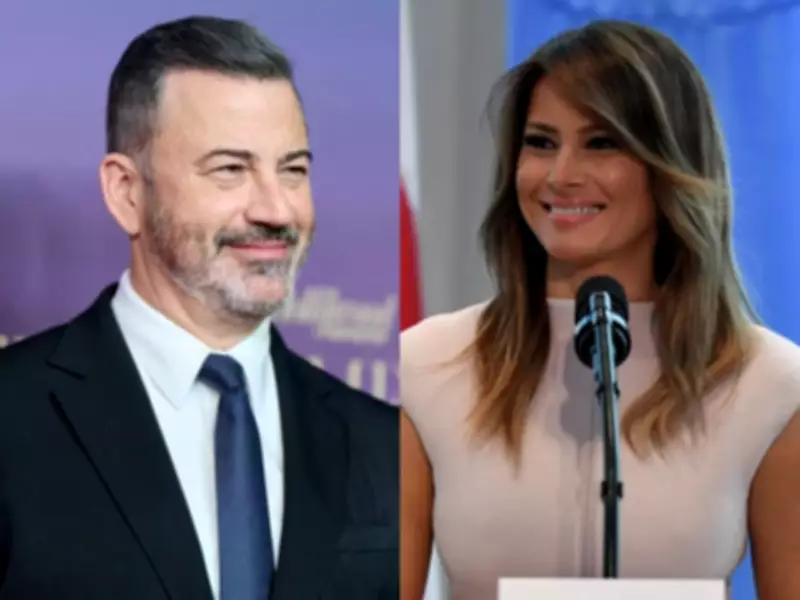
In a recent segment on his popular late-night show, Jimmy Kimmel launched a scathing critique of a documentary focused on former First Lady Melania Trump, describing it as nothing more than a $75 million bribe to Amazon founder Jeff Bezos. This bold statement has ignited a firestorm of debate across media circles and political commentary, drawing attention to the intricate relationships between entertainment, journalism, and corporate interests.
Kimmel's Controversial Remarks on the Documentary
During his broadcast, Kimmel did not hold back in his assessment of the documentary, which reportedly delves into Melania Trump's life and her role during Donald Trump's presidency. He argued that the substantial financial backing behind the project, estimated at $75 million, serves as a questionable payment to Bezos, whose media holdings include outlets like The Washington Post. Kimmel suggested that this could be seen as an attempt to influence or curry favor with powerful media figures, raising ethical concerns about the intersection of money and storytelling in today's media landscape.
Reactions and Broader Implications
The comments from Kimmel have elicited a wide range of responses from viewers and critics alike. Some applaud his willingness to challenge what they perceive as corporate manipulation in documentary filmmaking, while others dismiss his remarks as mere sensationalism or partisan rhetoric. This incident underscores the ongoing tensions in how public figures and their narratives are portrayed, especially in an era where media ownership and financial incentives are increasingly scrutinized.

Moreover, Kimmel's critique touches on broader themes of media integrity and the role of documentaries in shaping public opinion. By framing the documentary as a bribe, he highlights potential conflicts of interest that can arise when large sums of money are involved in producing content about high-profile individuals. This has sparked conversations about transparency and accountability in the entertainment and news industries, with many calling for clearer disclosures on funding sources for such projects.
Context and Media Dynamics
This is not the first time Jimmy Kimmel has used his platform to comment on political or media-related issues, often blending humor with pointed criticism. His latest remarks add to a growing discourse on how documentaries and other media forms can be influenced by financial considerations, potentially skewing narratives or access. As the story continues to unfold, it serves as a reminder of the complex interplay between celebrity, politics, and corporate power in modern media.
In summary, Jimmy Kimmel's denunciation of the Melania Trump documentary as a $75 million bribe to Jeff Bezos has stirred significant controversy, prompting discussions on ethics, media bias, and the financial underpinnings of documentary filmmaking. Whether viewed as a legitimate critique or an exaggerated claim, it reflects the heightened scrutiny that surrounds media productions involving influential figures today.