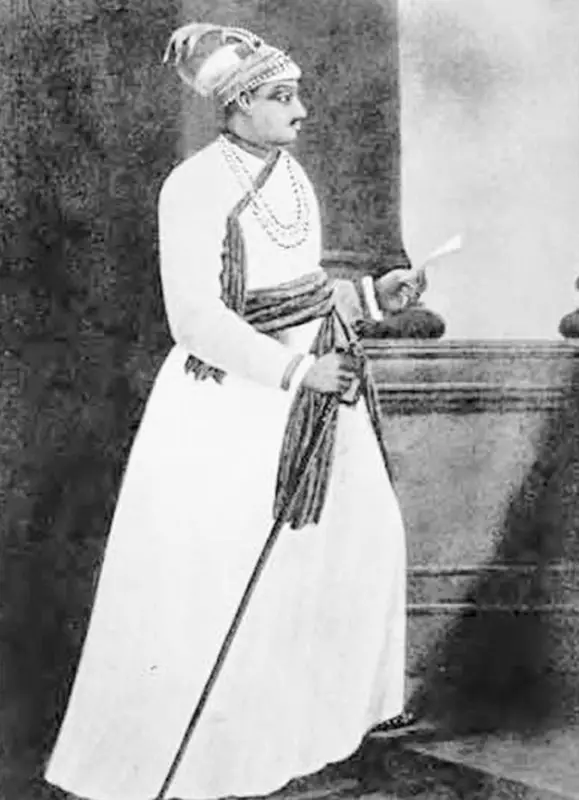
The history of the Indian subcontinent was irrevocably altered by the dramatic and short-lived rule of Siraj-ud-Daula, the final independent Nawab of Bengal. His ascent to power, marked by intense family conflict, was swiftly followed by a catastrophic confrontation with the British East India Company, an event that paved the way for nearly two centuries of colonial rule.
From Adopted Son to Crown Prince
Siraj-ud-Daula's path to the throne began with a succession crisis. The reigning Nawab, Alivardi Khan, found himself without a direct male heir to inherit his rule. To secure the future of Bengal, Alivardi Khan adopted Siraj-ud-Daula and raised him as his own son. The young prince received comprehensive training in statecraft, warfare, and administration, meticulously groomed to one day lead. He proved to be a capable student, eventually becoming the son Alivardi Khan had always desired.
This careful preparation culminated in 1752, when Siraj-ud-Daula was formally nominated as the Crown Prince of Bengal. Upon Alivardi Khan's passing, he rightfully assumed the title of Nawab, stepping into a role fraught with immediate challenges.

Family Rifts and Internal Opposition
His rise, however, was not welcomed by all. Siraj-ud-Daula's nomination and subsequent rule ignited fierce opposition within his own family. Key figures felt sidelined and plotted against the young Nawab. The most prominent dissidents included his own aunt, Ghaseti Begum, who possessed significant wealth and influence. Another was Shaukat Jung, the Nawab of Purnea, who contested the succession.
Most dangerously, opposition festered within his military command in the form of Mir Jafar, the commander-in-chief of the Bengali army. These internal rifts created a fragile and divided court, weakening Siraj-ud-Daula's position at a critical moment in history.
The British Arrival and a Lasting Legacy
The internal conspiracies coalesced with the ambitions of a foreign power: the British East India Company (EIC). The Company's escalating demands and fortification of Calcutta directly challenged the Nawab's authority. This tension exploded into open conflict, famously leading to the incident of the Black Hole of Calcutta and the subsequent Battle of Plassey in 1757.
Tragically for Siraj-ud-Daula, his trusted commander Mir Jafar betrayed him by conspiring with the British. This betrayal was a decisive factor in the Nawab's defeat. The victory of the East India Company at Plassey did not just end one man's rule; it marked the beginning of the end for independent Indian kingdoms in the region.
His rulership was cut short, and the British, through the EIC, initiated their political and military dominance over the subcontinent. This event set in motion a chain of events that led to the complete takeover of India for the next two hundred years, fundamentally reshaping its political, economic, and social landscape. The story of Siraj-ud-Daula thus remains a poignant perspective on a pivotal turning point in South Asian history.