

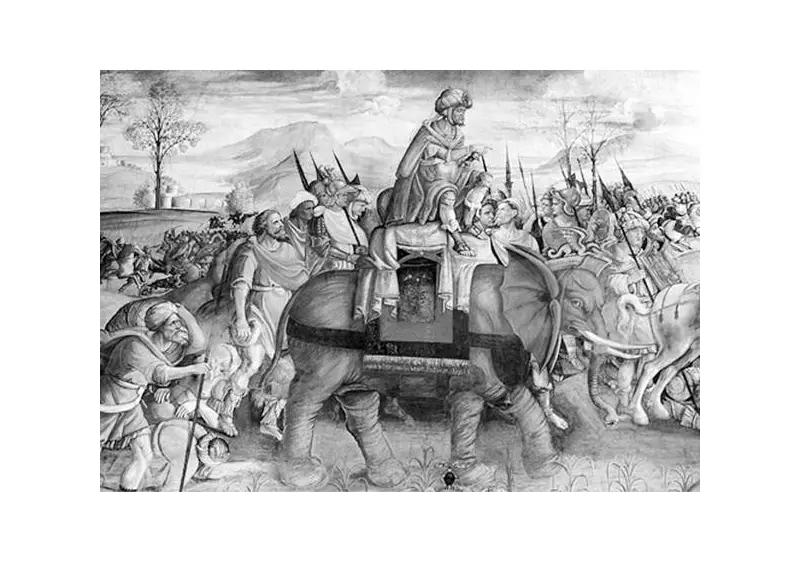
The ancient world witnessed one of its most defining conflicts in a series of three brutal wars fought between two superpowers: the Roman Republic and the Carthaginian Empire. Known as the Punic Wars, this epic struggle culminated in the utter destruction of Carthage, the enslavement of its people, and the unchallenged dominance of Rome over the western Mediterranean. This clash was not a sudden outburst but the inevitable result of two expanding empires on a collision course for supremacy.
The Roots of Rivalry: Rome's Rise and Carthage's Ambition
The origin of these devastating conflicts can be traced back to the strategic position Rome secured by 275 BCE. Having established itself as the principal power and protector of the Italian peninsula, Rome's primary goal was to safeguard its territory from any formidable foreign threat. The republic was determined to prevent Italy from falling into the hands of a strong, expansive rival that could challenge its newfound authority and security.
On the opposite shore of the Mediterranean, the Carthaginian Empire viewed the situation very differently. Carthage, a formidable maritime and commercial power, was eager to extend its influence into Italy. Its ambition was to complete a strategic chain of island posts and coastal strongholds, thereby solidifying its control over the entire western Mediterranean basin. This direct clash of strategic interests made a monumental conflict almost unavoidable.

A Trilogy of Conflict: The Three Punic Wars
The Punic Wars unfolded in three distinct and bloody chapters. The First Punic War (264-241 BCE) was largely a naval struggle over control of Sicily, ending with Rome's emergence as a significant sea power. The Second Punic War (218-201 BCE), perhaps the most famous, featured the daring Alpine crossing of the Carthaginian general Hannibal and his legendary victories on Italian soil. Despite these triumphs, Rome's resilience ultimately prevailed. The Third Punic War (149-146 BCE) was a brief, brutal siege that ended with the complete destruction of Carthage. The city was razed, its surviving population sold into slavery, and its lands symbolically sown with salt.
The Aftermath: A Mediterranean Transformed
The consequences of the Punic Wars were profound and irreversible. With Carthage obliterated, Rome removed its last major rival in the region. The victory established undeniable Roman hegemony over the western Mediterranean, transforming it from a regional Italian power into a sprawling empire. The wealth and territories seized from Carthage fueled Rome's further expansion, setting the stage for its eventual domination of the entire Mediterranean world. The wars demonstrated Rome's relentless political will and military adaptability, characteristics that would define its imperial trajectory for centuries to come.
In conclusion, the Punic Wars were more than just a military contest; they were a pivotal turning point in ancient history. The decisive Roman victory ensured that the cultural, legal, and political foundations of the Western world would be built on a Roman, rather than a Carthaginian, model. The echoes of this conflict, from grand strategy to the tales of legendary leaders, continue to resonate in the study of history and power politics today.

