

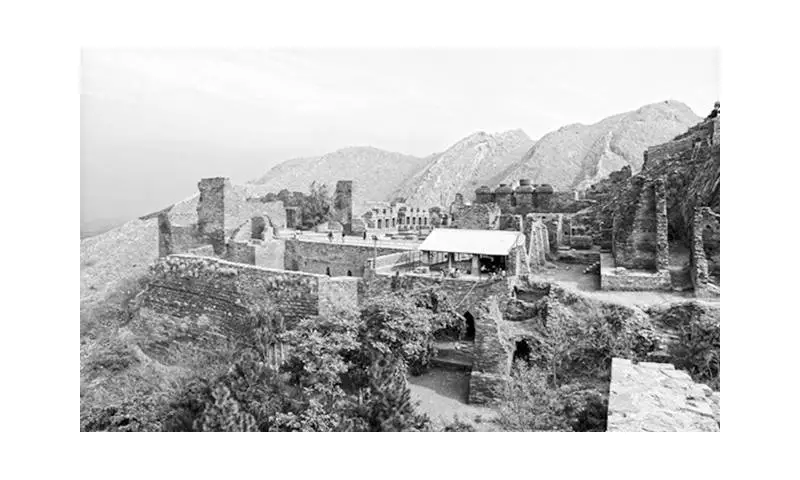
Nestled in the hills near Mardan in Pakistan's Khyber Pakhtunkhwa province, the ancient Takht-i-Bahi monastery stands as a monumental testament to a rich spiritual and artistic past. This remarkable complex, dating back to the 1st century CE, was once a thriving hub for Buddhist learning, worship, and the creation of exquisite art. Its enduring ruins continue to captivate historians, pilgrims, and tourists, offering a direct window into the region's profound Buddhist heritage.
A Fusion of Architectural Grandeur
The structural design of Takht-i-Bahi presents a fascinating blend of influences. It masterfully combines Gandhara and classical Indian architectural styles, a synthesis that reflects the cultural crossroads of ancient South Asia. Built on a hilltop, the complex is strategically divided into distinct areas for monastic living, meditation, worship, and learning. This thoughtful layout highlights the sophisticated planning of its founders and the daily rhythms of monastic life that once flourished here.
The Legacy of Exquisite Art and Craftsmanship
The true soul of Takht-i-Bahi lies in the artistic mastery preserved in its stones. For centuries, skilled artisans at the monastery dedicated themselves to creating intricate stone carvings, statues, and frescoes. Their work, ranging from serene Buddha figures to detailed narrative reliefs, showcases an exceptional level of craftsmanship. This artistic excellence was not merely decorative; it served as a vital medium for religious expression and teaching, making the site a premier center for Buddhist art in the region.

Recognition as a Global Heritage Treasure
In recognition of its outstanding universal value, Takht-i-Bahi was inscribed as a UNESCO World Heritage site. This prestigious designation underscores its importance not just for Pakistan, but for all of humanity. It protects the site as a crucial cultural landmark and ensures its preservation for future generations. The monastery's significance is twofold: it is both a sacred religious monument and a priceless archive of ancient artistic heritage.
Today, a visit to Takht-i-Bahi is more than a tour of ruins; it is a journey back in time. It allows visitors to walk through the same courtyards and chapels where monks meditated and scholars debated nearly two thousand years ago. The site stands as a powerful reminder of the diverse and pluralistic history of Pakistan, where Buddhism once thrived and contributed to a vibrant cultural tapestry. For anyone seeking to understand the deep historical roots of the region, Takht-i-Bahi near Mardan is an essential and awe-inspiring destination.

