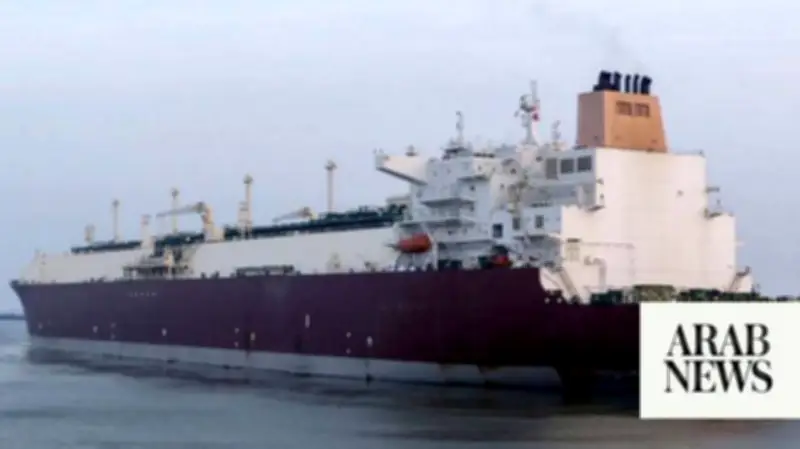
Pakistan has acquired a liquefied natural gas (LNG) cargo from the costlier spot market this week, according to an official tender document, as a top energy ministry official expressed concern that renewed tensions between the United States and Iran in the Strait of Hormuz could disrupt the country's energy supplies.
Renewed Hostilities Threaten Energy Route
Despite a peace agreement brokered by Pakistan earlier in June, the US and Iran exchanged attacks in the Middle East last week, reigniting tensions along the Strait of Hormuz maritime trade route. This waterway, which carries approximately 20 percent of global oil and LNG trade, came to a virtual standstill after the US-Iran war erupted in February, causing worldwide supply disruptions and hiking petroleum product prices in Pakistan.
BP Singapore Pte Limited, a global oil refining and marketing company, was the sole bidder responding to the tender issued by state-run Pakistan LNG Limited (PLL) on Monday. BP Singapore offered to supply 140,000 million cubic feet of LNG at a price of $16.7372 per million British thermal units (MMBtu).

Urgent Delivery Required
The tender, posted on PLL's website, states: "Bids are invited from reputed international suppliers, for the supply of one (01) LNG cargo on a Delivered Ex-Ship (DES) basis at Port Qasim, Karachi." BP Singapore must deliver the cargo between June 30 and July 4, as Islamabad requires fuel to keep five power plants operational in the coming weeks, an energy ministry official told Arab News on condition of anonymity.
"We will be tapping the spot market as this new US-Iran tension is a concern and is threatening our fuel supplies through Strait of Hormuz again," the official said, adding that PLL has started spot purchases because Pakistan lacks access to LNG from Qatar.
Qatar's Force Majeure Continues
Qatar's state-run QatarEnergy declared force majeure after Iranian attacks on two of its main facilities in March halted LNG production. This move severely impacted Pakistan's energy security plans. "Qatar's force majeure is in place till mid-July," the official explained. "It has not been taken back by QatarEnergy, so we will be making spot purchases."
Pakistan's LNG suppliers include BP Singapore Pte, TotalEnergies Gas & Power, Vitol Bahrain, OQ Trading, SOCAR Trading, and PetroChina International Singapore. Islamabad has been issuing and canceling LNG spot tenders in recent months, depending on Iranian permissions for Pakistani vessels to transit the Strait of Hormuz.
Energy Deficit and Rising Costs
The official revealed that Pakistan has received about five to six LNG cargoes under special arrangements from Qatar since the war began in February, along with two to three spot market shipments. Energy-deficient Pakistan generates roughly 17 percent of its power from gas, including six percent from imported LNG, and requires four to five LNG cargoes monthly from April to August.
"Five cargoes would be required in July to be supplied to the power sector," the official said, adding that the government would buy at least four more spot shipments if no cargo arrives from Qatar. Spot cargoes cost Pakistan $16 to $17 per MMBtu, compared to the $10 to $12 per MMBtu rate offered by QatarEnergy.
Rising fuel costs directly impact inflation in Pakistan, which the finance ministry projected at 11 to 12 percent in June 2026, according to a report released on Tuesday.
Expert Analysis
Energy expert Muhammad Saad Ali, head of research at Lucky Investments Limited, downplayed concerns over the economic impact of costlier LNG. "The government buying a spot pit is not that troublesome," he told Arab News. "I don't think it will be a big burden on the kitty." He noted that the government is ensuring gas supply for power plants, four of which are in Punjab and one in Karachi. However, he acknowledged that turning to spot cargoes reflects Islamabad's worry about escalating Middle East conflict.