Pakistan's Diplomatic Success and Economic Paradox
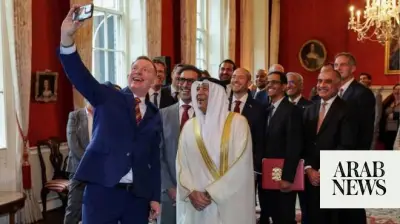
Pakistan's emergence as a credible peace broker, through quiet diplomacy between Washington and Tehran and the Islamabad Memorandum, has brought international recognition for its statesmanship. However, this achievement masks a deepening economic crisis that threatens the nation's future. The country's slow growth is not just an economic challenge but a national security threat, as poverty rises and population growth outstrips economic expansion.
Stagnant Growth Under Shehbaz Sharif
Prime Minister Shehbaz Sharif has presided over the weakest growth in six decades, averaging just 2.33% annually, barely matching population growth. Pakistanis are poorer than in 2022, with millions slipping into poverty. Official figures debate whether the poverty rate is 29% or 40%, but the decline is undeniable. The government lacks a growth strategy, relying instead on an IMF stabilization narrative presented as achievement.
Comparative Decline: Falling Behind Neighbors
In 1990, Pakistan had a higher per capita income than India and Bangladesh. By 2024, both had overtaken it. Pakistan's annual per capita income growth was just 1.61%, compared to India's 4.49% and Bangladesh's 4.24%. This reflects a systemic failure of a state designed to preserve power rather than create prosperity. GDP per capita (PPP, constant US$) data from the World Bank shows Pakistan at $3,200 in 1990 and $5,503 in 2024, while India rose from $2,203 to $9,818 and Bangladesh from $2,070 to $8,469.

Demographic Emergency and Human Capital Crisis
Pakistan faces a demographic emergency, with 2.5–3 million young people entering the labor market annually. The median age is around 20, and the NEET rate (youth not in employment, education, or training) stands at 32–33% nationally. Education spending has declined to approximately 1.0% of GDP, while debt servicing consumes nearly 6%. A child born in Pakistan today will be only 41% as productive as they could be with complete education and full health, comparable to Sub-Saharan Africa. Expected years of schooling are 7.9, against India's 13.0 and Bangladesh's 12.3, placing Pakistan 168th out of 189 countries in the Human Development Index.
Women's Exclusion and Urban Dysfunction
Nearly half of women are illiterate, and only one in four participates in the labor force, leaving around 50 million women outside it. The IMF estimates closing the gender gap could raise GDP by up to 30%. Bangladesh built its export surge on female garment employment, while Saudi Arabia raised female labor-force participation from 20 to 37% through reform. Pakistan's cities, where exports are generated, are dysfunctional sprawls constrained by colonial-era zoning. Over 70% of urban land is state-controlled, and more than 70% of Pakistanis live in urban settlements classified as rural.
The Extractivist Political System
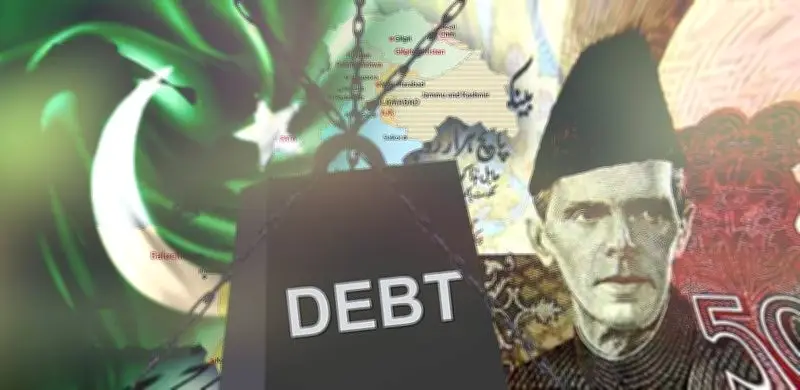
Pakistan's hybrid democracy is a kleptocracy in constitutional dress, where rulers treat the treasury as spoils and park wealth abroad. The bureaucracy protects connected interests, with Defence Minister Khawaja Asif accusing senior civil servants of massive corruption, and former central bank governor Ishrat Husain claiming the net worth of top Customs officials exceeded US$100 million. Official public debt has risen from 46% of GDP in 2006 to 68.5% in FY26, after peaking at 76.6% in FY20. Debt servicing consumes Rs8.05 trillion—43% of the budget, second only to Egypt.
Military Power and Economic Foundations
The changing character of war, with networked systems and precision strikes, demands a costly overhaul of Pakistan's defense ecosystem, conceivably around 2% of GDP. However, economic stagnation coincides with a global AI revolution. Pakistan's risk is not sudden collapse but gradual strategic erosion: textile competitiveness fading against Vietnam and India, export growth slowing, and dependence on external debt deepening. As the article notes, "advanced military power is an epiphenomenon of advanced productive power."

Comparative Lessons: South Korea and Vietnam
South Korea redistributed land, achieved near-universal literacy, built a meritocratic bureaucracy, and transformed into a nearly US$2 trillion economy. North Korea, prioritizing militarization, remains one of the world's poorest states with per capita income roughly 3.4% of South Korea's. Vietnam, under a one-party regime, attracted $18.24 billion in registered FDI in the first four months of 2026 alone, up 32% year-on-year. This was a vote of confidence in its institutions, not diplomacy.
Reforms Needed: A New Republic
Pakistan requires reforms of comparable ambition: dismantling a parasitic bureaucracy, restoring property rights, investing in human capital, breaking feudal landholdings, integrating women into the workforce, and rebuilding cities. The current constitutional architecture has produced instability and economic decline. The article argues for a directly elected executive with a fixed mandate, authority to govern decisively, and time to pursue long-term reforms. The choice is between preserving an extractive political order and building a developmental state capable of competing in the twenty-first century.