The debate over the future of US–India relations carries a lesson that reaches well beyond Washington and New Delhi. If the strategic assumptions that shaped South Asia for two decades are shifting, the region has to face a harder question: should South Asia remain one of the least integrated regions on earth? For years, South Asian states have viewed their economic and security futures through partners outside the region. India built strategic ties with the United States. Pakistan deepened its links with China and the Gulf. Bangladesh, Sri Lanka, and Nepal cultivated several external partners at once to balance competing pressures. That logic suited an era of expanding globalisation, stable alignments, and a United States willing to underwrite regional order. That era is closing.
Shifting Strategic Assumptions
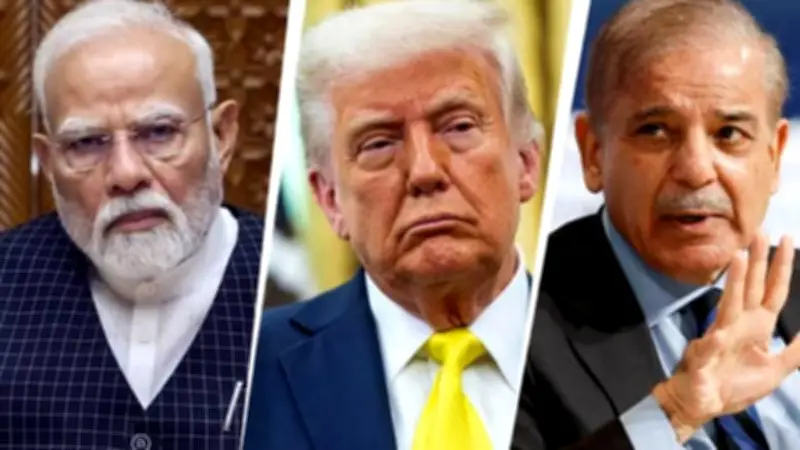
In a recent Project Syndicate column, The US and India Have Become Regional Rivals, Brahma Chellaney sets out a shift that policymakers across the region cannot ignore. Washington still values India as a counterweight to China, he writes, but it is wary of any single power dominating South Asia. He points to specific examples: American endorsement of regime change in Bangladesh after Sheikh Hasina's ouster, more direct US courting of Nepal that skips the customary stop in New Delhi, pressure on Myanmar's junta along India's north-eastern frontier, and, above all, Trump's embrace of Pakistan. One senior US official put the economic edge bluntly, warning that Washington would not repeat its China mistake by letting India build up markets and then outcompete it. The pattern, in Chellaney's reading, is a United States that prefers a plural South Asia to one organised around Indian primacy, even while it keeps India as a global partner.
India's Regional Influence: Security vs. Integration
Chellaney's conclusion is the starting point for my argument. India, he writes, can no longer count on Washington to sustain its regional influence and must instead cultivate that influence through economic engagement, sensitivity to its neighbours' concerns, and public goods that smaller states actually value. He intends this mainly as a way to hold the smaller capitals against Chinese inroads, and he remains openly hostile to Pakistan in the same piece. I would take his logic one step further than he does. If economic engagement and public goods are what build durable influence, the case does not stop at Pakistan's border. It runs through it.

That is the real choice before India. It can keep pursuing regional influence through security competition, or it can build it through integration and connectivity. The second path is slower and harder to reverse, and under current conditions, it is also the more practical one.
The Integration Gap: Staggering Statistics
Consider the gap. South Asia is home to nearly a quarter of humanity and some of the world's fastest-growing economies, with young populations, expanding consumer markets, and dense historical and linguistic ties. Yet it trades with itself less than almost any other region on earth. Intraregional trade is under 5 per cent of the region's total trade, compared with roughly 25 per cent in ASEAN and about 60 per cent within the European Union. The World Bank has estimated that intraregional trade in South Asia stands at around $23 billion, whereas its realistic potential is closer to $67 billion, nearly three times higher.
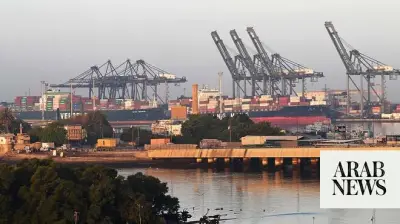
The puzzle is that South Asia has the ingredients that usually drive regional trade: shared borders, common languages, and complementary economies. Lahore and Amritsar lie closer to each other than many cities within a single country, yet a manufacturer in either city often finds it cheaper to ship goods to Dubai or Rotterdam than across that border. The costs are concrete. Regional supply chains remain shallow, logistics remain expensive, consumers pay more, and firms forfeit the scale that larger markets would give them. Economists have argued for years that the region trades at a fraction of its potential, and that lower tariff and non-tariff barriers, together with better connectivity, could multiply it.

The ASEAN Model and the Dominance Challenge
ASEAN is the usual model, and it works as one so long as its limits are clear. Southeast Asia had its own territorial disputes and historical grievances, and its members chose to let economic cooperation run alongside political disagreement rather than wait for every quarrel to be settled. But ASEAN had no single dominant member. South Asia does. India accounts for roughly 80 per cent of the region's GDP, a level of dominance Indonesia never held within its bloc. That asymmetry is the real design problem. Smaller neighbours do not fear ASEAN-style cooperation. They fear being absorbed by a giant. Any integration India leads has to be built in such a way that smaller states benefit visibly while retaining their autonomy, or they will not join.
Honesty About India-Pakistan Hostility
This is where the argument parts most sharply from Chellaney, and where it has to remain honest. The very column behind this piece calls Pakistan a sponsor of terror and warns against engaging with it. That view is not fringe in New Delhi. It reflects real grievances and a real history. India and Pakistan have traded almost nothing since 2019, and they fought a short but dangerous military exchange as recently as May 2025. Pretending economics can wash all of that away is not serious. The narrower, and defensible, claim is this: permanent hostility is not a strategy either, and the burden cannot rest on India alone. Integration requires Pakistan to move on transit, trade access, and militancy, just as it requires India to stop treating connectivity as a concession that it grants. Neither side has to trust the other to identify bounded areas where cooperation pays. That is how Europe began: with coal and steel between recent enemies, not with friendship.
The Security Objection: A Real Answer
The serious objection to all of this is not that war builds prosperity. No one argues that. The serious objection is that security has to come first, and that trading with an adversary can finance the very capabilities one fears. That argument deserves a real answer rather than a slogan. Permanent hostility carries its own price, paid every year in defence budgets, deferred investment, crisis management, and growth that never materialises. Security and commerce are not a straightforward trade-off. A neighbourhood with something to lose economically tends, over time, to find more reasons to keep the peace.
A Hard-Headed Case for India
There is also a hard-headed case for India, separate from goodwill. China is the actor most responsible for the connectivity that smaller South Asian states already enjoy, having spent more than a decade financing ports, roads, and power plants across the region while India hesitated. A connected South Asia gives Indian firms a nearby market and deeper supply chains. It gives New Delhi a credible way to compete with that Chinese footprint in its own neighbourhood instead of ceding it. And it lowers the long-term cost of securing a hostile periphery. India's influence will grow faster by creating shared opportunities than by demanding deference.
A Workable Agenda
A workable agenda does not require grand treaties to begin. It can start with customs harmonisation, cross-border digital payments, electricity trading, transport corridors, and integrated supply chains—areas where the gains are measurable, and the politics are manageable. The region also shares problems that ignore borders: water stress, climate shocks, energy transitions, public health threats, and youth unemployment. None of these can be addressed by one country acting alone.
The Wider Lesson: Depend Less on External Sponsors
The wider point holds across the subcontinent. Major powers are becoming increasingly transactional, and no South Asian state can assume that an external patron will defend its interests on demand. The lesson is not to swap one external sponsor for another. It is to depend less on external sponsors altogether. A more integrated South Asia would be more prosperous, more resilient, and better able to act on its own terms. For India, the conclusion is direct. Its regional standing in the coming decades will rest less on its ties to Washington and more on its ties to Dhaka, Kathmandu, Colombo, Thimphu, Malé, and, hardest of all, Islamabad. For the rest of the region, the choice is just as stark: another generation of suspicion and missed opportunities, or a future built on trade and connectivity. South Asia's low level of integration is not a fact of geography. It is a political choice, and it can be made differently.