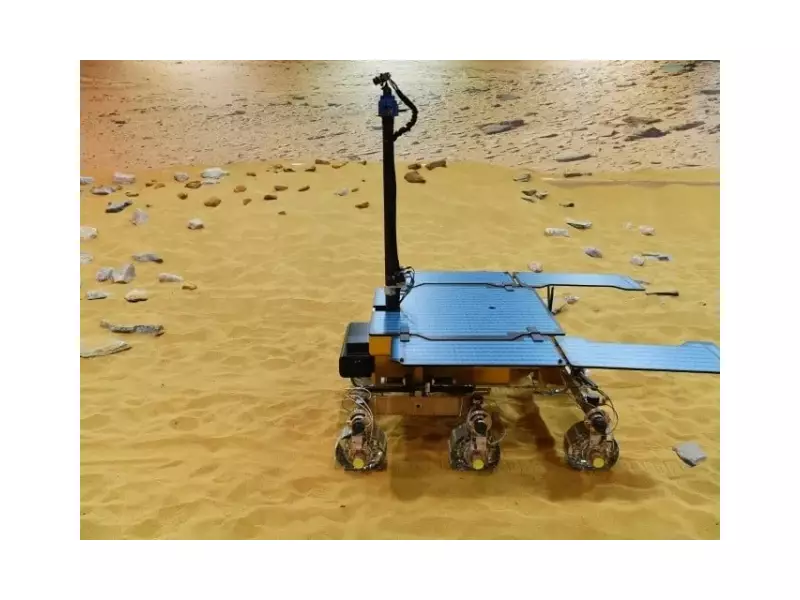
The European Space Agency has received confirmed support from NASA for its ambitious Rosalind Franklin Martian rover mission, which is now scheduled to launch in 2028 after facing multiple delays and setbacks.
Mission Details and NASA Collaboration
During the ESA ministerial council meeting in Bremen, Germany, ESA director general Josef Aschbacher announced the positive development. NASA has formally confirmed its contributions to three critical elements of the mission: the launcher, radioisotope heater unit, and braking engine.
Aschbacher described the confirmation as "good news" for the European space program. The rover, named after British scientist Rosalind Franklin, represents a significant step forward in Martian exploration due to its unique drilling capability.

Technical Capabilities and Challenges
The Rosalind Franklin rover aims to become the first Martian vehicle capable of drilling up to two metres (6.5 feet) below the surface to search for evidence of extraterrestrial life. This deep-drilling capability could revolutionize our understanding of Mars' potential to host life.
However, the mission faces challenges beyond technical specifications. Since returning to the White House in January, US President Donald Trump has targeted NASA with steep budget cuts, creating uncertainty around American space contributions.
Mission History and Future Timeline
The mission has experienced a turbulent journey since its original planned launch in 2020. In 2022, the project suffered a major setback when the ESA terminated cooperation with Russia, its main partner at the time, following Moscow's invasion of Ukraine.
This suspension forced the European Space Agency to seek alternative partnerships, ultimately turning to the United States for assistance. NASA's involvement now provides crucial stability for the project.
Beyond the three primary contributions, NASA will also provide one instrument specifically designed to analyze traces of possible life on Mars. If all proceeds according to schedule, the Rosalind Franklin rover will touch down on the Martian surface in 2030, beginning its historic search for extraterrestrial life.