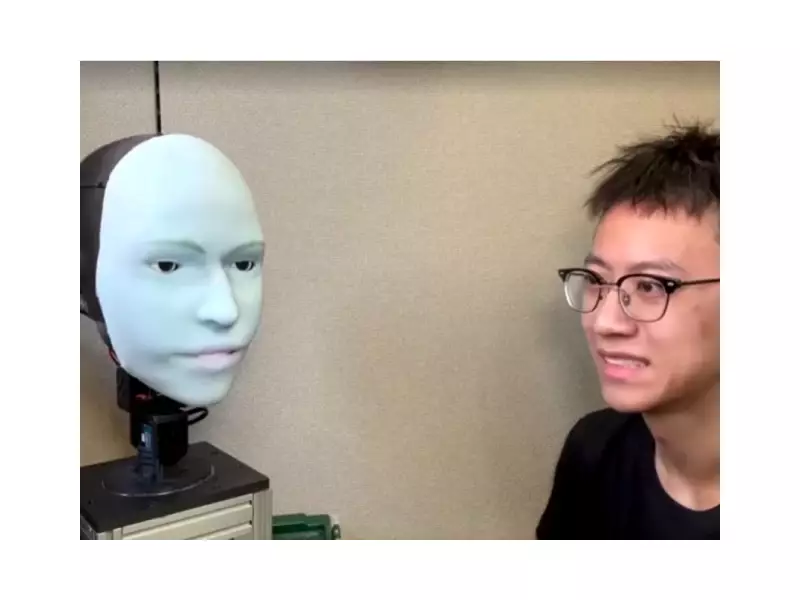
Columbia Engineers Develop Self-Learning Robotic Face for Natural Lip-Syncing
Engineers at Columbia University have achieved a breakthrough in robotics by creating a robotic face capable of learning to synchronize its lip movements with speech and singing through an innovative observational learning process. This development aims to make humanoid robots appear less eerie in face-to-face interactions, addressing a long-standing challenge known as the uncanny valley.
Overcoming the Uncanny Valley with AI-Driven Learning
In a study published in Science Robotics, the Columbia University team detailed a two-step approach that replaces traditional programming with observational learning. The concept of the uncanny valley, first proposed by robotics professor Masahiro Mori in the 1970s, describes how people's reactions to humanlike robots can shift from empathy to disgust as the robots approach but fail to achieve a lifelike appearance. Hod Lipson, the James and Sally Scapa Professor of Innovation in the Department of Mechanical Engineering and director of Columbia's Creative Machines Lab, explained, "We used AI in this project to train the robot, so that it learned how to use its lips correctly."
How the Robotic Face Learns Lip Movements
The robotic face, equipped with 26 motors, undergoes a dual-phase learning process:

- Self-Observation Phase: The robot generates thousands of random expressions while facing a mirror, learning how its motor commands affect visible mouth shapes.
- Human Observation Phase: The system watches recordings of people talking and singing, learning the relationship between human mouth movements and emitted sounds.
Lipson added, "That learning is a sort of motor-to-face kind of model. Then, using that learned information of how it moves and how humans move, it could sort of combine these together and learn how to move its motors in response to various sounds and different audio."
Capabilities and Applications of the Technology
By combining both models, the robot can translate incoming audio into coordinated motor actions, enabling lip-syncing across multiple languages and contexts without understanding the audio's meaning. The researchers demonstrated this by having the robot articulate words and even sing a song called "metalman" from its AI-generated debut album hello world_. However, the results are not flawless; the team reported difficulties with sounds like "B" and puckering sounds such as "W," noting that performance should improve with more exposure.
Lipson emphasized that this lip motion research is part of a broader effort to enhance natural robot communication in fields like entertainment, education, and care settings. He stated, "I guarantee you, before long, these robots are going to look so human. People will start connecting them, and it's going to be an incredibly powerful and disruptive technology."
This advancement represents a significant step toward more lifelike and engaging human-robot interactions, potentially transforming how robots are perceived and utilized in various sectors.