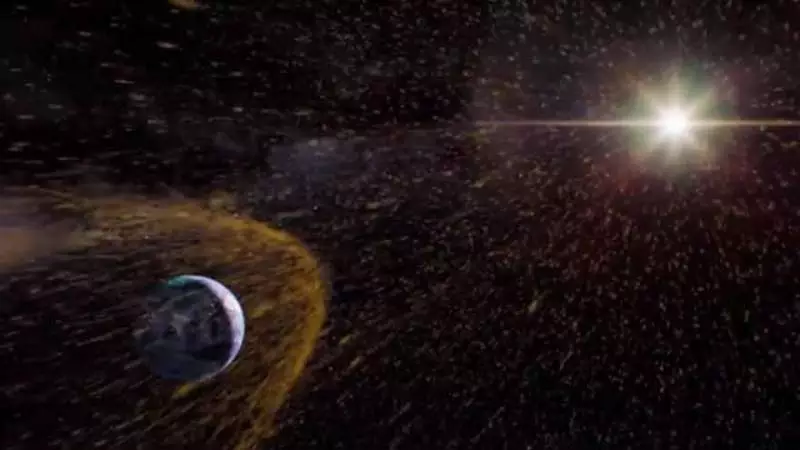
NASA has unveiled a series of breathtaking new images that offer scientists a fascinating window into the possible fate of our solar system billions of years from now. The space agency explains that these visuals illustrate what could occur in approximately five billion years, when the Sun depletes its nuclear fuel and enters a dramatic final phase of its life cycle.
Understanding the Sun's Transformation
During this profound transformation, the Sun is expected to cast off its outer layers, forming an enormous shell of gas and dust. This process, known as a planetary nebula phase, could have significant consequences for Earth and other planets in our solar system. The images focus specifically on the Helix Nebula, a vast cloud of gas and dust situated about 650 light-years from Earth.
Insights from the Helix Nebula
Researchers believe the Helix Nebula is the remnant of a star much like our Sun, which exhausted its fuel thousands of years ago. Astronomers have observed striking details within the nebula's three-light-year-wide ring of expelled material. These complex structures are offering rare and valuable clues into the final stages of stellar evolution.

NASA noted that studying the Helix Nebula provides a crucial preview of the Sun's eventual destiny. This allows scientists to better understand how Sun-like stars conclude their life cycles, shedding light on fundamental astrophysical processes.
Scientific Significance
The detailed observations from these new images are helping astronomers piece together the intricate mechanisms that govern stellar death and rebirth. By examining the Helix Nebula's composition and structure, researchers can make more accurate predictions about our own solar system's distant future.
This research represents an important step forward in our understanding of cosmic evolution and the life cycles of stars throughout the universe.