China Claims Top Spot in Supercomputer Ranking
China has overtaken the United States to claim the number one position on the TOP500 list of the world's fastest supercomputers, according to the June 2026 edition of the biannual ranking. However, experts caution that the achievement may reflect Beijing's push for self-sufficiency in computing rather than a genuine lead in the global AI race.
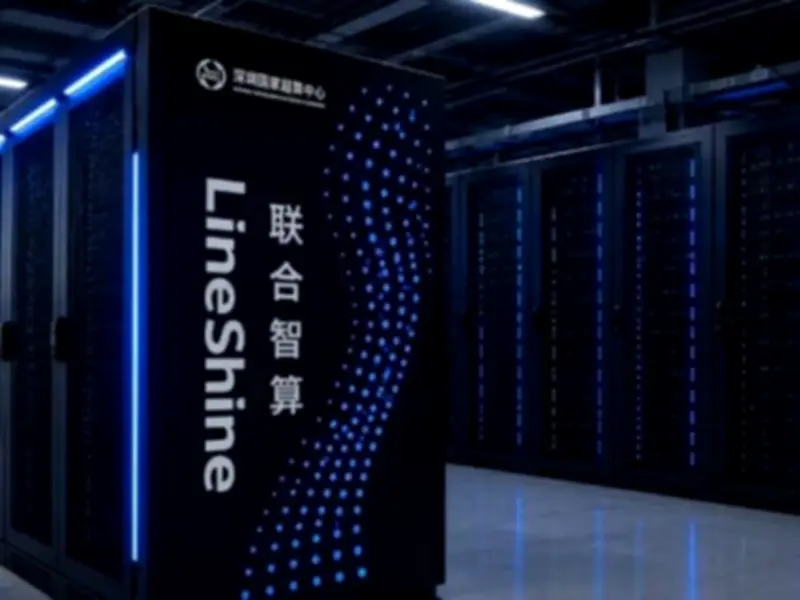
The LineShine system, housed at the National Supercomputing Centre in Shenzhen, China, uses domestically designed chips and secured the top spot for the first time in three years. It surpassed El Capitan, a supercomputer at Lawrence Livermore National Laboratory used by the US government for nuclear weapons stockpile maintenance. The ranking comes amid intensifying US-China competition in advanced computing, with US President Donald Trump signing an executive order on Monday aimed at advancing US quantum computing capabilities.
Benchmark Tests and AI Performance
Technology and policy experts interviewed by Reuters argue that the TOP500 ranking does not indicate China possesses the world's fastest computer for AI workloads. The shift in the computing industry and the methods used to compile the list are key factors. LineShine ranked fourth on a benchmark test designed to simulate AI-like computing, which is more relevant to modern AI applications.

Traditionally, supercomputers were used for complex scientific simulations, and the TOP500 benchmark tests mimic such work. However, cloud computing giants like Microsoft, Amazon, and Google have built massive supercomputers tailored for AI, but most do not compete for TOP500 rankings. A 2023 study by AI policy researchers Konstantin Pilz, James Sanders, Robi Rahman, and Lennart Heim found that SpaceX-owned xAI's Colossus system was likely more powerful than El Capitan.
"If the hyperscalers submitted their systems, this 'world's fastest' would not crack the top five," said Jimmy Goodrich, a senior fellow at the University of California's Institute for Global Conflict and Cooperation.
Domestic Chip Design and Export Controls
China's victory on the list likely highlights its desire for recognition of its chip design efforts, a departure from recent years. China first topped the TOP500 in 2010 and traded positions with the US and Japan until 2023, when it stopped submitting systems due to chip and computing export controls imposed by the Trump and Biden administrations.
"I'm not surprised it's the number one system. What I'm surprised by is that they submitted it and want recognition for it," said Addison Snell, CEO of Intersect360 Research, a firm specializing in supercomputers.
The LineShine system does not contain any advanced AI chips, likely because the tools to produce such chips remain subject to US export controls. "China is hoping to convince the world export controls are useless by hoping we ignore the details," Goodrich said.
The National Supercomputing Centre did not immediately respond to a request for comment.